



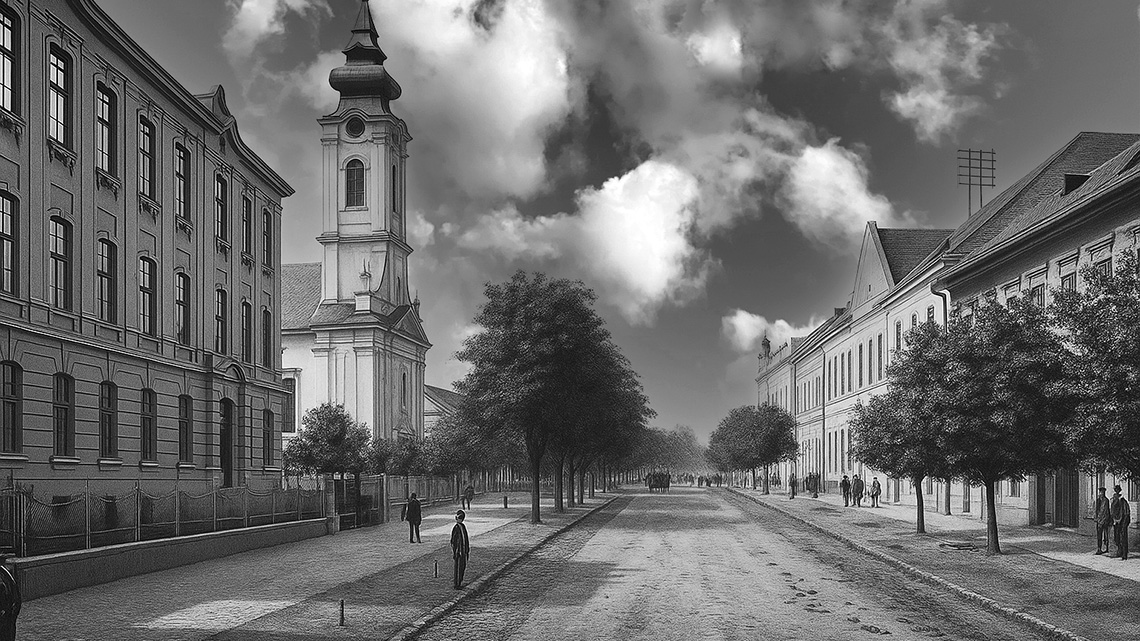
This image shows the appearance of Novi Bečej in the late 1910s, with a focus on its Main Street — at the time, the central axis of everyday life, trade, education, and religion. On the left side, we see the prominent building of the state school, one of the cornerstones of the town’s modernization. This institution served not only as a place of learning but also as a space for shaping the collective identity of a diverse population.
Next to the school stands the bell tower of the Catholic church, built in the Baroque style. The church played a vital role in the spiritual life of the Catholic community — predominantly Hungarians and Germans — and, through its imposing presence, contributed to the town’s visual and symbolic identity.
Lining the right side of the street are civic homes and commercial buildings, where merchants, doctors, craftsmen, and clerks carried out their work. By this time, Novi Bečej had already developed significant municipal infrastructure — including postal and telegraph lines, arranged tree-lined streets, and early street lighting — all of which gave this lowland town a sense of order and elegance.
The population of Novi Bečej was ethnically and religiously diverse: Serbs, Hungarians, Germans, Jews, Slovaks, and others lived in mutual respect. Traces of their cultures were visible in the language, architecture, clothing, and everyday customs. In addition to the Catholic church, the town was home to an Orthodox church, a synagogue, and several Protestant places of worship, reflecting the layered identity of this Banat community.
At the time, Novi Bečej was an important local center of trade and crafts. Thanks to its position on the Tisa River and proximity to the railway, it served as a hub for goods exchange, especially grains, oil, dairy products, and handcrafted items. Warehouses and dock facilities were located near the Main Street, further underlining the town’s economic activity.
The moment captured in this image reflects the calm and structured life of the town. People stroll along the street — perhaps students, traders, or travelers — and the scene in the background hints at the rhythm of everyday life in a time of slower pace, stability, and growing aspirations toward modernization.
The appearance of Novi Bečej’s Main Street in the early 20th century remains a valuable visual record of an era in which the town balanced tradition and progress, within the complex social and cultural fabric characteristic of the Banat region.


Comments