



During 1927 and 1928, the Local Party Committee in Kumane developed extensive political activity not only within the village itself but also by assisting Party organizations in neighboring communities, including Zrenjanin, Velike Livade, Novi Bečej, and Melenci. During election campaigns, it helped organize political gatherings and distribute propaganda materials.
The importance of the Kumane organization is illustrated by a statement made by Nikolić, a delegate from Zrenjanin, at the Politburo Plenum of the Central Committee of the Communist Party of Yugoslavia (CPY), held on November 27, 1927. During the discussion, he protested:
“The Politburo maintains connections only with one village (Kumane) and not with the Provincial Secretariat. That village receives everything, while we only get what we can obtain from them, because they maintain connections not only with us but also directly with the Politburo. It is impossible to continue working this way.”
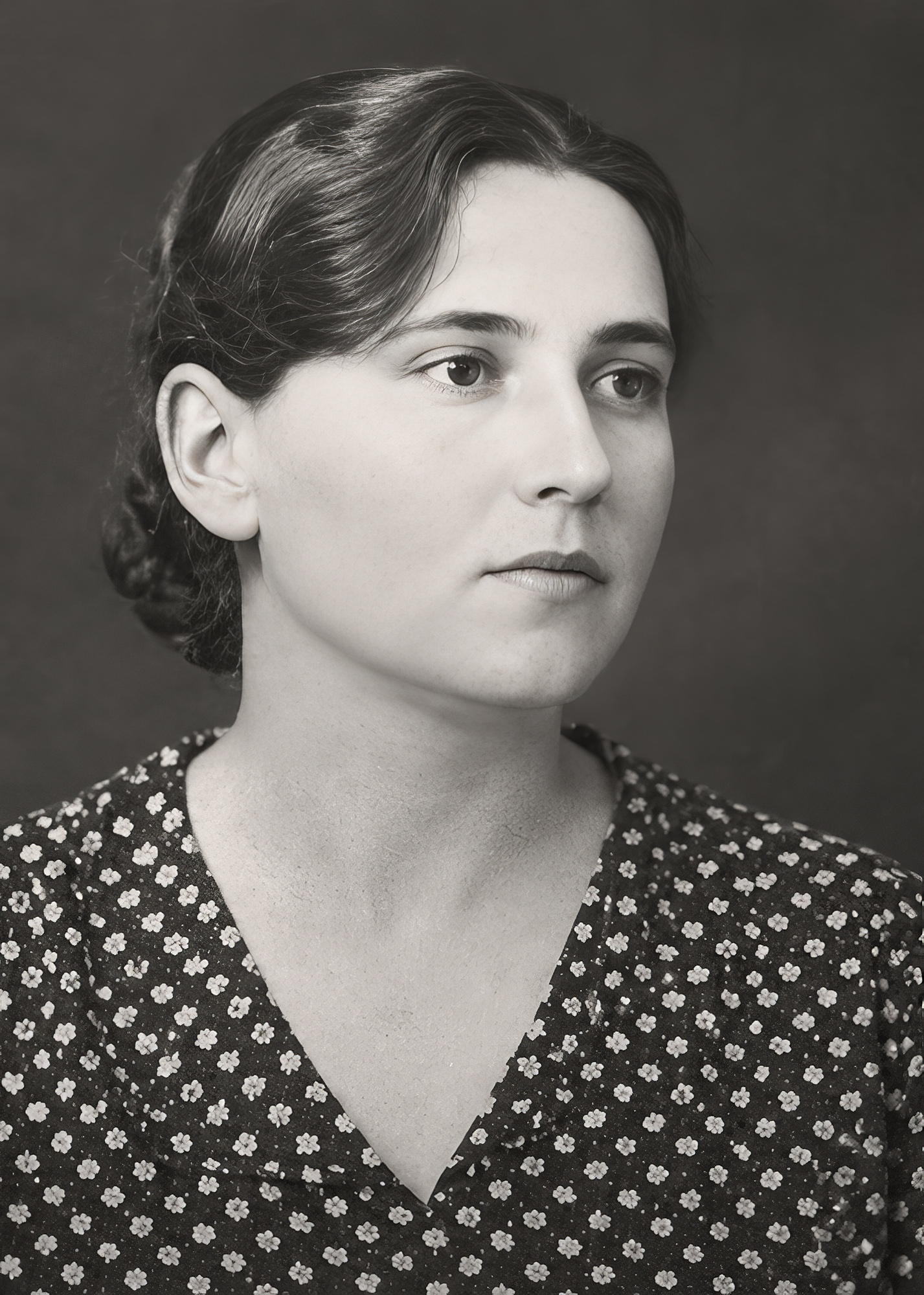
On May 7, 1928, the Gendarmerie Station in Nova Crnja uncovered a communist organization consisting of 97 members in Velike Livade. As a result, Dragoljub Šuvakov, Rada Savin, Dobrivoje Tatić, Nikola Pejin, Sredoje Velimirov, Despot Marinkov, and Veselin Stanisavljev were arrested on suspicion of participating in the establishment of the organization.
Searches of their homes uncovered a large quantity of communist leaflets, books, maps, propaganda plans, and directive letters intended for the operation of Party cells. Authorities also discovered a list of candidates for municipal elections containing approximately 120 names, as well as a letter that had arrived from Kumane through a worker visiting relatives in Velike Livade.
The investigation revealed that on March 3, 1928, Milica Blažić, Kovinka Mečkić, and Nevenka Petrović, all from Kumane, traveled to Velike Livade and stayed for two days at the home of Dobrivoje Tatić. On the very first evening, several individuals gathered there, including the well-known communist Dragoljub Šuvakov. The women brought instructions from Kumane, leading to the establishment of a local branch of the Yugoslav Agricultural Workers’ Union (SPRJ).
Based on the discovered correspondence, arrests were also carried out in Kumane. Those arrested included Kovinka Mečkić, Nevenka Petrović, Milica Blažić, Ljubomir Petrović, Lazar Mirčetić, and Sredoje Stanisavljev.
After being questioned at the Gendarmerie Station in Nova Crnja on May 10, the detainees were transferred to the investigative prison in Zrenjanin, where they were interrogated again on May 14 before criminal proceedings were initiated against them.
The confiscated materials clearly indicate that by 1928 Kumane possessed a strong Party organization equipped with a wide range of illegal theoretical and propaganda literature. Court records show that the accused from Kumane behaved courageously and resolutely during the trial. Owing to their determination and the lack of sufficient evidence, all defendants were eventually acquitted.
During the proceedings, Andrija Mihajlović was also arrested because the three women from Kumane had visited him on May Day. On that occasion, he sold them May Day postcards issued by CRSOJ, which had been legally distributed for years. According to Kova Granić-Mečkić, they also received May Day leaflets that were later distributed in Kumane and Velike Livade. These leaflets had been issued by the Trade Union Council in Zrenjanin.
The mass communist trials conducted throughout northern Banat in 1928 alarmed the authorities, who were already preparing the ground for the introduction of a royal dictatorship. The Communist Party was viewed as the only political force capable of resisting such a development.
Consequently, Minister of the Interior Anton Korošec issued confidential order No. 23/12060/928, calling for vigorous measures against communist activities. Following this directive, district administrators submitted reports to the Grand Prefect describing local conditions and proposing methods for suppressing the communist movement.
Particularly significant was the report submitted by the District Administrator of Novi Bečej on July 7, 1928:
“For the purpose of more rapid and effective suppression of communism in this district, especially in the village of Kumane, I have the honor to propose the establishment of a separate gendarmerie station in the Municipality of Kumane. Owing to the insufficient number of police officers, the existing force is powerless, while the village has 7,000 inhabitants, the majority of whom have been influenced by communist ideas.”
A similar report was submitted on August 31, 1928, by the District Administrator of Jaša Tomić, who noted that communist activity existed among settlers in Aleksandrovo originating from Kumane and Melenci. However, he emphasized that little concrete evidence could be obtained because all activities were conducted verbally rather than in writing.
In a report dated September 14, 1928, the District Administrator of Novi Bečej claimed that all communist organizations had been dismantled and their activities prohibited. He listed 35 individuals from Kumane whose homes had been searched and from whom communist books and brochures had been confiscated.
He also proposed several measures for combating communism:
- Prohibit communists from possessing weapons.
- Place all communists under strict police surveillance.
- Remove communists from all public and trade-related positions.
- Confiscate agrarian and volunteer land allocations from communists.
- Instruct courts to conduct investigations more aggressively and impose the harshest penalties possible.
One example of such repression was the case of Laza Blažić, known as “the Socialist,” whose 8.75 acres of high-quality volunteer land were confiscated and replaced with six acres of inferior land. Similar cases were common in Kumane, particularly among Dobrudža volunteers, many of whom had participated in the October Revolution.
The SPRJ branch in Kumane operated illegally for nearly two years. Its influence among the local population was particularly evident during election campaigns. Communists appeared on the electoral lists of Independent Workers and the Workers’ and Peasants’ Republican Alliance, achieving notable electoral success.
The Ministry of the Interior repeatedly ordered measures against the Yugoslav Agricultural Workers’ Union, arguing that its members were closely connected to the communist movement. Nevertheless, the Kumane branch continued operating until the union itself was banned in 1928. At the National Conference of the SPRJ held in Belgrade on February 19, 1928, the Kumane branch was represented by Svetozar Solarov, an agricultural worker and member of the CPY.
Following the prohibition of the Yugoslav Agricultural Workers’ Union and the police ban imposed on its Central Administration in Subotica on October 9, 1928, the Kumane branch also ceased its activities.
After the dissolution of the Association for the Education of Young People in 1927, communists and members of the Young Communist League continued their work among local youth through cultural and educational activities organized within the Amateur Drama Section and Choir of the Fire Brigade Society. Among the most active members were Slavko Miškov, Slavko Strajnić, Panta Miškov, Svetozar Solarov, Zoran Blažić, Ivan Aćimac, Žarko Petrović, Nevenka Petrović, Jovanka Đorđević, and Ljuba Stojić.
At their initiative, the Agricultural and Craft Youth Association “Progress” was established. Its founding assembly was held on December 30, 1928. Slavko Miškov, a barber, was elected president, while Slavko Strajnić, a locksmith, became secretary. The meeting was attended by 66 young people, including 37 peasants, 27 workers from various trades, and two grammar-school students.
The association aimed to gather young agricultural and craft workers of both sexes for the purposes of self-education, cultural development, and social engagement. Members could read books, newspapers, and magazines, attend lectures, recitations, musical performances, and choir rehearsals, and participate in celebrations, dances, and amateur theatrical productions.
The association’s rules and the minutes of the founding assembly were submitted to the District Administration in Novi Bečej for approval. However, following the introduction of the January 6 Dictatorship in 1929, the regulations were never officially approved, and the association ceased operations before becoming formally legalized.
Nevertheless, the minutes and regulations of the Agricultural and Craft Youth Association “Progress” have been preserved and remain an important historical testimony to the social and political life of young people in Kumane during the interwar period.
Photo: Kova Mečkić Granić, a member of the Communist Party of Yugoslavia since 1927. She was brought to trial for spreading communist propaganda and participating in the establishment of an illegal Communist Party organization in Velike Livade.
Comments