



Ljubiša Jocić was a poet, writer, painter, director, and an experimenter with form and meaning—but above all, a man of play and artistic exploration. His creative journey spanned half a century, leaving behind a rich body of work that includes poems, novels, anti-novels, plays, films, and paintings.
 His words still resonate today:
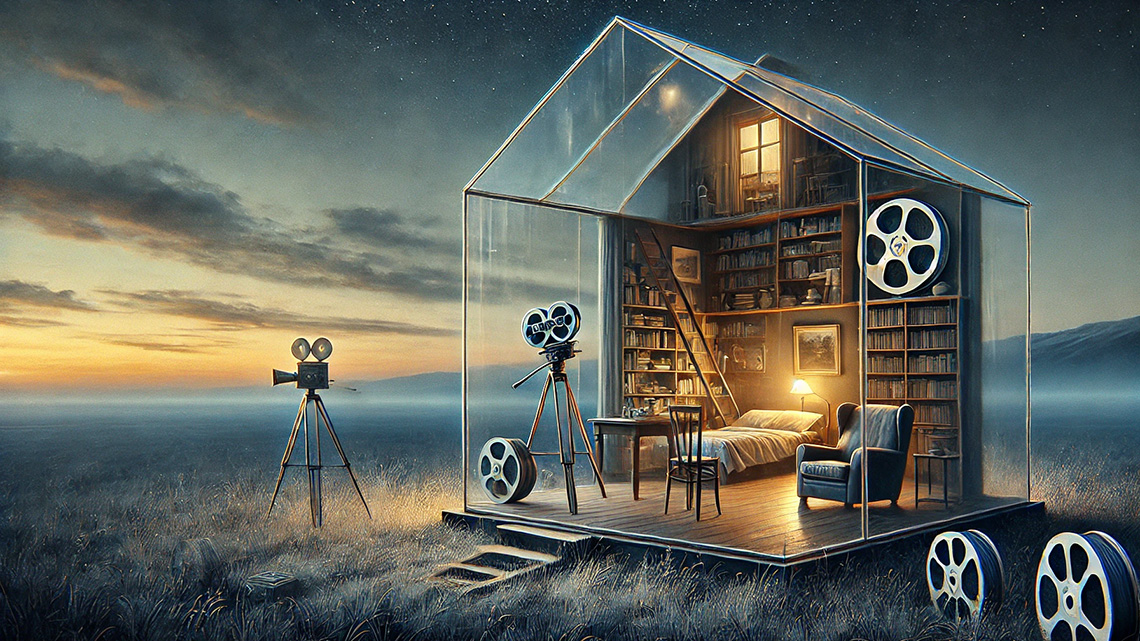
"I live in a house of glass," he would say, paraphrasing Breton. But how many could truly see through that glass, beyond their own reflection, to glimpse the scenes within?
Many perceived him as they wished. It was only after he vanished from the environment where he lived and created that the deeper understanding of his work began. Always kind, smiling, and ready to stage unexpected situations, he played with art and invited others to join him.
"My writing is a will for communication, collaboration, and play," he said.
A Poetic and Artistic Adventure
At the age of eighteen, he began his literary journey in the magazine 50 in Europe with the poem On Marble Walls. From that year, 1928, until 1978, he published twenty books, including long poems, poetry collections, novels, and plays. He also made twenty films and exhibited his paintings in Belgrade and Paris.
His works carry a rebellious spirit and opposition to the petty-bourgeois, consumerist world. With irony, he would call out: "Buy my poems!"—shedding light on the absurdity of modern society.
His collections Poem Without a Title, Hidden Worlds, In the Land of Arastrata, Courier at the Window, and Moonlight in a Tetra Pak stand as testimonies to his artistic quest.
Time and Language: "What Time Is It?"
He wrote his final poems and long verses while contemplating his own transience. Zero Hour 1978 was created two months before his departure:
"... in vain, on this night with this night that does not exist
you try to say the word night, any word
for words are at the zero point..."
Jocić knew that "we can listen even when we do not hear, for everything speaks even in silence." In his poems, films, and paintings, an endless play of language, meaning, and memory unfolds.
Who Was Ljubiša Jocić?
How can we speak of him? How can we find the time and space in which he can live again?
His memory remains in language, in verse, in film, in the stroke of a brush. And as we try to describe him, he eludes us, leaving behind only traces of his own words, thoughts, and artistic play.
Comments