



Why Did the People of Vranjevo Oppose the Merger with Novi Bečej in the 1930s?
Between the two world wars, Vranjevo and Novi Bečej were two separate administrative municipalities. With the establishment of banovinas in the Kingdom of Yugoslavia in 1929, the idea arose to merge settlements where it was economically justifiable. The Association of Merchants and Industrialists, led by Giga Jovanović, one of the most prominent citizens of Novi Bečej at the time, initiated the idea of merging Vranjevo and Novi Bečej into a single entity.
The association presented multiple arguments to support this idea during its meeting on June 12, 1929, and subsequently proposed it at the municipal assembly of Novi Bečej on June 15, 1929. Jovanović argued that the two municipalities formed a single geographic unit, being separated by only a small canal. They shared a railway station, a riverboat station, and common socio-economic and cultural ties.
Specific points included:
- Novi Bečej hosted the joint market, while Vranjevo lacked one. Most retail stores were also in Novi Bečej, with only a few small shops in Vranjevo.
- Prominent individuals from Vranjevo established a grain storage near the Tisza River and a financial institution, Vranjevačka Srpska Štedionica d.d., in Novi Bečej.
- Joint cultural and recreational activities, such as shared theater performances and the Sokolsko Društvo (Sokol Society), underscored their close ties.
- A joint school board funded the civil school in Novi Bečej, attended by students from both municipalities.
- The merger would reduce administrative costs and increase revenues through the establishment of a city council.
However, the Vranjevo municipality strongly opposed the merger, citing several reasons, particularly national identity. Vranjevo was predominantly Serbian, with 7,900 out of 9,159 residents identifying as Serbs, unlike Novi Bečej, where the Serbian population was a minority (2,088 out of 7,679). They emphasized their distinct historical and cultural identity:
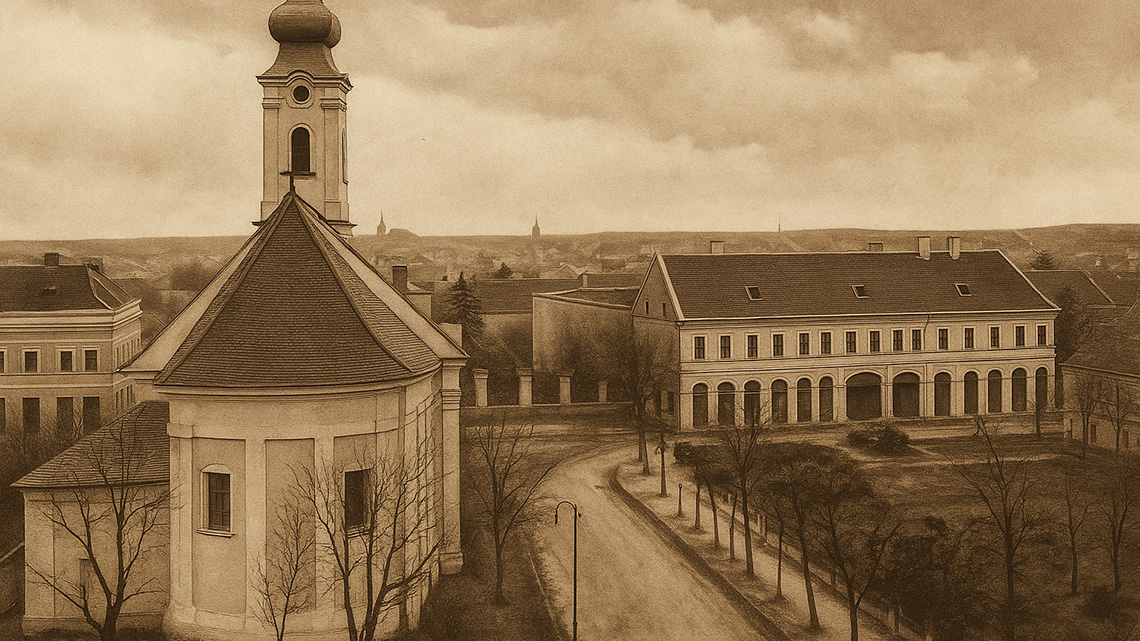
- Vranjevo was founded in 1751 by Serbian border guards after the demilitarization of the Potisje-Pomorišje Military Frontier, contrasting with Novi Bečej’s history of Hungarian serfdom.
- Vranjevo had been a significant economic hub during the era of the Great Kikinda District, exporting Banat grains.
- The municipality boasted unique infrastructure, including its own power plant, steam bath, brick and tile factory, and mills.
The Vranjevo council drafted a memorandum rejecting the merger, emphasizing national and economic autonomy. Despite ongoing efforts by Novi Bečej, including appeals to regional and national authorities, Vranjevo remained steadfast in its opposition.
Even with support from the Banovina administration and the military, as well as endorsements from financial and cadastral departments, the merger was never realized. After a prolonged four-year dispute, the idea was ultimately abandoned in 1933, with the understanding that "better times" might allow for reconsideration.
The two municipalities remained separate entities until after World War II. In 1946, they were merged under the name Vološinovo, which was later changed to Novi Bečej.
Comments