


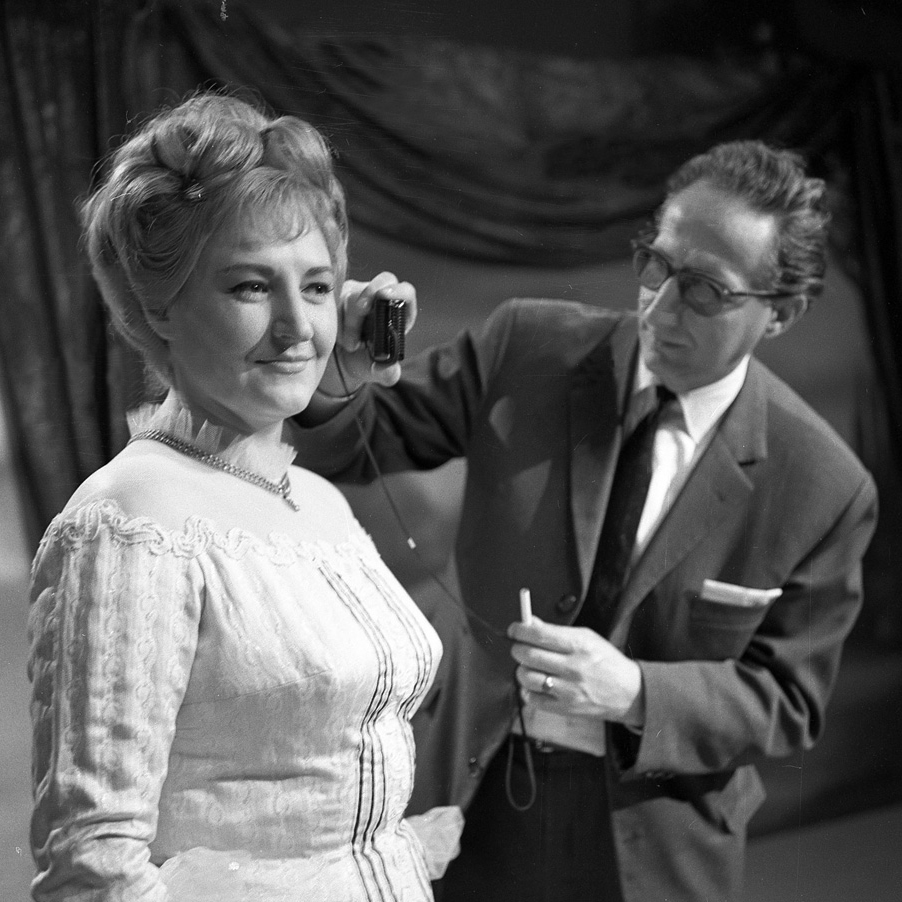
Dubravka Nešović, an outstanding performer of old urban songs and romances, was born on August 31, 1932, in Novi Bečej.
Dubravka’s parents, her mother Nataša Nešović from Belgrade and her father Milorad Majin from Novi Bečej, were actors with the Novi Sad Banovina Travelling Theatre. As their profession required frequent travel, chance had it that Dubravka was born during one of their guest engagements, almost on the stage itself.
“I was born on the stage. My mother performed in Act I, felt unwell in Act II, and in Act III, I came into the world!”
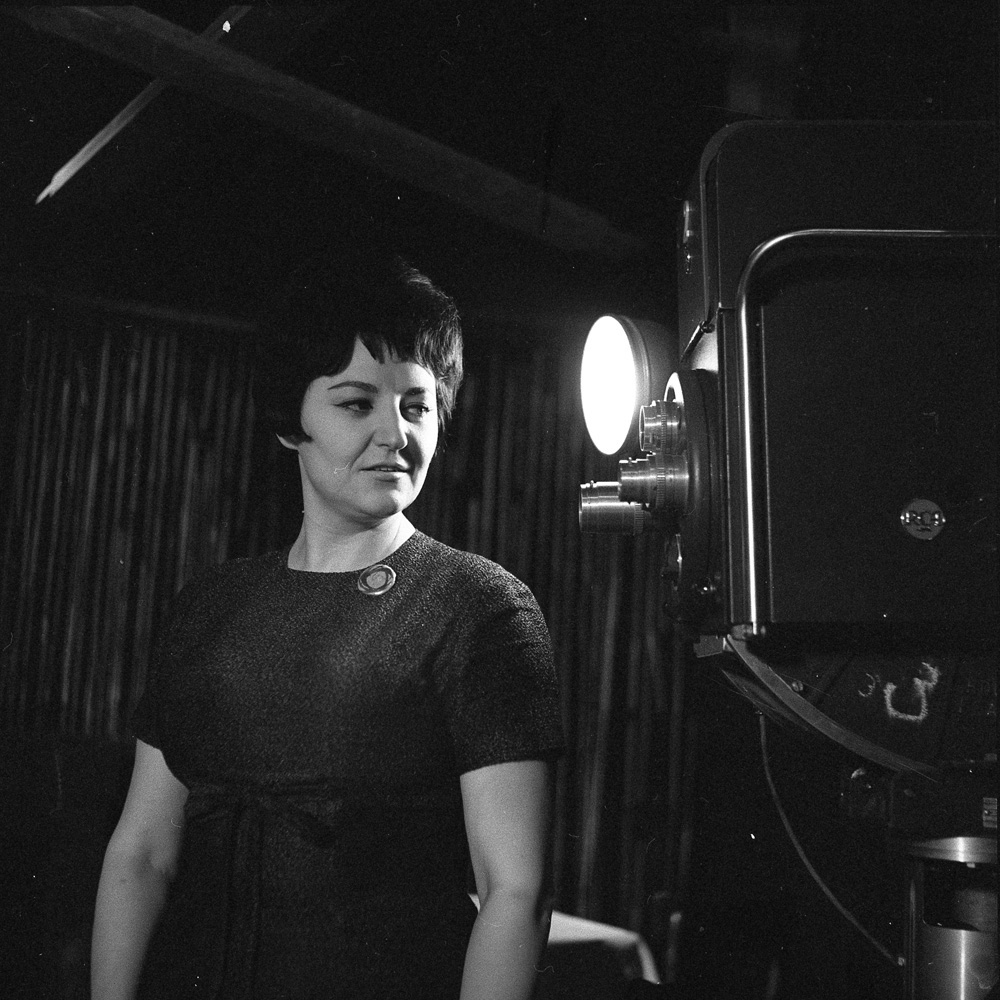 According to Dubravka, her parents’ colleague, actor Viktor Starčić, took her as a newborn to her grandparents in Novi Bečej, with a message explaining that the travelling theatre company could not care for a newborn baby. She received her name in a particularly interesting way: her grandfather, Bogdan Čiplić and Viktor Starčić drew that very name from slips of paper placed in a hat.
Nataša and Milorad were successful theatre actors, also remembered for their roles in Yugoslav cinema. Nataša appeared in “Gold, Frankincense and Myrrh” (1971) and “The Sarajevo Assassination” (1968), while Milorad appeared in “Kozara,” “The Ambush,” “Do Not Mention the Cause of Death” and many other films. For his role in “Four Kilometres per Hour” (1958), he received the Golden Arena Award in Pula.
A wide variety of performances took place in the respected tavern and cinema hall owned by Dubravka’s grandfather Slavko Majin Krka, so Dubravka had been singing before audiences practically since the age of four. “Kad sam sinoć ovde bila” was the first song she performed in public.
“Everyone told me at the time that the song was too demanding for a child of only four, but I insisted on singing that particular one.”
In Novi Bečej, she also had a piano, sang in a choir and learned her first musical notes. After completing lower secondary school, she moved to Niš, where her parents were acting at the time. Her mother had taken the position left vacant by the famous Mira Stupica, who had moved permanently from the Niš theatre to Belgrade.
“Watching my parents struggle and travel constantly, I was never attracted to an acting career. But I had performed before audiences from an early age, singing in front of the stage while the scenery was being changed, and perhaps that is why I never suffered from stage fright.”
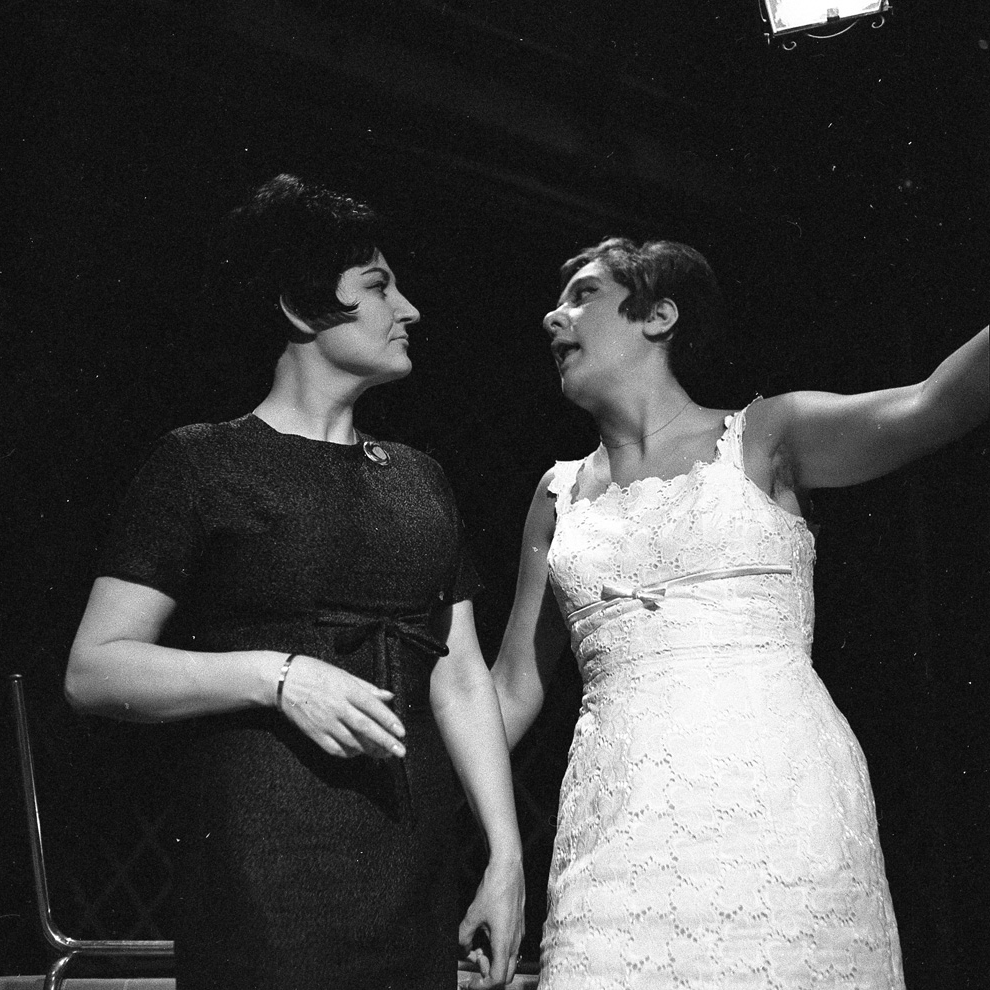 In Niš, she enrolled in music school to improve her piano playing. However, when her teachers and the Niš theatre’s dramaturge, Velimir Živojinović Massuka, heard her sing, they all insisted that she take the role of Koštana. After her three years in Niš, she continued to perform the role on stages throughout the former Yugoslavia.
Encouraged by her teachers, she soon continued her vocal training in Belgrade, first at the Stanković Music School and then at the Music Academy, in the class of Zlata Đunđenac. She was the academy’s top student, receiving the highest mark in every subject, even though her classmates included the exceptional Biserka Cvejić and Radmila Bakočević. With her remarkable and very rare contralto voice, Dubravka received a state scholarship after graduation to continue her studies in Belgium. There, in Bruges, she spent two years specialising in medieval church singing, after which she earned a master’s degree in singing. She thus became the first person in the former Yugoslavia to hold that degree.
Upon returning to Belgrade, she continued her career as a soloist with two distinguished choirs: the Radio Belgrade Choir and the widely acclaimed Branko Krsmanović Choir, known as Krsmanac. With the latter, she travelled the world, performing at La Scala in Milan, the Salle Gaveau in Paris and other renowned venues.
A critic from the famous Paris newspaper “Le Figaro” described her performance of Stravinsky’s “Les Noces” as: “The most powerful piano ever heard in the Salle Gaveau!”
Alongside her choral work, Dubravka built a successful career performing old urban songs and romances in Serbian, Russian and Hungarian. She appeared with numerous orchestras and at many festivals, regularly participated in Yugoslav Radio Television programmes, made recordings for the Radio Belgrade archive, opened the celebrated Skadarlija Summer events and acted at the Terazije Theatre.
“Despite my thorough education and training to become an opera singer, I never loved opera. And once I chose a repertoire of old urban songs, I never changed it, although I could sing whatever I wanted. I especially loved Russian romances and songs from well-known plays with music.”
One particularly interesting performance took place when Russian president Nikita Khrushchev first visited Tito. Dubravka was given the responsibility and honour of singing a Russian romance for Khrushchev. Her performance was so convincing that Tito approached her afterwards and addressed her in Russian.
“After the performance, Tito came up to me and spoke to me in Russian because he was convinced I was Russian. When I told him I wasn’t, both he and Jovanka were very surprised.”
Another interesting fact is that, during the ten years it took to build the Đerdap hydroelectric power plant, Dubravka served as the music editor responsible for events organised for the workers. On the day the power plant opened, she was presented, in the presence of Ceaușescu and Tito, with a gold plaque bearing the inscription: “While we built the dam with concrete, Dubravka built it with her voice.”
For several years, she ran her School of Beautiful Singing at the House of Đura Jakšić in Belgrade’s Skadarlija district. There, she taught many young singers, including the Teofilović brothers, both singing and stage presence. Above all, she required her students to have a good musical ear because, as she said, the voice could be improved, but a good ear was essential.
She recorded hundreds of old urban songs for the Radio Belgrade archive. PGP was her record label. She released 18 singles, five LPs and two CDs.
She also gave more than 3,500 charity performances and is a member of the Belgrade Association of Variety Artists and the Belgrade Jazz Musicians’ Association. She retired with the status of Distinguished Variety Artist, a distinction held for many years only by Dubravka and Cune Gojković. Nevertheless, she was not awarded a national pension. Her greatest regret, however, is that she never gave a major solo concert.
Dubravka always fondly describes her childhood in Novi Bečej as the happiest days of her life. In tribute to those memories, she dedicated her first album, released in 1958 under the title “Kad bi ove ruže male,” to Novi Bečej. Today, she lives near the Danube and, as she says, enjoys being close to it because it reminds her of her favourite river, the Tisa.
Speaking about her songs, she says: “I don’t have a favourite song. I love whichever one I am performing at that moment, and I sing with great concentration and dedication, giving myself completely to every song.” Her best-known songs include “Kad bi ove ruže male,” “Bolujem ja,” “Ima dana,” “Crveni šal,” “Tišina nema vlada svud,” “Oči čornije,” “Crveni sarafan” and “Rastanak.”
Thanks to our Dubravka Nešović and her lifetime of dedicated work, many beautiful old songs have been permanently preserved from oblivion, enriching our people’s musical heritage.

Comments