




At the time of the birth and early childhood of Josif Marinković, Vranjevo was the most developed and wealthiest settlement in the Great Kikinda District. Located on a navigable branch of the Tisa River, it was a bustling center of trade. There was a large warehouse for grain exports, where producers from neighboring villages would bring and sell their goods, and similarly, purchase various products from other manufacturers.
This created incentives for merchants and craftsmen to settle there and conduct their business. As a relatively new settlement, Vranjevo also attracted new residents with its wide, straight, and beautiful streets on elevated terrain, leading to a population that ranged between six and six and a half thousand people.
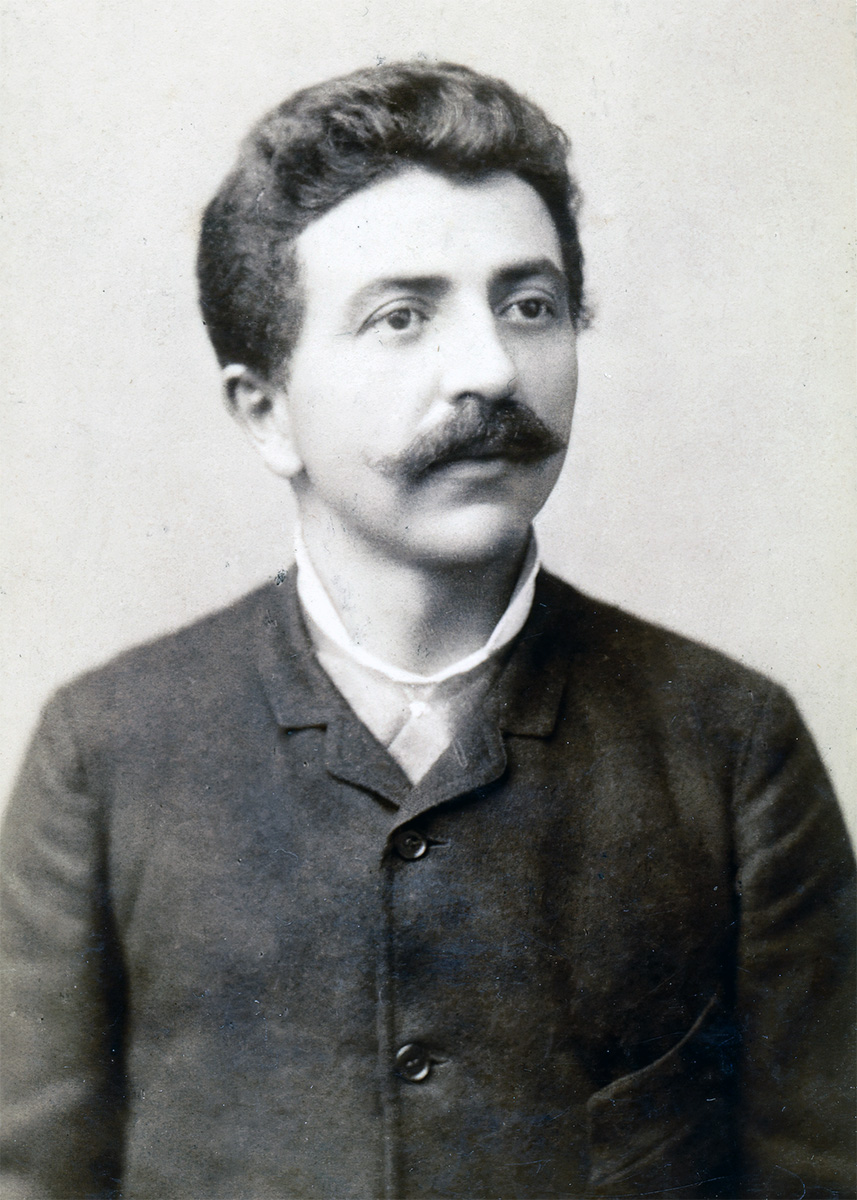 With its dynamic development, Vranjevo soon became the second-largest town in the district after Kikinda and stood out in many respects. As early as 1758, it was noted that the Serbian primary school in Vranjevo had the same number of students as the one in Kikinda. Particularly noteworthy was the great interest of Vranjevo families in educating their children, especially in the 19th century, when secondary education became established, and higher education also began. The most prominent secondary school for Serbian students in Vojvodina, the Sombor Preparandija, had more students from Vranjevo than from any other nearby places during the time Josif Marinković attended. According to enrollment records from 1860 to 1874, the following students from Vranjevo are known: Sava Rajković, Lazar Josimović, Stevan Dušan Knežević, Mladen Belić, Josif Marinković, Arkadije Popović, and Dušan Knežević. Students from Bečkerek included: Andrej Kirilović, Aron Aršinov, Jovan Dimitrijević, and Toma Mirč; from Melenac: Mihail Jovanović, Sima Monašević, Pavao Tanezović; and from Kuman: Jovan Borjanov. At that time, residents of Vranjevo also attended higher educational institutions, especially in Požun, and the most famous were Dr. Vladimir Glavaš, Mladen Mađarević, and Mija Vlaškalin. While studying, they organized gatherings with their colleagues, including Jovan Jovanović Zmaj, Đura Jakšić, and others. These legal professionals remained in Vranjevo and Novi Bečej, where they practiced law.
Educated individuals and the youth of Vranjevo contributed to a very rich cultural atmosphere, which produced a strong theatrical activity. This led to the creation of amateur theater groups, and later, professional individuals, including traveling theaters. Such was the case with Dušan Knežević’s professional traveling theater, which later became the National Theater of Novi Sad. A similar traveling theater by Aleksandar Popović from Vranjevo gave rise to the Sombor National Theater.
It is worth recalling the names of actors who marked the second half of the 19th century: Jovan Knežević-Caca, Aleksandar Popović, Stevan Đekić, and the notable Popović family of priests, who gave Serbian theater actresses Draginja, Ljubica, Jelisaveta-Jeca, Sofija, and Katarina, as well as actors Paja and Laza. Additionally, there were: Nikola Zorić, Teodora-Toda Boberić, Vojislav Turinski, and Aleksandar Nešić-Tucaković.
It is not surprising that high intellectuals visited Vranjevo. A municipal record from Vranjevo in 1862 notes that 16 candidates applied for the position of municipal doctor, and six women applied for the position of midwife.
In this lively and active town, with rich agriculture, crafts, and trade, it was possible during the 19th century to build a new Orthodox church, a Municipal House, and seven new school buildings. Such Vranjevo was declared a small town and granted the right to hold two fairs annually.
This is a general picture of Vranjevo in the 19th century, where Josif Marinković's family lived, despite having a large estate in Kikinda. An interesting fact is that the family's stay in Vranjevo can be tied to the existence of the District, as Josif’s grandfather moved to Vranjevo, and their departure coincided with the abolition of the District. Josif’s father, Jovan Marinkov, was one of the twenty-five municipal heads, and it is possible that he held a position between the district center and Vranjevo itself.
These are all signs of the Marinković family's connection to Vranjevo, which will be evident in Josif’s life during his schooling years. He spent every school break in Vranjevo, where he actively participated in the town's cultural life, organizing "speeches" (musical-literary events) and directing a choir that sang in the church.
The Marinković family lived in the heart of the town, on the busiest part of the main street, where Josif witnessed all public and cultural events, which deeply attracted him. His family’s life was harmonious, with music playing a large role. Josif had two sisters and two brothers, all of whom were musically inclined. His father enjoyed playing and singing along to the tambura, while his mother played the guitar, encouraging the children to join in.
Josif was immersed in music from a young age and played various instruments, including tambura, guitar, harmonica, and piano. As he wrote in his 1907 application to the Serbian Royal Academy, "I taught myself to play any instrument I could get my hands on... I would play without knowing exactly what, and if asked what I was playing, I would simply answer, 'Well, it just came to me.'"
A significant influence on his musical development came from his aunt, a Russian by birth, during visits to her husband, Arkadije, in Belgrade. She was an accomplished pianist and often sang opera arias, teaching Josif that music was a noble art. This had a profound impact on his romantic soul, solidifying his decision from a young age to pursue music as a career.
However, his father did not approve of his musical aspirations, as he envisioned a more stable life for Josif on their estate in Kikinda. Despite the resistance, Josif’s love for music never wavered, and he continued his pursuit of it, even when his father transferred him to various schools. Josif began his studies in German-language school in Petrovaradin, where he lived with a teacher who was also a cantor and had a harmonium at home, providing Josif with ample opportunity to develop his skills on the instrument.
After his father disapproved of his musical activities, Josif was moved to Novi Vrbas, then Novi Sad, and finally Kikinda, where he completed the third year of high school. Josif learned German during his schooling, which later proved useful when he went to Vienna for advanced choral training in 1886.
From 1866 to 1870, Josif spent time at home, hoping to find a way to pursue his musical ambitions. He encountered a group of young men playing and singing beautifully at a wedding in Vranjevo, and they revealed they were students at the Sombor Preparandija, a teacher's school known for its strong music program. Josif immediately decided to enroll there. His parents were not opposed, as they thought that the teacher's career might divert him from his overwhelming musical passion.
This did not happen; on the contrary, he met a young music teacher, Karel Blažek, who was only a few years older than him and who immediately accepted him as a professional collaborator. In his second year, Blažek entrusted him with independent preparations for public musical performances or "speeches," which the students organized several times throughout the year. A particularly significant "speech" took place in 1872, where Marinković’s original compositions were performed: the choir pieces *Ustajte, braćo!* ("Rise, Brothers!") and *Smeša srpskih pesama* ("A Medley of Serbian Songs"), as well as *Banatsko kolo* and *Svatovac* ("The Wedding Guest"), which the composer performed on the harmonium. Marinković's mother and sister attended this event, and they were deeply moved by the great applause and praise Josif received from his colleagues. The praises were particularly emphasized by his teacher, Blažek. Upon returning to Vranjevo, his mother and sister excitedly shared the success with their father, which eventually led him, after much persuasion, to agree to Josif’s trip to Prague for further musical training—but only for one year! This marked the beginning!
Satisfied with this success and full of hope that he would finally receive proper musical education, Josif continued composing with great enthusiasm and organized "speeches" during his breaks, which were very popular in Vranjevo and Novi Bečej. He wrote about this activity in his application for membership in the Serbian Royal Academy: "During school breaks, I had a choir, but I no longer taught by ear. We organized speeches in Vranjevo and Turski Bečej to raise funds for a poor student and for the National Theater..."
His studies at the Organ School in Prague were prolonged, as his father attempted to end Josif’s education each time a school year concluded, wanting him to return to work on the family estate in Kikinda, which offered him a comfortable life. However, this plan never succeeded, as Josif patiently waited for the breaks and returned to Vranjevo, successfully obtaining permission to continue his studies. His education finally concluded in the summer of 1881, and the young artist immediately received an invitation to become the conductor of the Belgrade Singing Society, which he accepted.
This marked the definitive end of his "Vranjevo" period and the beginning of his life and work in Belgrade, which continued until his death on May 13, 1931. He only left Belgrade during the hardships of World War I. There is no reliable information about whether he visited Vranjevo, where his wife Leposava’s parents lived. His last connections to Vranjevo were visits from his son, Dr. Ivan Marinković, who visited the family godfather, Ivan Janković, a florist from Vranjevo. Thus, all ties to Vranjevo were severed, and it was forgotten that the great artist was born and spent twenty-eight years of his life there. It was only in 1951, during the centennial celebration of the composer’s birth, that the Belgrade Singing Society and the Composers' Association of Yugoslavia placed a memorial plaque at the site where his birthplace had been. This brief moment of remembrance was soon extinguished. Neither Vranjevo nor Novi Bečej continued to honor the memory of their distinguished fellow citizen. However, it should be noted that neither the Serbian nor the Yugoslav music community paid enough attention to this.
The glorious years of his career were forgotten, when he was carried in the arms of his choir members from a banquet held in his honor. The famous "speeches" dedicated to his work at the turn of the 19th and 20th centuries were also forgotten. It was forgotten that *Bosanska vila*, a magazine from Sarajevo, published a wonderful, complimentary article on the front page in December 1897: "On October 29 of this year, at 8 o'clock in the evening, the hall of the Great School was packed with the finest audience of the capital; there were numerous corporations and representatives from singing societies from Serbia and abroad. Dr. St. Marković, professor at the Great School, was present and warmly greeted a humble worker in the arts, who had dedicated his life to his country. To whom were all those greetings, congratulations, wreaths, and diplomas addressed? A man of medium height, with black hair and middle-aged, stands up. His walk is unsure, his gaze very calm, and his smile is pure and gentle. He barely speaks: 'Thank you! Thank you!' This is Josif Marinković... *Bosanska vila* salutes the honoree and wishes that he may enrich Serbian art with his new works, that he may bring his country songs and music, spreading the beautiful Serbian melody 'from the Balkans to the Adriatic...'
Regarding the phenomenon of forgetfulness that affected many music experts and institutions, Professor Branko Dragutinović wrote in the 1938 issue of the magazine *Dvadeseti vek*, in his conclusion: "In the era of rising nationalism, which expressed itself through music, Marinković was known, popular, and famous. After the war, withdrawn and modest, Marinković somehow remained on the sidelines, abandoned and forgotten. This was largely due to the popularity of Mokranjac and his *Rukoveti* (a collection of Serbian folk songs) and the wave of modernism that strongly swept through our musical culture in all its manifestations. Today, when collections of his interesting and significant compositions are being published one after another, there is a movement for the rehabilitation of Marinković, aimed at highlighting the purely artistic values of his work and definitively establishing the greatness of the first Serbian original composer and his importance in the development of Yugoslav musical culture."
This mentioned movement to shed more light on Marinković's work struggled to gain the support of significant experts until it was finally acknowledged by Professor Vlastimir Peričić, who in 1967, under the auspices of the Serbian Academy of Sciences and Arts, published a comprehensive and scholarly study titled *Josif Marinković. Life and Work*. In addition, professional musicians' associations published his most significant works several times, but even then, it was rare for independent or school choirs to perform them.
Vranjevo took the first significant steps to renew the memory of its great fellow citizen at the initiative of Ivan Janković, a florist, the first neighbor, and godfather of Marinković's family. He drew the attention of the newly arrived director of the Vranjevo Primary School to the need to restore the memory of Josif Marinković. The school then established direct contact with the descendants of Marinković’s daughter’s family. At the school’s request, Josif Marinković’s grandson, Dr. Ivan Valčić, donated a rich collection of Marinković’s personal belongings that he had kept for a long time. The school then established the *Josif Marinković Memorial Collection*. This was one of the steps taken to popularize the name and work of the artist. This happened in 1970-1971, during the celebration of the 120th anniversary of Marinković’s birth, when the following actions were carried out:
- The main street in Vranjevo, where the artist's house once stood, was named *Josif Marinković Street*.
- The Vranjevo Primary School changed its name to *Josif Marinković Primary School*.
- The aforementioned Memorial Collection was established.
- The local choir was named *Josif Marinković Society for Choral Music*.
- From 1971, every fifth year, the *Music Festival of Children of Vojvodina* has been held in Novi Bečej.
- In 1993, the *Obzorja na Tisi* solo song competition was established.
- In 2001, the Novi Bečej post office issued an envelope and stamp featuring Josif Marinković’s likeness.
However, despite these efforts, these actions were not enough to properly showcase Marinković’s work—his compositions were rarely performed, as music teachers and educators were often hesitant to include them in their programs.
At present, there is an issue concerning the survival and uninterrupted operation of the *Josif Marinković Memorial Collection*, as the same rooms have been converted into a pedagogical cabinet, and there are no other suitable rooms within the school. Efforts should be made to resolve this, either within the school or in one of the appropriate public buildings.
With this welcoming speech, the Scientific Conference in honor of the 150th anniversary of Josif Marinković’s birth was solemnly opened on September 28, 2001, at the Matica Srpska in Novi Sad.
(*Josif Marinković (1851-1931) Music at the Crossroads of Two Centuries*)
Comments