



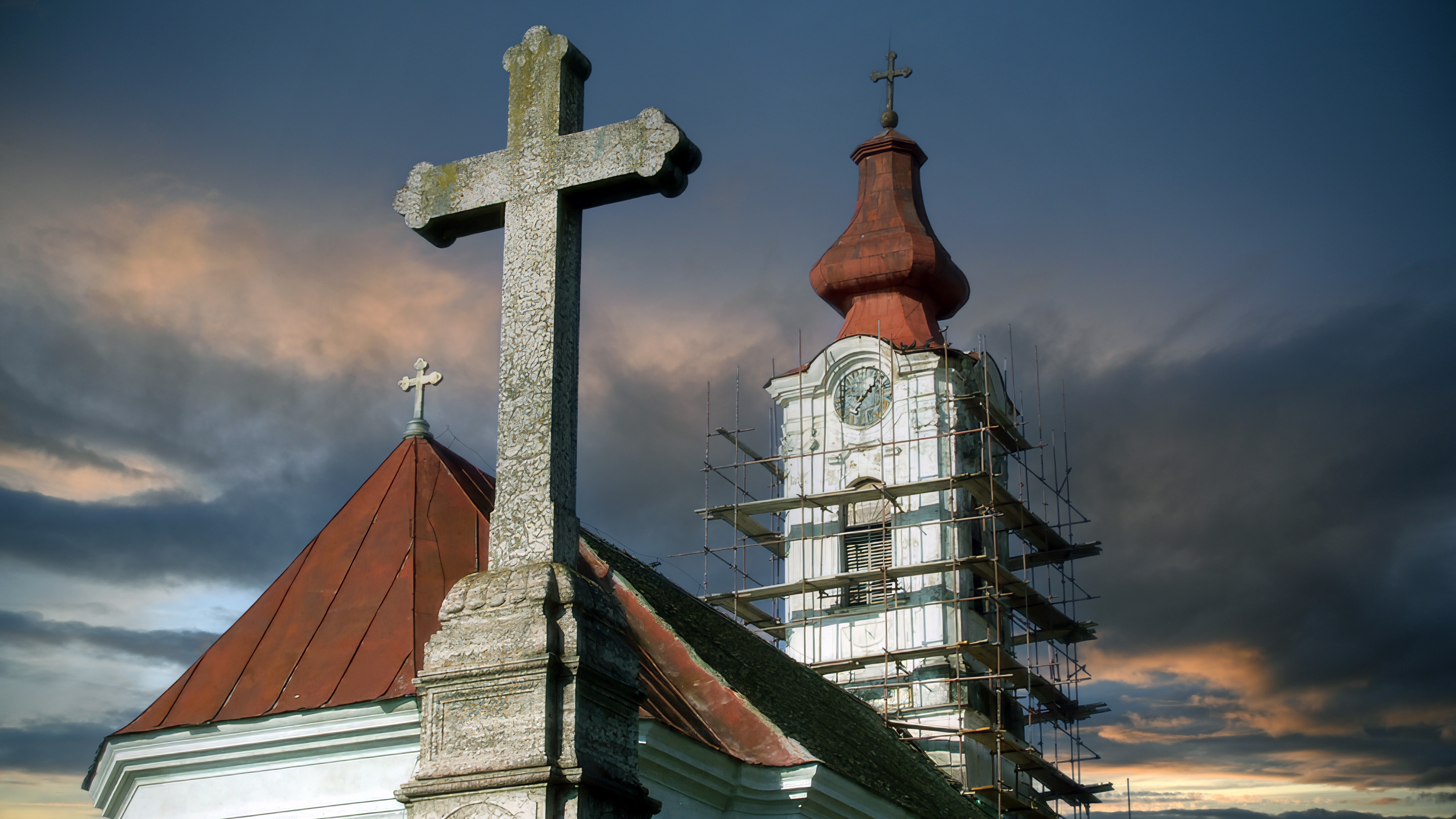
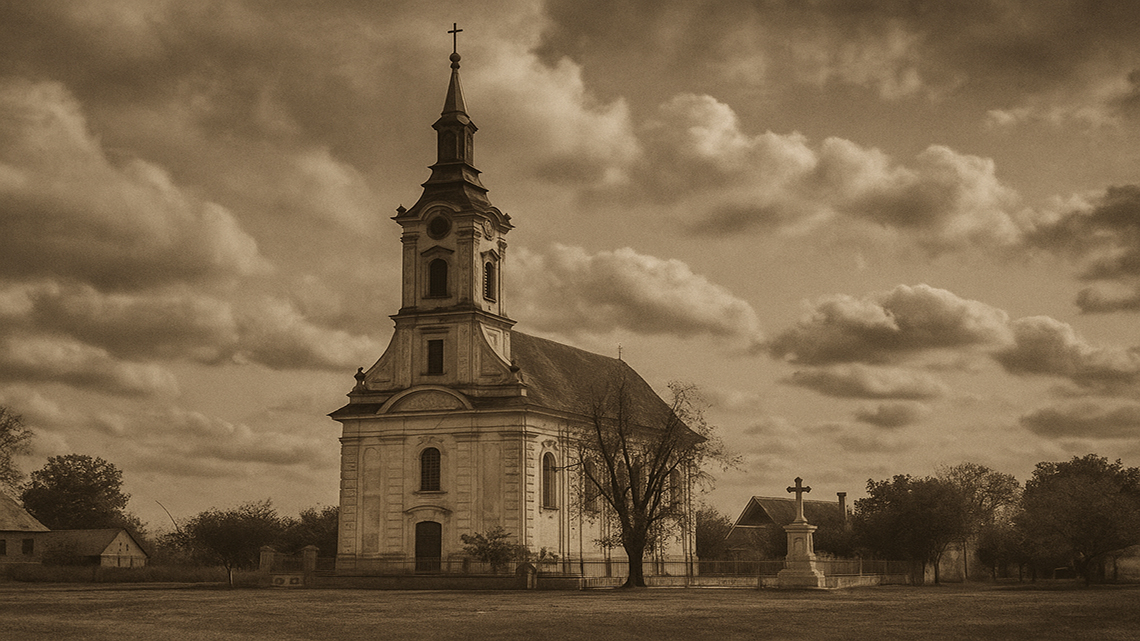
Since the great storm of 1931 toppled the slender tower of the Orthodox Church in Novi Bečej, only a few photographs and postcards remain as documents of that never-forgotten, much-talked-about ornament of our church. When a new tower with a wider structure and a considerably shorter height was erected later that same year, the citizens, especially the faithful, did not look upon it with much affection.
Although it was said to be only a temporary solution, they felt sorrow, yet they understood that in an era of severe financial depression, when money was scarce, such an endeavor was simply unthinkable.
 Still, among the townspeople, a glimmer of hope persisted—that one day, someone would remember, and with the help of the dignitaries of the Serbian Orthodox Church and the state, restore their beloved tower. After World War II and the transition to a socialist-communist regime, even that faint hope faded. Difficult times followed for church parishes, and the communist authorities were not particularly favorable toward religious practices. When, in 1952, the cross from the town center was moved to the Orthodox churchyard, it became clear to everyone that few of them, or even their children, would live to see the long-awaited slender tower.
Years and decades passed under the one-party system, until in 1989, with the changes sweeping through Eastern Europe, followed by the dissolution of the Soviet Union and Yugoslavia, communism came to an end. The values of a multi-party society were embraced, and the church once again assumed its former role. In the wake of these changes, the state began restoring dilapidated and neglected religious buildings. At the beginning of the 21st century, this process reached our municipality as well. In 2009, the Serbian Orthodox Church in Novi Bečej was scheduled for restoration.
 When, in October 2011, the tower was dismantled and removed, many among the older generations hoped that the time had finally come to install a replica of the slender tower from eighty years ago. Every day, they visited the churchyard, gazing up at the church’s peak and carefully observing every detail of the wooden framework being erected for the new tower. By late October, the wooden structure seemed somewhat odd to them—it increasingly reminded them of the recently dismantled tower. But by the first day of November, everything was clear. Their hopes, and the hopes of their ancestors, would not be realized this time either.
The state, the local government, and the Institute for the Protection of Cultural Monuments in Zrenjanin, with the approval of the church parish, had embarked on a restoration project intended to be completed in 2011—precisely on the 80th anniversary of the destruction of the original slender church tower. And so it was—by late December 2011, the church restoration was finished. Everyone was satisfied and proud, except for the elderly citizens mentioned earlier, who, in the opinion of the author of these lines, had every right to expect that the replica of the slender tower would once again shine and adorn the top of the Orthodox Church in Novi Bečej.
Unfortunately, a rare opportunity—this being the second—was missed to correct what the hurricane-like storm had destroyed in 1931. As we know, faith does not die, and hope does not fade even when there seems to be no more hope. So, my dear fellow citizens, let us not lose hope—the time will come when our dreams will come true, though by then, it will already be a story for our descendants.
Comments