



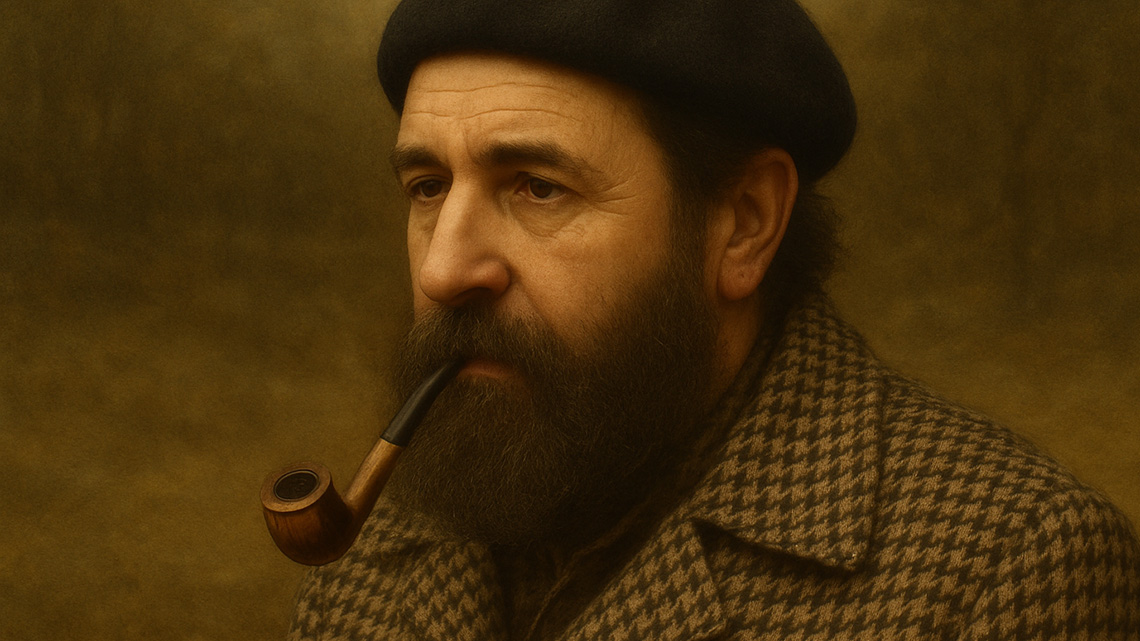
Dragiša Bunjevački, a painter from Novi Bečej and the founder of the group “Selo,” was born in 1925 in Pančevo.
He was an artist who lived to paint, but never lived from painting nor painted merely to survive.
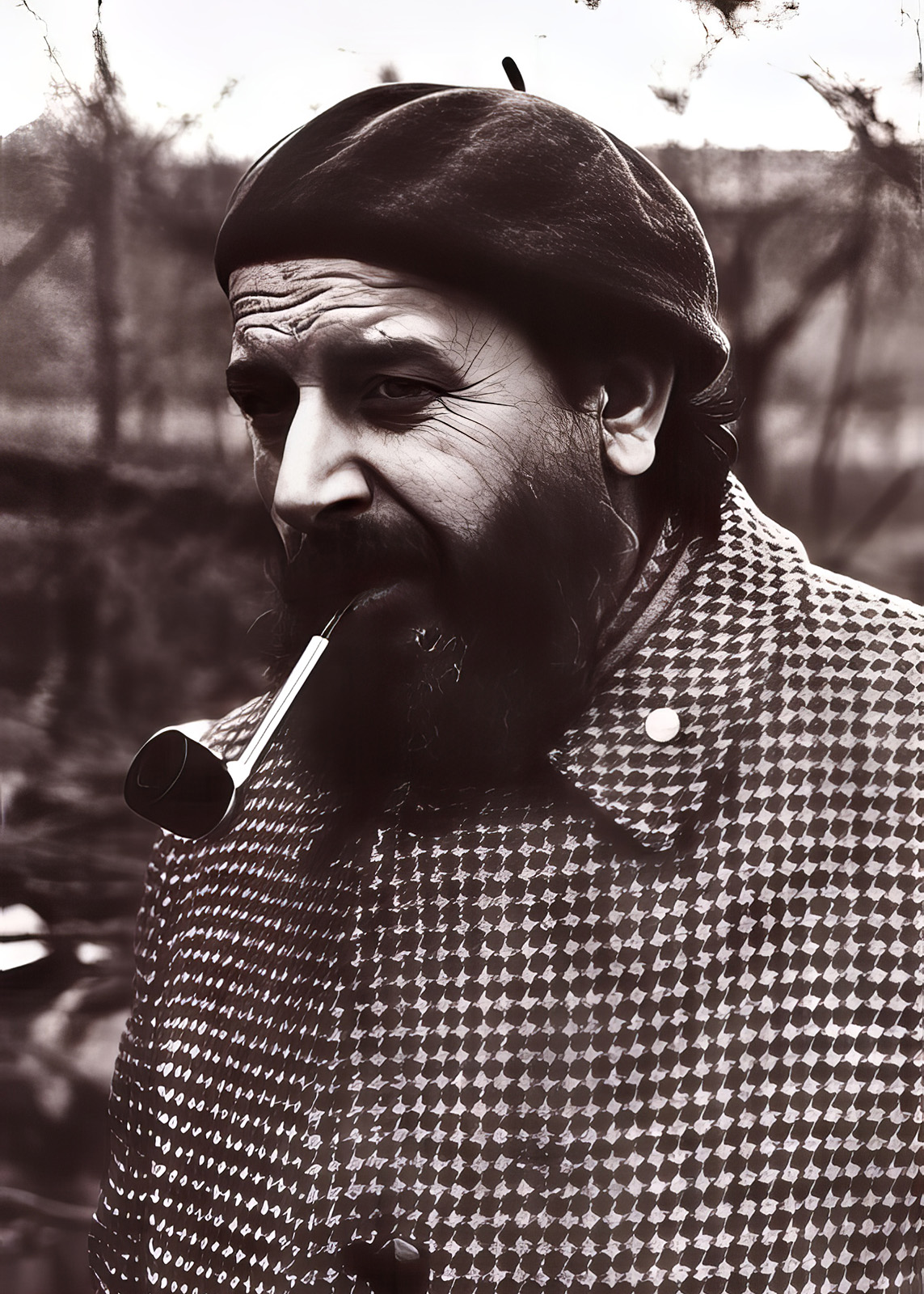 The strength of his artistic creation lay in his cosmopolitan spirit and outlook. Unconcerned with established norms and petty-bourgeois security, he lived simply, freely, and bohemian-like. Due to life circumstances and the social status of his parents, he changed many professions from an early age – newspaper vendor, circus horse trainer, café musician, to factory workshop worker. These experiences brought him close to ordinary people: those who worked hard, earned little, and lived cheerfully.
His life unfolded outside clichés – dynamic and difficult, yet deeply intertwined with art. Bunjevački was one of the most solitary painters, and his body of work resounds with personal experiences and a unique vision of the world. Through his paintings, he managed to capture the aura of time, evocation, and transience.
Some of his best works were dedicated to prominent figures such as Rousseau, Malraux, Sartre, Bihalji, and Hegedušić. In his visionary and poetic compositions, the portraits of these personalities float in space, weightless and detached from the ground. In this way, he rejected static forms, emphasizing his striving toward heights and the symbolic power of portraiture.
A large part of his work was autobiographical. He often cut across the canvas to create a shifted horizon, onto which he symbolically placed a circus tent, a horse with a trainer, a dove, an easel, a book, or his cat, who never left his side. From 1938, when he painted his first picture, until his death in 1983, Bunjevački created numerous works inspired by nature, freedom, restlessness, and meditation.
He was communicative and sociable, witty and simple, always willing to help colleagues, yet never fully surrendering himself to people. He died prematurely at the age of 58. However, by the way he painted, lived, and thought, he became an exceptional figure in Serbian and Yugoslav naïve art.
Source: Koviljka Smiljković, “Naïve Art of Serbia”
Comments