
The occupier was usually not satisfied with just the investigations carried out after each partisan action, as they did not yield the desired results. However, since he could not find the culprits, he took other measures: conducting sudden raids, searching suspicious houses down to their foundations; blocking parts of villages and fields, and searching barns, sheds, and huts; setting ambushes on main approaches to the village; randomly arresting villagers, mistreating, beating, and torturing them in various ways. He also took many other measures, particularly trying to establish a dense and secure intelligence network within the movement by encouraging wavering individuals and traitors to provoke, denounce, and betray others.
Breathe life into the forgotten stories of Novi Bečej through our rich collection of articles dedicated to people and events from the past. Travel through the ages, exploring the colorful array of historical moments that shaped our city.
Share this page on social media
Stevan Davidović was born on October 6, 1949, in Novi Bečej. He completed his primary and secondary education in his hometown, where he also graduated from the local Grammar School. He went on to earn a degree from the Higher Pedagogical School in Zrenjanin, majoring in Serbo-Croatian language and the history of Yugoslav literatures.
In 1995, Novi Bečej thrived despite economic challenges. The town, closely tied to the Tisa River, saw growth in education, culture, tourism, and community initiatives.
In March 1944, a group of underground fighters spent some time at the farmsteads of Dušan Malešev and Sava Pajić in Korektovo. By mid-March, joined by several more activists, they set out for Fruška Gora.
Telečki was an unusual, curious, lively, inquisitive, multifaceted, and, above all, restless personality. At the dawn of our first professional theaters, he quickly emerged in the spotlight and became our first acting star.
All of us from Novi Bečej are well acquainted with the beautiful two-story building with an Einfort (arched passage) entrance on the main street, located between the Miloje Čiplić Elementary School and the Sakač family house. Today, on the ground floor of this building, to the left of the entrance, there is a commercial space (formerly the Trocadero café), while on the right is the headquarters of the Tourist Organization of the Municipality of Novi Bečej.
Until 1955, kindergartens were part of schools. There were four groups in Serbian (2 groups in Vranjevo and 2 groups in Novi Bečej) and two groups in Hungarian (1 in Šušanj and 1 in the center of Novi Bečej). On September 1, 1955, the kindergarten became independent, with its own administration, and began to focus exclusively on the problems of managing and developing its groups.
To successfully achieve the goals and objectives of preschool education, a qualified teaching staff was essential. Former educators with five years of secondary education graduated from the Pedagogical Academy for Educators while working between 1975 and 1979. They took pride in the fact that out of 21 educators, 19 graduated from the Academy.
During the summer, the occupying authorities made sure that every resident over the age of 18 was supplied with an identity card. Without such a document, no one could leave the village, and often, it was impossible to move freely even within the town. This measure by the occupiers was a novelty for the population. In the pre-war period, very few villagers possessed identity cards, so the introduction of this new regulation sparked various reactions. However, it was clear that the primary purpose of these identity cards was to help the occupiers implement more effective control over the movement of the population, as well as to identify suspicious individuals, of whom there were more and more, causing the enemy increasing concern.
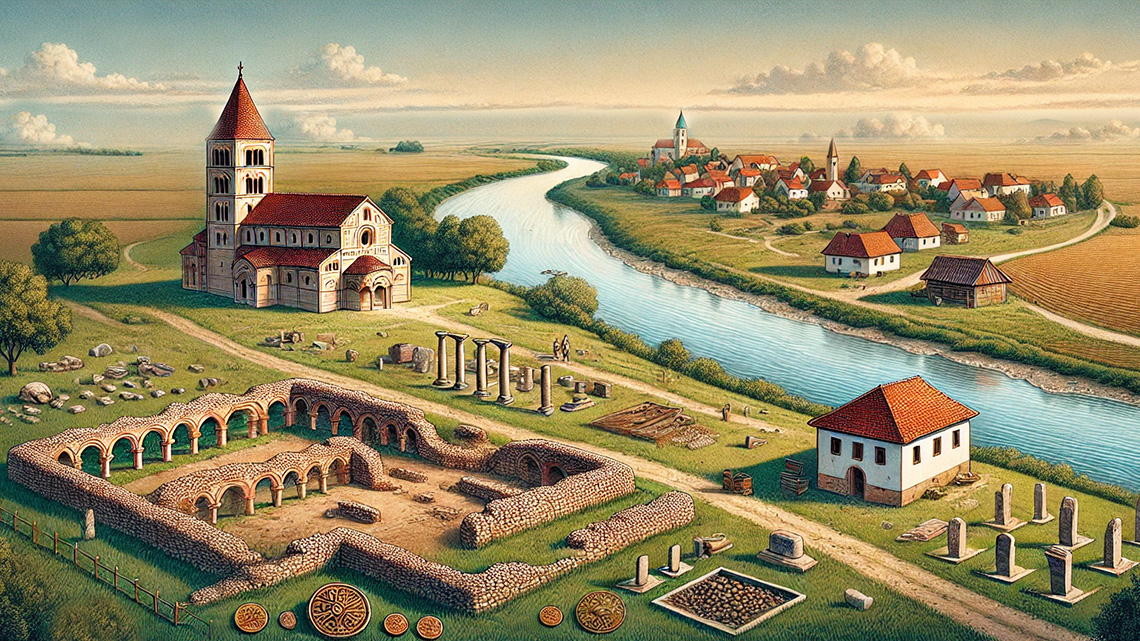
The medieval settlement of Arača is located on the southern shore of Crna Bara, a watercourse within the alluvial plain of the Tisza River, about 13 kilometers east of its riverbed. The name of this settlement, also referred to in sources as Potiska Arača, is associated with the ruins of a basilica and monastery.
In 2008, Novi Bečej's Elementary School "Miloje Čiplić" will mark its centenary. Few of today's students, as well as older ones, even know who the person after whom our school is named was, and who it was named after following World War II.
Drinking in front of stores in Serbia is not just a custom – it’s an institution! It dates back to the first store and the first bottle of rakija – essentially, since the dawn of time. Even the old craftsmen in the Ottoman period would take a “merak break,” drinking in front of shops while debating if it would rain.
One of the participants in the long-lasting struggles for the vacant Hungarian throne was the Serbian nobleman Stefan Balentić, a descendant of the prominent Serb Toma Balint and a relative of despot Radič Božić – all of whom served the Hungarian nobility. This nobility was partly aligned with Ferdinand of Habsburg, and partly with John Zapolya, or, depending on the situation, would shift its loyalty entirely or partially – sometimes to one, sometimes to the other claimant.
In early September 1941, the partisans spent some time at Livade near Galad, in the immediate vicinity of Milan Veskov's farm. Not all the fighters were present. A group had recently left for Ostro, as part of a new unit. Those who remained—Klima, Laza, Selika, Arkadije, Bracika, and Dragomir Pajić—were making the final preparations to transport the gathered supplies and food.
The enemy patiently waited for the first heavy snow to cover the village and fields before launching a general hunt for the People's Liberation Movement (NOP) and its prominent fighters in Dragutinovo and Beodra; especially targeting the Dragutinovo Partisan Detachment, which had caused them considerable trouble during the summer and autumn.
On December 31, 1941, municipal gendarmes distributed about eighty calls for forced labor throughout the village. The notices stated that a male member from each household should report to the municipality on the morning of January 1, bringing a shovel or a spade with him.
Last night, at half past seven, a member of the Serbian National Theatre, Serbian actor and writer, the most outstanding theatrical character artist in the Slavic South—Laza Telečki—passed away at the age of 33. Tuberculosis, which has become a common ailment among the youth, and in his case, almost a family curse—having already claimed two of his brothers and a sister—has taken his life.
Novi Bečej is a small town that, before liberation, was considered a town with about 7,000 inhabitants. And when you consider that many of its residents engaged in literature over a period of just about 30 years, and most of them wrote poetry, it can be boldly said that there was a real poetic school in Novi Bečej. Especially when you take into account that a group of the local youth at the time, part of its young intelligentsia, wrote poems as if by some mutual agreement, and some even by an explicit agreement — so much so that they almost literally formed a genuine poetic school.
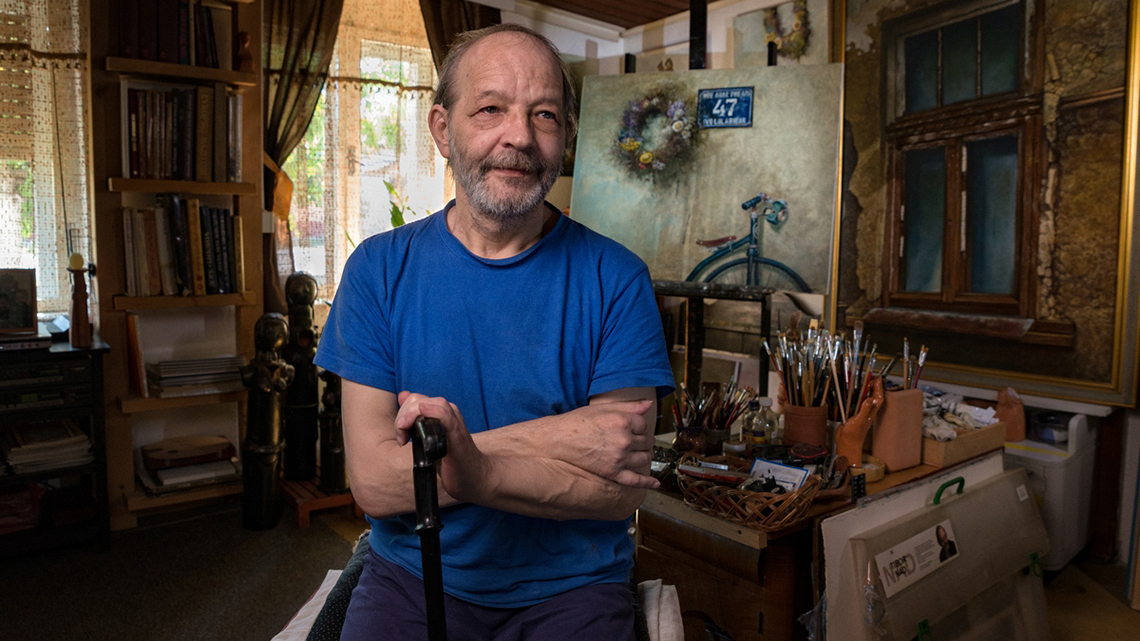
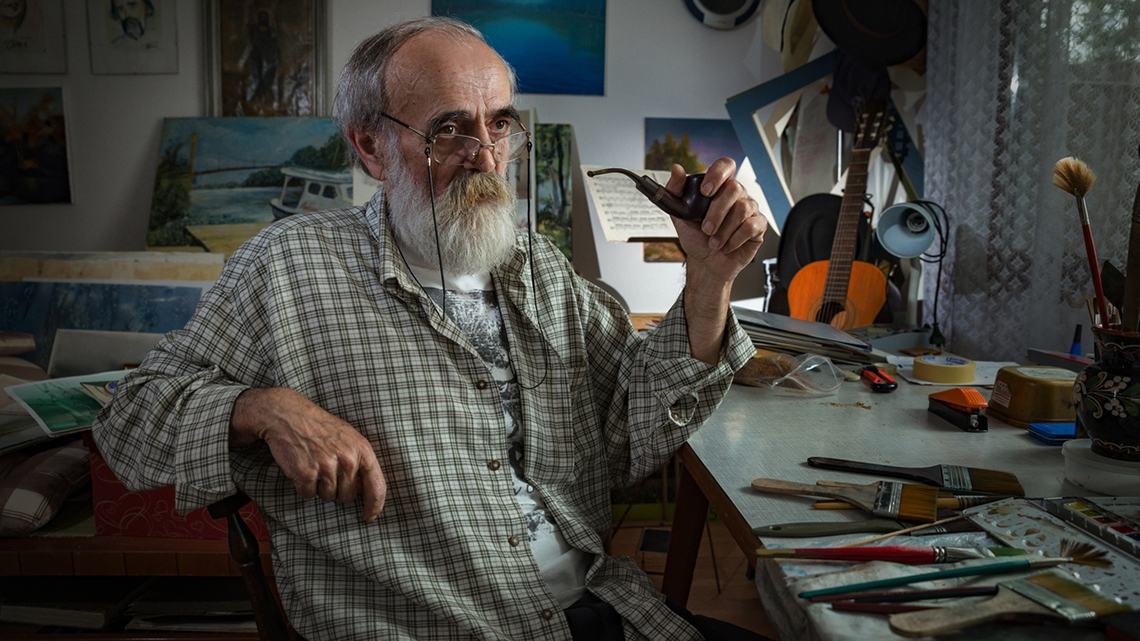
Janos Mesaros entered the stage of naïve art in the early 1960s. As a young and talented painter, he became a member of the group of naïve artists “Selo” founded in Novi Bečej by Dragiša Bunjevački. Alongside Bunjevački, one of the most remarkable representatives of naïve art in Serbia, the group also included Milica and Milivoj Mirić, Svetozar Kiselički, Tivadar Košut, and Janos Mesaros.
Ivan Jovanović, an only child of Dragomir Jovanović, a merchant, and Zlata Jovanović, née Aranka Stanišić, a teacher, was born in Novi Bečej on February 13, 1928. The Jovanović family house was located in the heart of the town on Žarka Zrenjanina Street, number 1. While his father Dragomir was busy with the family business, Ivan mostly grew up alongside his mother and his aunt Leposava Jovanović, a teacher, who were known not only for their strictness but also for their versatility and fair pedagogical approach toward children.
Laza Telečki (1839—1873) made his debut at the National Theater (SNP) on Sunday, June 10/22, 1862, in the lead role of Avakum in the comedic play Better to Know than to Have by Jovan Ristić Bečkerec. "This play, which lacks a distinct plot, gained much through excellent performance," wrote the Danica journal on June 20.
The Law on Social Care for Children came into effect on July 2, 1992, marking the beginning of changes in the functioning and operations of preschool institutions.
The 1992/93 school year was extremely challenging, characterized by high inflation and difficulties in making ends meet. The Ministry of Veterans' and Social Affairs provided food supplies for the children's meals.
The founder of the first Serbian professional theater, Jovan Knežević Caca, was born in Novi Bečej (Vranjevo) on September 26, 1818, to father Mojsije, a merchant, and mother Sofija, a homemaker. His love for theater and actors was nurtured in his parents' home.
Vranjevo emerged as a settlement following the disbandment of the Potisje-Pomorišje Military Frontier in 1751. The Serbs who had defended the Austrian Monarchy from the Turks and settled in these areas after the Great Migration of 1690, but chose not to emigrate to Russia, established the so-called Velikokikinda District under the Austrian Crown, with its seat in Kikinda.
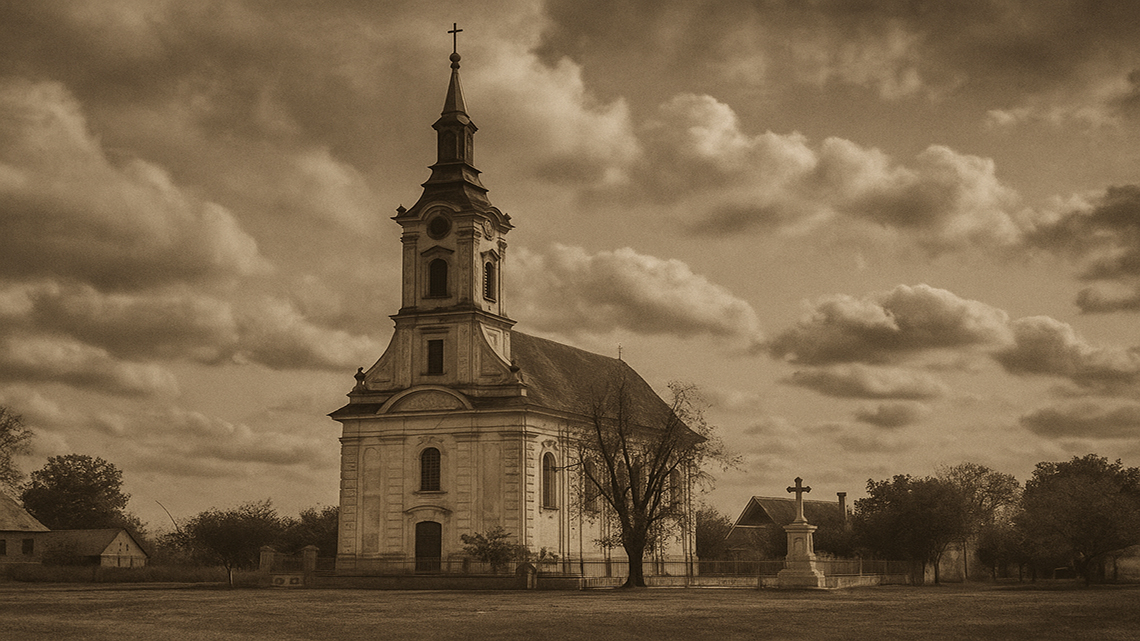
Since the great storm of 1931 toppled the slender tower of the Orthodox Church in Novi Bečej, only a few photographs and postcards remain as documents of that never-forgotten, much-talked-about ornament of our church. When a new tower with a wider structure and a considerably shorter height was erected later that same year, the citizens, especially the faithful, did not look upon it with much affection.
Even during the pre-war revolutionary activities, both the Beodra and Dragutinovo communists, along with other progressive individuals, established close mutual cooperation. The peak of this relationship was the intimate and comprehensive collaboration between the two partisan cells – Dragutinovo and Beodra – on all matters of ideological and political struggle against the anti-people regime: against bourgeois and petty-bourgeois parties, and against anything that hindered or delayed the realization of the age-old aspirations of the masses for freedom, equality, and a humane life.
Autumn had arrived, and the corn harvest was in full swing. Many fields were already bare, and each day, there were more and more heaps of corn stalks lying in the fields. This prompted the leadership of the Northern Banat Partisan Detachment to seriously consider how to enter the winter with such a large unit, survive, and save as many people as possible. On the other hand, the goal was to prolong the armed struggle during the winter period. Therefore, it was necessary to carry out a reorganization that would be most suitable for the given time of year and the terrain, which, after the crops had been harvested, stretched out for tens of kilometers.