



He emerged in 1930 during the monarcho-fascist dictatorship of King Alexander Karađorđević and General Petar Živković. It was a time of the darkest reaction and the triumph of the Law on the Protection of the State. This was an era of strict illegality for the Communist Party, where its fighters, carrying the banner of revolution, were sentenced to long prison terms, dying under police beatings, or being shot while "attempting" to escape—a justification often used by the police for their crimes.
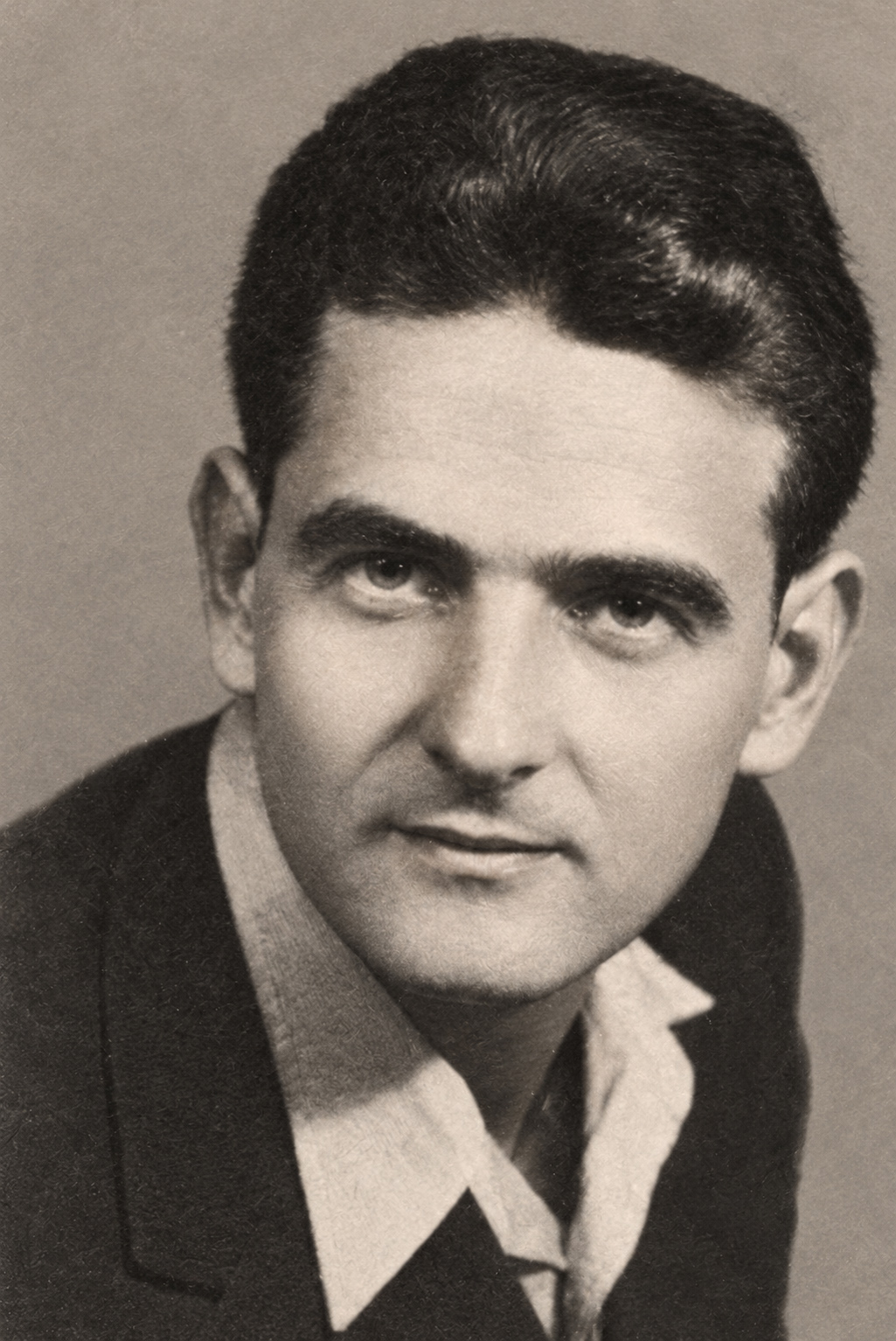
In such conditions, the young eighteen-year-old farmer Ivan Vioglavin lived, worked, and grew. Born in Kumane in 1912 into a poor family, he completed elementary school and, as a young man, experienced the full extent of the injustice inflicted on the poor by capitalists. Since his family's small landholding of a few acres provided neither "life nor death," Ivan had to work for local landowners. Thus, he experienced capitalist exploitation firsthand from an early age. After work, he would read at night and on Sundays, devouring everything he could get his hands on. Initially, he read novels and stories but gradually sought out Marxist literature. To enhance his understanding, he associated and debated with people much older than himself. As one of his friends, I can attest to the passion with which he read and his deep understanding of the material.
Among his peers, he was undoubtedly the most capable and influential. Tall, with regular features, cheerful, and above all intelligent, he quickly won over the local youth with his demeanor.
By the time he joined the army in 1931, he had already gathered a wide circle of young Communist Party sympathizers loyal to the workers' movement. Although he had only an elementary education, his strategy was to discuss everything he read with his comrades to fully grasp it. This approach allowed him to quickly stand out.
His time in the army temporarily slowed Ivan’s development, but he continued studying even there. Upon returning from the army, he reconnected with youth and activists in the movement, including Laza Milankov, who proposed founding a branch of the League of Communist Youth of Yugoslavia (SKOJ). In 1933, Ivan and two comrades established a SKOJ organization in their village.
Ivan worked in this organization briefly before being reassigned by Laza Milankov and the Local Committee of the Communist Party of Yugoslavia (KPJ) to a new role in the agricultural union, which was secretly founded in the winter of 1933. Here, he fully applied himself, dedicating his energy to organizing the rural poor. As the union’s president, he led two major strikes: a strike by chamomile pickers and another by agricultural workers. Despite being only twenty years old, his leadership ensured victories in these strikes against powerful landowners and wholesale traders.
Recognizing Ivan's abilities, Laza Milankov, the Provincial Committee Secretary of the KPJ, entrusted him with increasingly significant tasks. Ivan was tasked with founding Communist Party organizations throughout Vojvodina. He traveled to Melenci, Elemir, Aradac, Novi Bečej, and other towns, holding meetings, providing instructions, and distributing party publications. He maintained connections with Stajićevo, Livade, and even Novi Karlovci. Alongside these tasks, Ivan worked with the youth, connecting SKOJ with the university youth organization and Ivo Lola Ribar. A gathering was organized in Kumane, where Lola Ribar gave a speech that left a lasting impression on the residents.
As the Provincial Committee Secretary's headquarters were in Kumane, Milankov also assigned Ivan other tasks. However, in the fall of 1936, the Provincial Committee was infiltrated, leading to the exposure of both Laza Milankov and Ivan. Ivan was sentenced under the Law on the Protection of the State to two years in prison, which he served in Sremska Mitrovica. While in prison, he attended courses on political economy and participated in discussions on trade unions and agrarian issues. Prison became a school for revolutionaries. He used this time to prepare for further struggles upon his release.
In November 1938, Ivan was released and resumed leadership of the party. He not only strengthened the Kumane organization but also rebuilt connections, traveling from town to town to establish and restore party organizations across the region. He organized SKOJ activities, worked with amateur theater groups, and led youth excursions to the Tisza River, using these outings for discussions and as SKOJ meetings.
Through his tireless efforts in party work, revolutionary zeal, and intelligence, Ivan gained significant popularity and authority. He maintained contact with prominent revolutionaries such as Žarko Zrenjanin, Toza Marković, and others.
In 1940, his exceptional activity earned him a position in the Provincial Committee for Vojvodina, and he moved to Novi Sad. He remained there until his death. Ivan was hanged on January 10, 1942, in Veliki Bečkerek.
Comments