



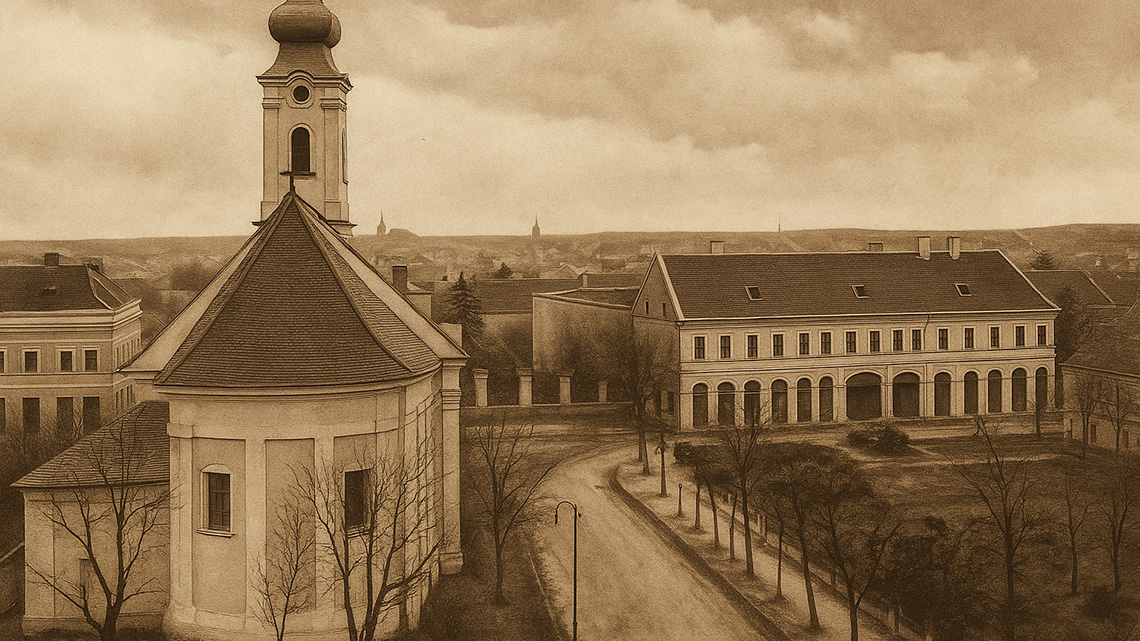
According to archaeological research, human settlements existed in this area as early as 3000 BC. The oldest and best-studied sites are Borđoš, southwest, and Matejski Brod, northeast of Novi Bečej. From the medieval period, the best-preserved monument is Arača, located about 12 km towards Novo Miloševo. This monastery dates back to the 11th century and represents the original location of Vranjevo.
The first reliable mention of Novi Bečej dates from 1332–1337. Hungarian historiography considers it to have been the property of the Bečei family, which traces its origins to the Árpád dynasty. It is believed that Bečej (Vila Večei) was mentioned earlier, in 1238, in a charter issued by King Béla IV, confirming the settlement as the possession of the Székesfehérvár convent of the Knights Hospitaller. However, it is not entirely certain that this refers to the same place. King Sigismund of Luxembourg later granted it first to the Losonci noble family and then to Serbian Despot Stefan Lazarević.
As a fortress, Novi Bečej was mentioned in 1342 under the name Castellanum de Beche, and as a town in 1441. After Despot Stefan, Bečej came under the ownership of Despot Đurađ Branković. In the 15th century, assemblies of the Torontal County were held in Arača, while the Bečej fortress frequently changed rulers. In the first half of the century, it was in the possession of the Serbian despots. By the end of the 15th century, Despot Vuk Branković, known as the "Fiery Dragon," successfully defended it from the Ottomans. After the extinction of the Branković dynasty and the death of King Matthias Corvinus, Bečej came under the ownership of the Gereb family of Vingárt. In 1514 it was seized by the rebels of György Dózsa, but after the uprising was crushed, it was held by István Verbőci, a nobleman of John Zápolya, until Serbian vojvoda Stefan Balentić took it in 1531.
Around the fortified town and its suburbs, several settlements were located: Berek, Borđoš, Matej, Szentkirály, Šimuđ, Vran, Arača, and Kovince. After liberation from Ottoman rule, Novi Bečej (known in Hungarian as Török Becse – Turkish Bečej) developed as a feudal estate, separate from Vranjevo to the north.
In 1551, Grand Vizier Mehmed Pasha Sokolović captured Bečej. In 1594, it was briefly taken by Banat Serbs during their uprising, which was later suppressed by Sinan Pasha. Even under Ottoman rule, the town did not become deserted. The Ottoman traveler Evliya Çelebi described it, noting that in 1717 it had 20 registered Serbian households and belonged to the Becskerek district.
Following the Treaty of Karlowitz in 1701, the fortress was destroyed to its foundations by demolition. In the 1717 census, Török Becse (Turkish Bečej), today’s Novi Bečej, was recorded as a village with only twenty inhabited houses. A significant change occurred on March 31, 1750, when Török Becse was renamed Francisdorf. Over time, this name was Serbianized into Franjevo (later Vranjevo). In 1920 the name was changed to Novi Bečej, and in 1946 the old settlement of Vranjevo and the newer Novi Bečej were united under the name Vološinovo. In 1952 the historical name Novi Bečej was restored and has remained in use ever since.
The development of the town and its economy was seriously affected by a major fire in 1886 and a cholera outbreak in 1893 (Mečkić, 1989).
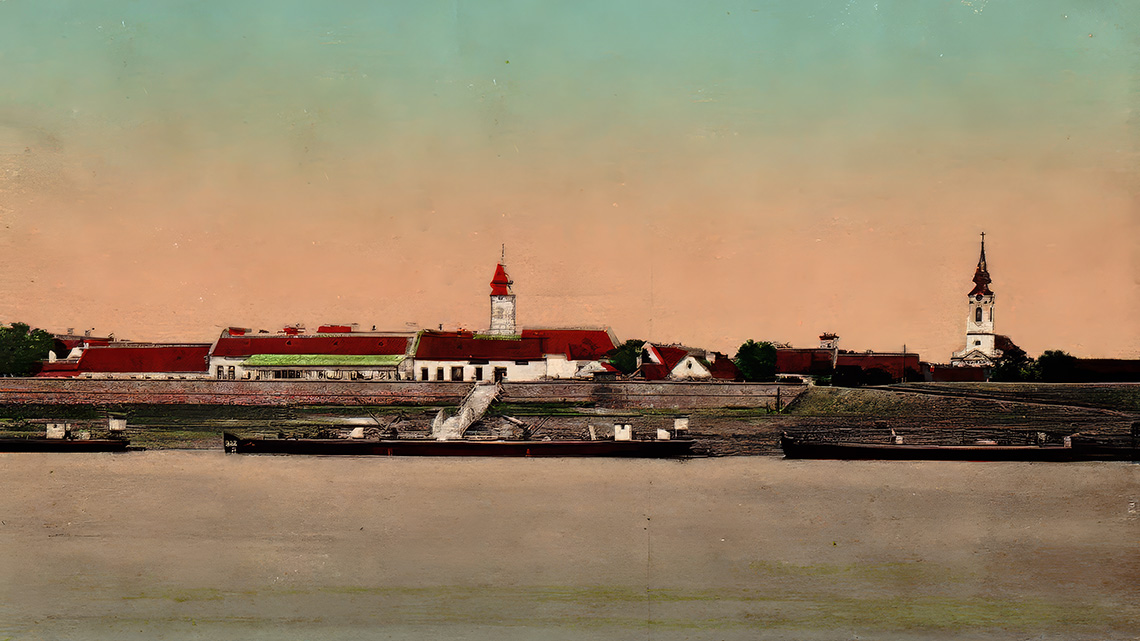
Key milestones in the town’s history include: the founding of the first school in 1732 (which became regular from 1830), the construction of the church in 1741, the arrival of the railway in 1883, and the establishment of the power plant in 1927. At the beginning of the 20th century, the remains of the Bečej fortress were completely demolished to improve river navigation.
From 1919, Novi Bečej became part of the Yugoslav state. Today, it is the administrative center of the municipality of the same name, which also includes the settlements of Novo Miloševo, Kumane, and Bočar (Lazić L., Stojanović V., Pavić D., Ivkov Džigurski A., Blažin N., 2010).
Comments