



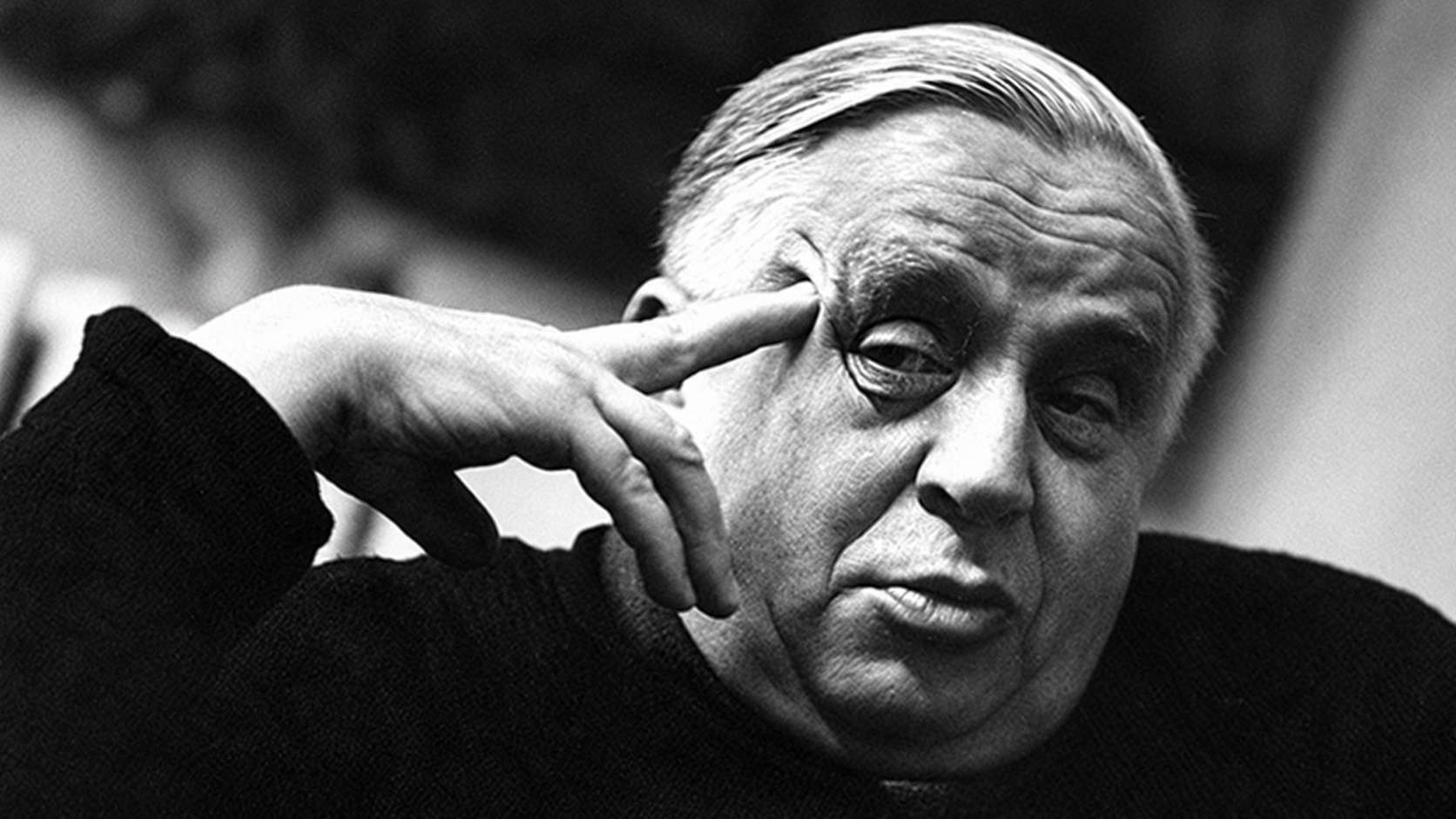
Branko Ćopić belongs to the writers whose books accompanied generations of readers growing up throughout Yugoslavia. His stories connected the world of childhood with the experience of war, bringing together cheerfulness, sadness, and concern for others. People from his native region held a special place in his writing, along with their imagination, speech, and ability to preserve their humour even in difficult circumstances. Behind the distinctive warmth of his storytelling lay a critical view of the society in which he lived.
From Hašani to a Literary Career
Ćopić was born on January 1, 1915, in Hašani, near Bosanska Krupa. He grew up in a farming family and lost his father at an early age. His grandfather and uncle had a strong influence on his childhood, encouraging his imagination through their stories. Bosanska Krajina remained a lasting source of his literary themes and characters.
After attending lower secondary school in Bihać, he trained as a teacher and later studied in Belgrade. He graduated from the Faculty of Philosophy in 1940, specialising in pedagogy. While still a student, he published stories in the newspaper Politika, and in 1939 he received the Milan Rakić Award.
His first collection of short stories, Pod Grmečom (Under Grmeč), appeared in 1938. It was followed by Borci i bjegunci (Fighters and Fugitives) and Planinci (Mountain People). These books already displayed the qualities that would distinguish his storytelling: accessible language, lyricism, humour, and close attention to the lives of ordinary people.
War and the Lives of Ordinary People
Ćopić joined the Partisan movement in 1941. His wartime experience became an important part of his writing, but people—their weaknesses, fears, and relationships—remained at the centre of his books. [2][3]
In works such as Prolom, Doživljaji Nikoletine Bursaća (The Adventures of Nikoletina Bursać), Gluvi barut, and Osma ofanziva (The Eighth Offensive), he portrayed ordinary people caught up in historical upheaval. Humour held a special place in this world: it allowed his characters to preserve their spirits and enabled the storyteller to examine their actions with both understanding and irony. [2]
Books That Shaped Childhood
After the war, Ćopić worked in Belgrade as the editor of the children’s magazine Pionir. During the 1950s, he devoted himself entirely to literature. He wrote poetry, short stories, novels, and satire, while also producing a substantial body of work for children.
Orlovi rano lete (Eagles Fly Early), Ježeva kućica (Hedgehog’s Home), and Doživljaji mačka Toše (The Adventures of Toša the Cat) are among the titles through which readers most readily recognise him. His works also found a life beyond the printed page: they were dramatised, performed in theatres throughout Yugoslavia, and adapted for film.
The short-story collection Bašta sljezove boje (The Mallow-Coloured Garden), published in 1970, holds a special place in his work. Its lyricism, humour, and irony reveal what makes Ćopić’s storytelling so appealing: the feeling that the past is being recalled intimately, with a smile that does not conceal sadness.
Satire and Conflict with the Authorities
Ćopić’s willingness to criticise society was particularly evident in Jeretička priča (A Heretical Story), published in 1950. This satire provoked harsh condemnation from the Communist Party and state authorities. The biographical account published by the Archives of the Serbian Academy of Sciences and Arts records that his critical attitude towards his own times brought political pressure and rejection by some colleagues and friends.
This part of his life reminds us that Ćopić’s humour also served as a way of asking uncomfortable questions about power, society, and human behaviour.
Literary Legacy
Ćopić was elected a corresponding member of the Serbian Academy of Sciences and Arts in 1965 and a full member in 1968. His honours included the NIN Award in 1958 and the Njegoš Award in 1972. He died in Belgrade on March 26, 1984.
Ćopić’s books leave room for both laughter and compassion. His characters make mistakes, experience fear, dream, and try to find their place in the world. It is this human closeness that makes his work worth returning to—in childhood for its adventures, and later for what it reveals about kindness, loss, and conscience.
Sources and References
- Serbian Academy of Sciences and Arts: “Branko Ćopić” — official biography, Academy membership, and honours.
- Croatian Encyclopaedia: “Ćopić, Branko” — Miroslav Krleža Institute of Lexicography; overview of his works and literary characteristics.
- Decorations Collection of the Archives of the Serbian Academy of Sciences and Arts: “Branko Ćopić” — biographical account accompanying the archival collection.
- Encyclopaedia of the Serbian National Theatre: “Ćopić Branko” — bibliographical information and an overview of theatrical and film adaptations.
Comments