



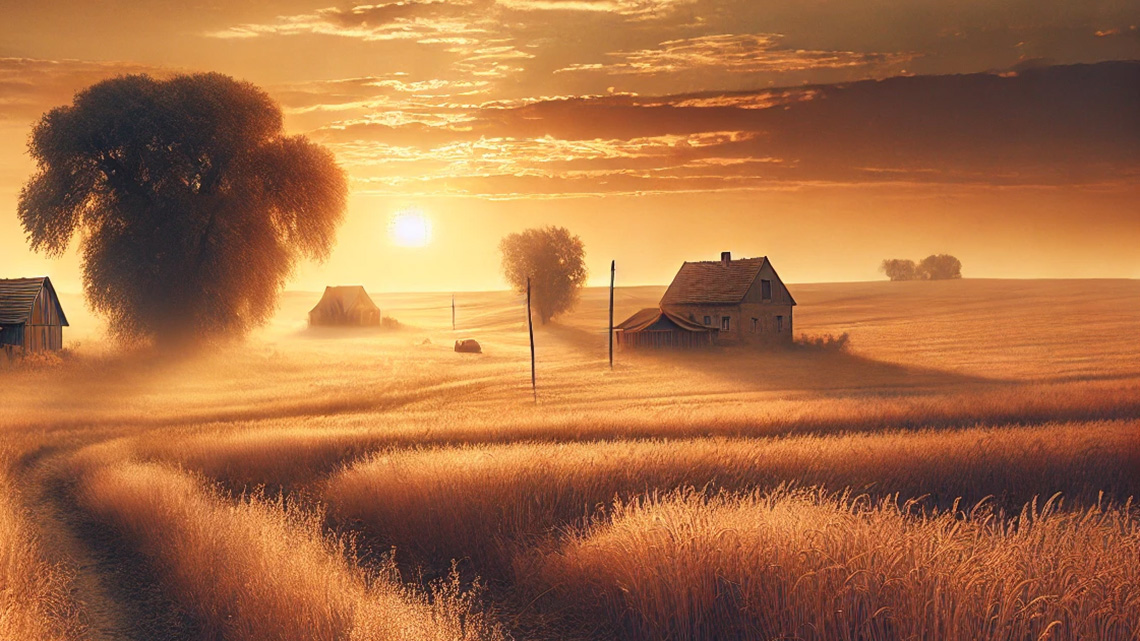
Folk songs like "Hey homesteads, I will come to you again..." or "Hey homesteads in the north of Bačka," with their exceptional melody and perhaps perfectly chosen words, awaken a longing for homesteads even in those who have never experienced their charms in reality.
These songs, with their warm words, remind us of a way of life that, though not so distant, was peaceful and beautiful. Today, few people will come to the homesteads, as they have mostly disappeared from our fields. Those that remain stand alone, resisting the inevitability of nature, which subjects everything in the world to constant change.
For us older generations, it's not just the song that reminds us of the beauty that the homesteads provided, but they are deeply engraved in our hearts. We remember them in our dreams and in solitude. It's impossible for us to pass through our roads and lanes without sadness because, across the vast fields of the plain, we search for the former decorations and echoes of life—the bells of the flags that once rang there—but the homesteads are gone!
Once, it was a delight to pass through our local lands and see scattered homesteads on all sides, surrounded by the greenery of tall trees, breaking the monotony of the landscape. One can't help but wonder how such a seemingly simple environment could so harmoniously blend with the surroundings and the climate, filling our hearts with joy and making us long to stop there. The soul would be uplifted by the simple beauty of the rich nature.
Homesteads didn’t just break the apparent monotony of the landscape; they completed the life of the plain. They influenced the climate, breaking storms and winds, which, now that they and their trees are gone, no one else can stop or resist in the vast fields of the Vojvodina plain. They provided shelter to farmers caught in bad weather on their fields, and to any passersby who found themselves in a storm on their journey. They offered food and protection to wildlife during snowy blizzards. Homesteads provided almost universal benefits.
For those lost in a storm, whether pedestrians or those with horse-drawn vehicles, the homesteads were always a refuge. They would seek shelter here, finding a hospitable host. There would always be a place to rest, and especially food for dinner. Guests were always welcome, as news would be shared, work and other experiences exchanged, and one would learn where to buy good seeds, special methods of feeding livestock, and many other useful insights. The main thing was that the visit broke the monotony of everyday life. It was a joy for the whole family, and everyone would regret it when the guest left at dawn.
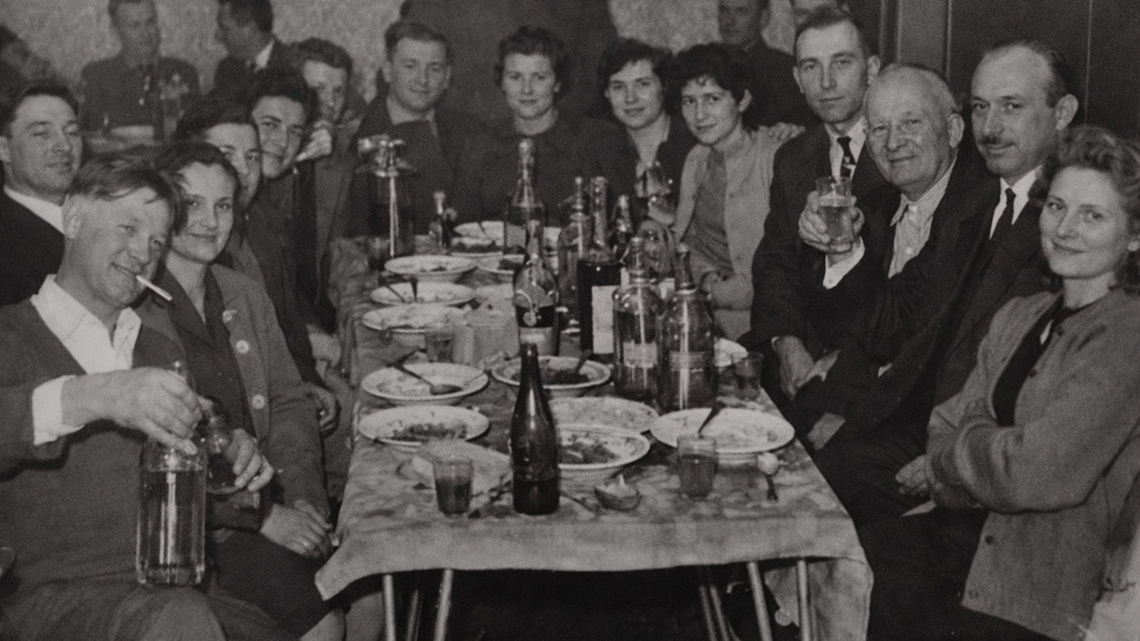
The monotony of life is not felt during agricultural work. It grips the homesteaders in the late autumn and winter days. However, they break it fairly simply, as they are modest in their desires. It's enough to visit a neighbor, or for the neighbor to come, and with a glass or two, chat for a while. Visits usually happen in the morning when the livestock is fed, and in the afternoon when the housewives have finished preparing lunch for the household. The younger ones solve this with evening gatherings, like spinning or gathering the neighborhood for an evening chat. With a glass of wine, the men would talk, the women would knit, and the young ones would cheer up the older ones with songs. Everyone would regret when it was time to part. They would leave with lanterns in hand, heading back to their homes, which were often far apart, especially since it was common to wade through mud or untouched snow. But none of this mattered, as they would soon meet again in the same way at another homestead. In those times, there were various joys, like slaughtering pigs or celebrating patron saints, and life would pass full of satisfaction, mutual love, and respect.
Today, the large empty expanses, even though they are sown with crops, almost give the impression that one has found themselves on the open sea, which offers no joy, but feels cold and often ominous. Joy, however, appears when land is in sight, even if it's the smallest island. The closer we get, the greater the joy. This is how our plains look today without homesteads, with the difference being that they don’t feel ominous, but one still wishes to cross that "empty space" and reach a settlement, even if they may have wished to "escape" the city.
With the disappearance of the homesteads, one especially feels a sense of dread at night when they find themselves in those endless plains, as the thought of some misfortune never leaves them. Along the roads and lanes, there are no visible landmarks, except for road signs that give a sense of where one is. The homestead dogs no longer bark to let travelers know that life is nearby, in the dark and eerie silence.
In the past, even on the darkest nights, farmers returning from their fields had a good landmark in their oil lamps, whose light struggled to shine through the small, crooked homestead windows.
On the road, one rarely sees even abandoned and half-destroyed homesteads. Our spirits lift when our view leads us to a small acacia grove, which is the only remaining witness to the fact that not long ago, there was a homestead with all its wealth of life.
Even that grove brings back joyful feelings in me and urges me to imagine the life once lived at that homestead. I imagine the harmony of homestead life, where a man managed to almost completely adapt to those natural conditions. He had a maximally beneficial relationship with the swallows, martins, storks, and pigeons. He didn’t even chase the pigeons, although he knew they ate only grain and could cause him harm. No, he wasn’t driven by profit calculations to determine what was worth keeping and nurturing. He wanted his life to be beautiful and joyful, and the birds, like the domestic animals and trees, completed that joy.
Now, there is not a single tree along our roads and fields, for several kilometers in diameter, that could serve as the most basic landmark, nor, let’s not forget, could offer shade during the hot summer days when a person might need to rest. Everything has been turned into arable land. It seems as though removing trees from our fields is in the interest of rationally using the arable land, yet there is no land left in the local areas where several thousand acres are left abandoned, overgrown with weeds.
Has man really wanted to erase all traces of the once beautiful and healthy way of life?
In the West, in developed countries, today, in the abundance of wealth, people live on farms, and these farms, in fact, represent the most advanced agriculture. Successful businessmen from the city live up to 100 kilometers away from their workplaces, in houses outside the city, much like homesteads. The poor live in city slums. This means that to escape the city and return to nature, a person today must be rich and belong to the wealthy class.
Not a few scientists argue that we must return to the homesteads if we want to survive on the plain.
Comments