
Studying the art that developed in the first decades of the 20th century, its appearances, participants and relationships, creates a kind of prejudice that it is easy to get to the facts that caused their creation and movement. However, sometimes the circumstances are such that today the distant 18th and 19th centuries, with some well-preserved artifacts and data, seem closer and more accessible for study and exhibition. Therefore, the case of the painter Paulina Sudarski, whose life ended tragically at the age of 29 by being killed on Sutjeska, is particularly interesting.
Paulina Sudarski from expressive cheerfulness to the tragic end
An Inquiry into the Painter's Past: A Study of Pauline Sudarski's Formative Era Through a Close Look at Her Path Through the Royal School of Art - Unknown Paths and Portraits of Youth Shape Her Artistic Legacy.
Share this page on social media
Paulina Sudarski was born on July 12, 19144 to father Relja Sudarski5 and mother Jovanka, née Kovačev6. Similar to her parents, Paulina's birthplace is listed as Vranjevo, which was then part of the Danube Banovina, but as a separate administrative municipality compared to the neighboring Novi Bečej.7
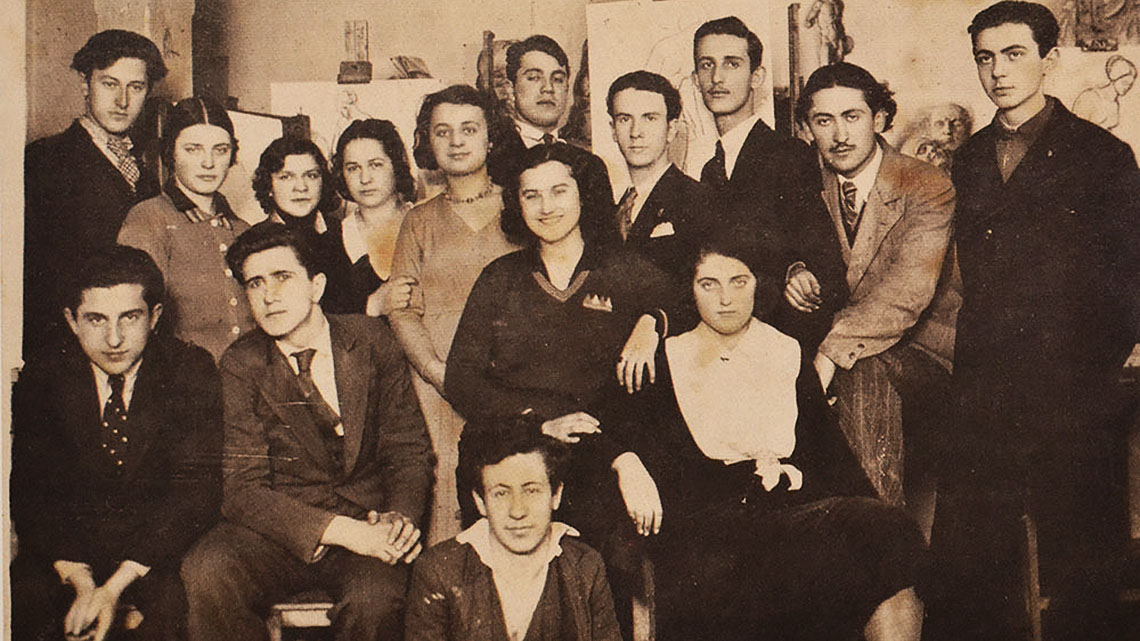
The only known traces of Paulina's education before the Academy can be found in the detailed text by Milivoje Nikolajević, in which he describes in detail most of the students who attended the famous Art School at the same time as him (1932-1939). In pre-war Yugoslavia, generations of young painters and sculptors could receive their first lessons in three art schools. In Belgrade, these were the Royal Art School and the Academy of Fine Arts, while in Zagreb, there was the School of Arts and Crafts. In the Royal Art School, there were three departments: teaching - for the education of future drawing and calligraphy teachers, academic - where after three years of joint studies, they learned oil painting and sculpture, and the sculptural department. Nikolajević in the mentioned text emphasizes that the school operated similarly to all European schools of that type, but it was materially quite poor, with classes held in cramped spaces and lacking some departments, such as graphics or subjects like composition and technology.
Although she received a solid foundation for a teaching career after completing the Royal Art School, Paulina did not stop there. In 1937, the Academy of Fine Arts was founded in Belgrade, and this young painter belonged to the first generation of enrolled students. (24)
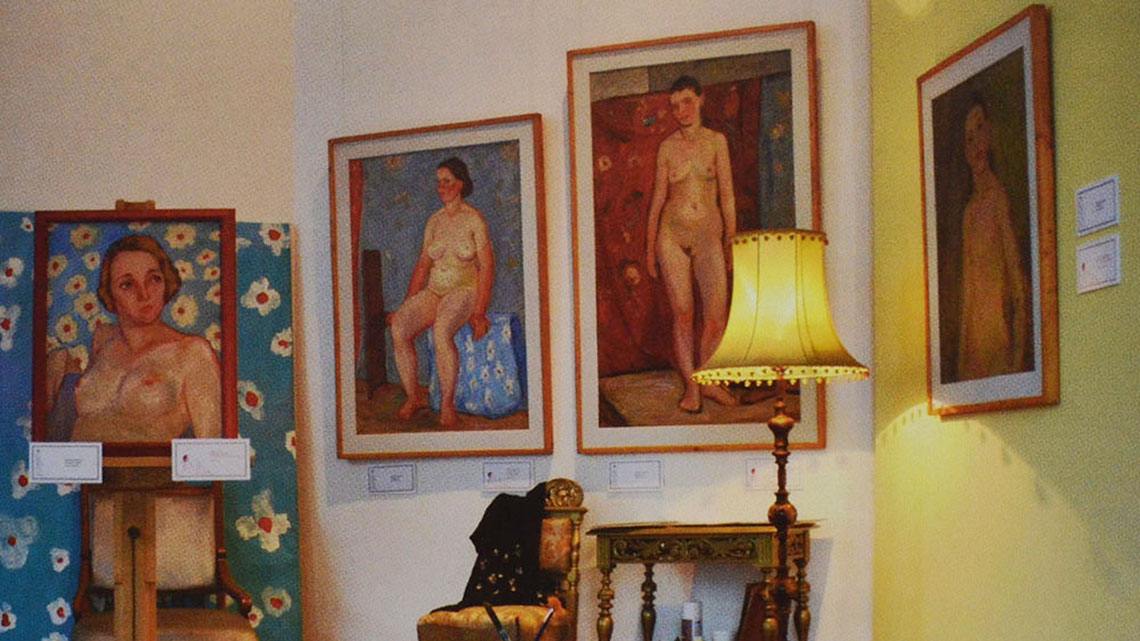
Although the nude is the most represented theme in Pauline Sudarski, we find a similar coloristic and intimate grayscale in her portraits. To this should be added the fact that the move is now somewhat clearer and more decisive, which also affects the strikingness of the personalities shown.
A year before Paulina was to enter the Academy of Fine Arts, the magazine "Zena danas" was launched in Belgrade, which featured articles on various topics of interest to women of all profiles, structures and ages. (38) They wrote about women's right to vote, about the work of organizations of the women's movement, but also about the position of women, education and health care of children, about hygiene, theater, film, sports, gymnastics, fashion, etc. At the end, various practical tips were given to women regarding food preparation, tailoring, sewing, knitting and cosmetics. (39)
To conclude Paulina's academic and overall period in Belgrade, it should be mentioned her drawings, although they were often an integral part of her preparatory process for some act. However, as a separate artistic work, Paulina also paid great attention to them.
During that just over a month, which lasted the battle at Sutjeska (from mid-May to the end of June 1943), it was the toughest period for the People's Liberation Army during the four-year war. It was a decisive battle of the Fifth enemy offensive.
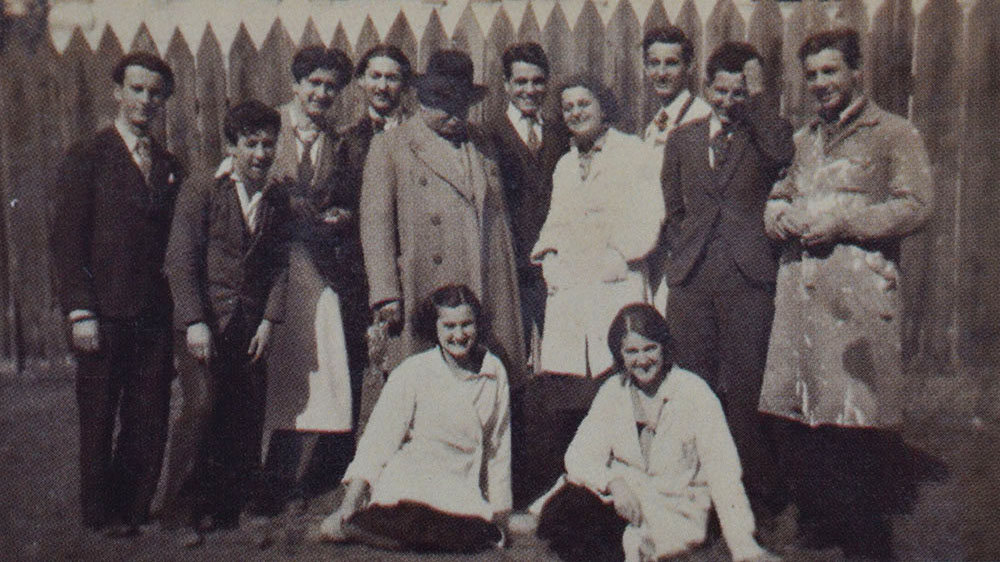
In the Preschool Institution 'Pava Sudarski' in Novi Bečej, there is also a bust of a young painter, cast in bronze, the work of sculptor Milan Besarabić. Until a few years ago, along with Ljubica Cuca Sokic, he was our oldest artist. Both attended the Royal Art School at the same time as Paulina.