



In those frequent walks, I would go, in my thoughts, to the Great Warehouse, pondering its antiquity (built in 1780) and all it had endured over time.
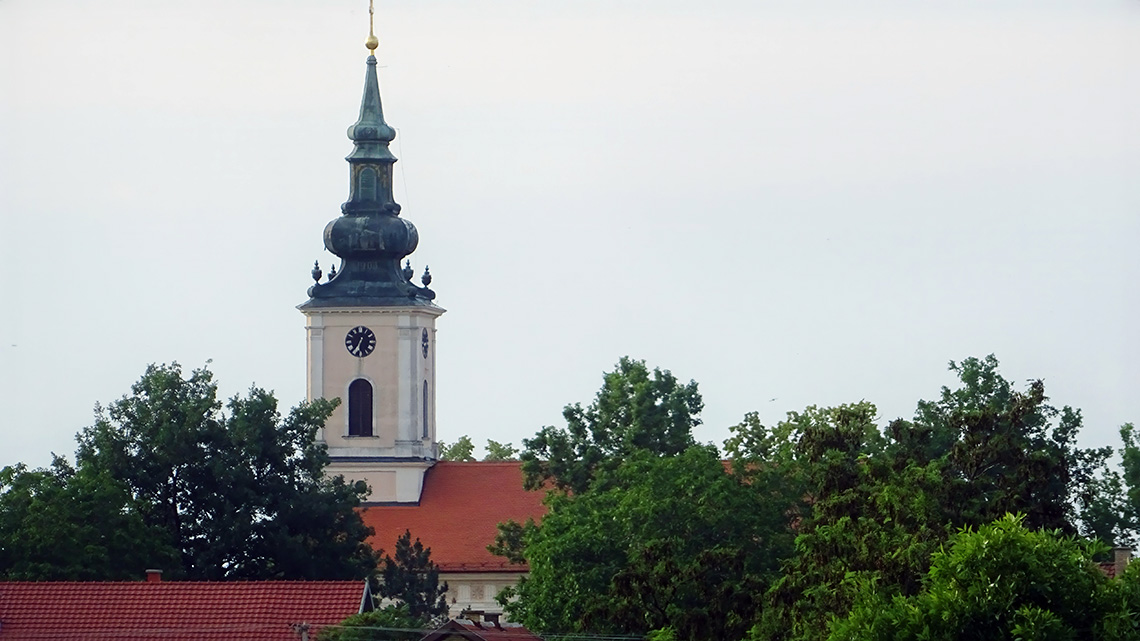
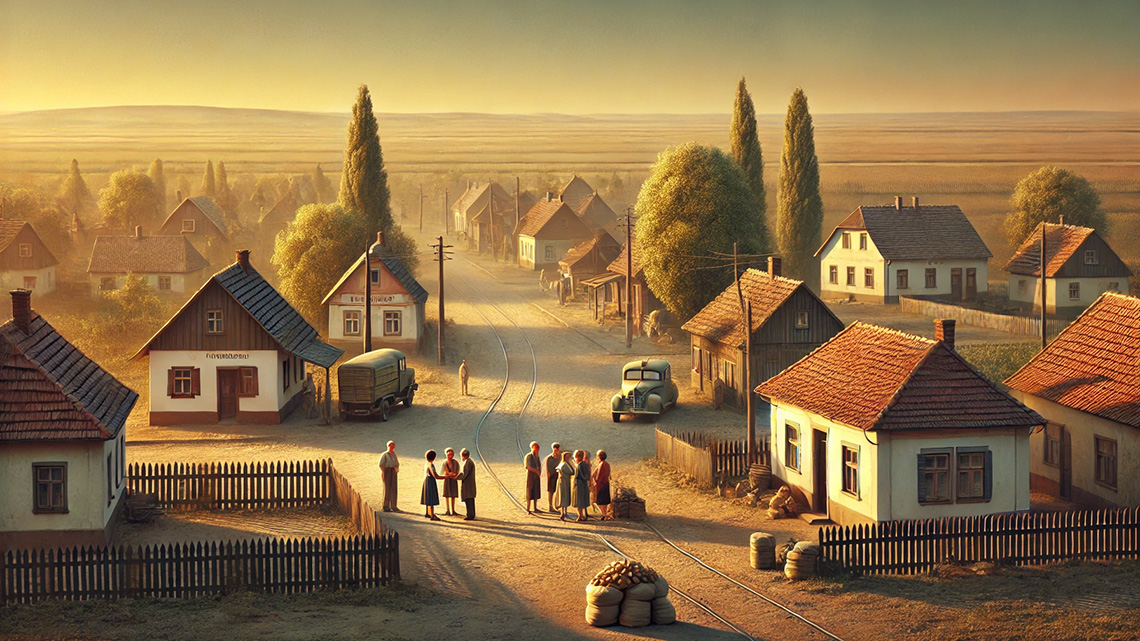
I would pause and conjure the tranquility of the evening at the part of the dolma where the pedestrian path descends toward Vranjevo. From that height, I would revel in the beauty of Vranjevo's panorama. What a beautiful view it was. The village wrapped in greenery—acacia and mulberry trees along the streets and in the yards, and fruit trees in the gardens. Here and there, a red-tiled roof or a white gable peeked through, while above the entire village stood two tall and beautiful bell towers of Vranjevo's churches, like proud, adorned sentinels watching over the peace of the village.
There, almost "beneath my feet," was the Venice Pond, its shore below the village gardens overgrown with reeds. Nearby, and even within the reeds themselves, played countless grebes and coots, and occasionally wild ducks could be seen. It was a delight to watch their frolicking, to hear their chatter and the fluttering of wings just above the water's surface. One could not help but feel joy at the sight of such freedom and the liveliness of the birds. I marveled at their skill in diving. Many times, I tried to guess where a diving bird would surface, but I never succeeded. It always surprised me, emerging in a place I least expected.
Leaving that spot on the dolma from which I observed Vranjevo, I would encounter, on the way back, the gate and toll booth for cobblestone road fees. This always took me back to the time when Novi Bečej and Vranjevo were two separate municipalities, and a boundary ran through that area dividing them. Back then, every resident of Vranjevo entering Novi Bečej with a horse-drawn cart had to pay a designated fee before the barrier (gate) was lifted to allow entry into Novi Bečej.
These thoughts, of course, did not end there but led me to conclude that due to the cobblestone road, Vranjevo was connected to Novi Bečej by only two streets with roadways. One was the one passing by the Great Warehouse and the dolma, where the building of the former toll booth still stands. It looks the same today, with the difference that it was then municipal property, whereas now it probably belongs to the descendants of Milan Kiselički. He was the clerk at the toll booth, and when cobblestone toll collection ceased during a time of crisis, he collected market fees at the Novi Bečej market. The kindhearted Kiselički earned the nickname "Krajcarica" (penny collector) for his minor collections. The other gate was located at the entrance from the Bašaid and Beodra roads into the main street, in front of the “Kruna” tavern.
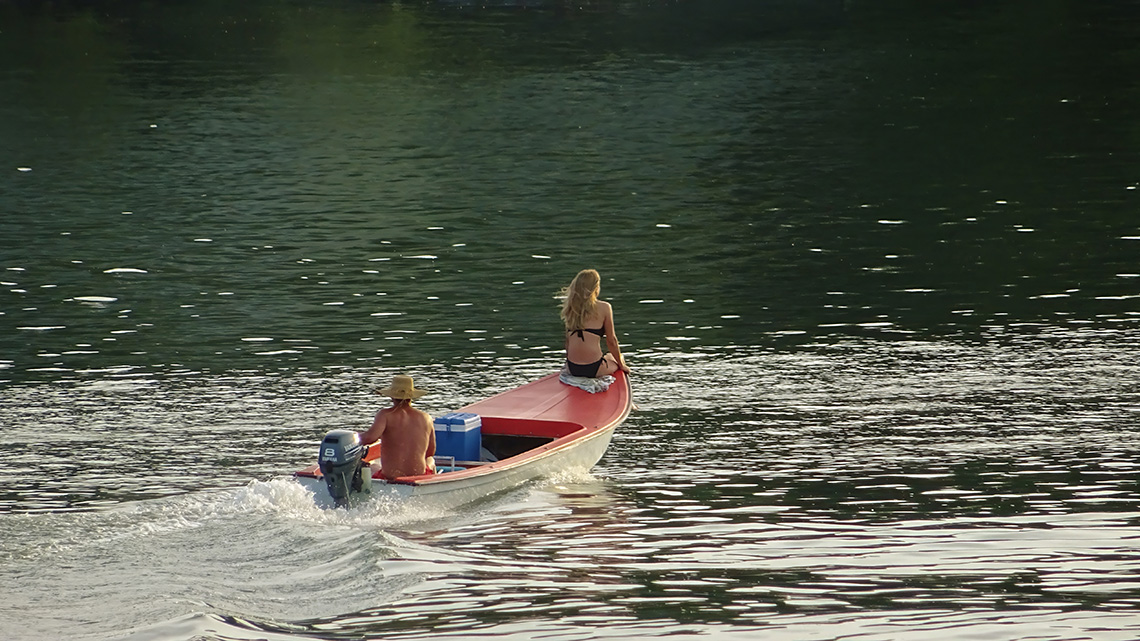
Returning in my thoughts from that walk along the dolma, I would hurry to time my arrival with the arrival of the large steamboat that operated daily between Belgrade and Senta: one day from Belgrade to Senta, the next from Senta to Belgrade. It was an exceptionally beautiful paddle steamer named "Princess Jelena." It docked in Novi Bečej every day around 8 p.m., whether heading to Senta or returning from Senta to Belgrade.
It was very pleasant to hear the bell in front of the river agency, which uniquely announced the arrival and departure of the steamer. The agency’s clerk, Sava Lekić, approached the bell hanging on a metal bracket embedded in the dolma wall. Holding a short rope attached to the clapper, he struck one side of the bell. At first, the strikes were widely spaced, then gradually closer together until they merged into a continuous ring, ending again with two or three strikes with a pause in between. The small and modest, yet highly pleasant, almost artistic echo of the bell resonated in the quiet of a summer evening.
Occasionally, Uncle Sava allowed his son Dejan, my peer, to ring the bell. We all envied him for being entrusted with such an important task.
Perhaps it’s interesting to mention that I don’t recall anyone ever misusing the bell, even though it hung freely within reach of any passerby. It was respected, and even we children never thought of playing with it.
To conclude my walk in thoughts, which habitually extends from Buda to the Great Warehouse, it often lasts long as I envision everything I’ve described here. Only sleep could interrupt this walk, though more often, I "experience" it in its entirety.
Comments