



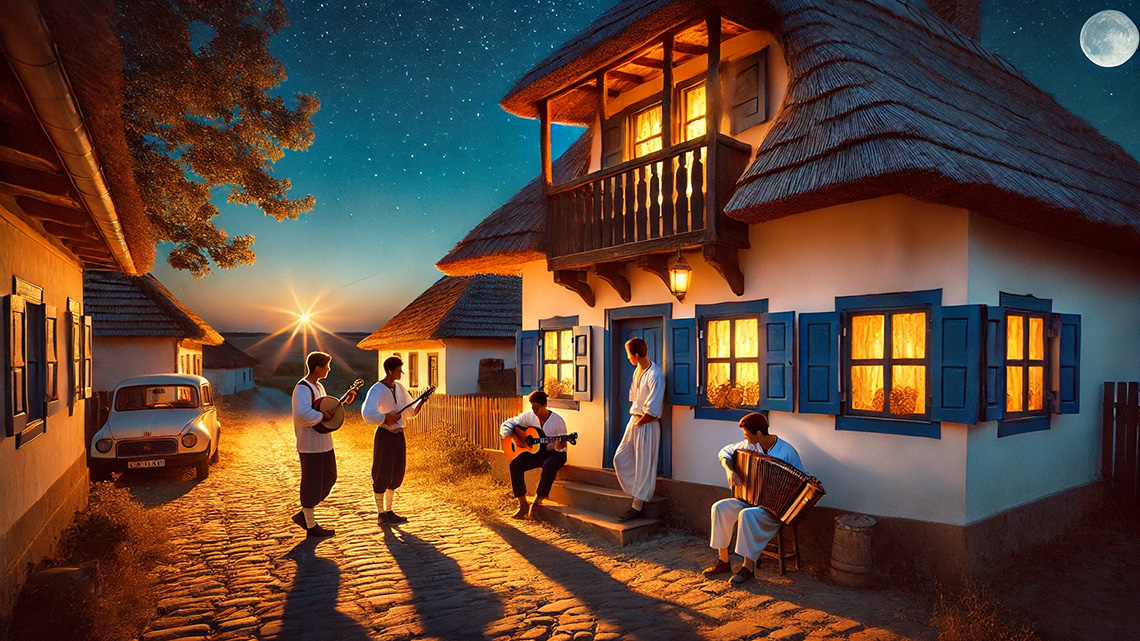
Sometimes, enchanted by the magic of summer evenings, sitting on the benches of the embankment, we would decide to share our joy with those who were not with us that night. And so, we would make the decision to perform a serenade for one of our dear friends or a charming guest.
Serenades were unforgettable and rare experiences. They were not a widespread tradition, so many never had the chance to witness or experience them in their youth.
In the dead of night, we would gather beneath the window of the chosen girl, bringing music and singing a fitting sentimental song.
The song most often sung during serenades:
(This is a transcription from the theater play Seoski lola, though we sang it with slightly altered lyrics.)
Here I stand before her house,
A place I longed to see,
To tell her, faithless one,
May God judge you for deceiving me!
I bring your scarf back to you,
I have no use for it anymore.
All I am left with is sorrow,
Heavy sorrow, deep lamentation.
Take your ring back as well,
I have no need for it, here it is.
But for you, my heart will always ache,
No matter how much time may pass.
From the moment we decided to give a serenade, everything became somewhat secretive, which filled each of us with a certain thrilling excitement. But at the same time, there was always a lingering fear—how would the girl’s family, or even the neighbors, react? In those times, when strict patriarchal values prevailed, the elders in the household often saw such acts as improper, and some even considered them immoral! That was surely one of the reasons why serenades never became a widely accepted tradition.
Knowing that we might be scolded by the host or the neighbors, we did our best to avoid giving them any reason for it. As soon as we entered the street where our chosen girl’s house was, we walked almost on tiptoe and spoke in whispers, so as not to wake anyone who might reprimand us. This kind of caution would likely be incomprehensible to today’s young men—who would dare, especially an elder, to even verbally confront a group of cheerful young men? But back then, in the era we are reminiscing about, it was considered shameful to argue with an angry host. His disapproval was simply accepted as his right. He could complain to our fathers or even report us to the police. Without a word, we would hurry away, sometimes even running, from the street where we had sung the serenade.
Once we arrived beneath the desired window, the song would begin. It was sung softly, and the music was even softer, gently blending into the quiet of the night—just loud enough to awaken only the one to whom the serenade was meant. Our beloved, without turning on the light in her room, would strike a match, signaling that she had heard the song and was grateful for the lovely gesture.
Feeling happy and proud, as if we had done something truly noble, we would quietly leave the house. Only after we exited the street would the eager discussions begin—how well the song was performed, whether the music was too loud. We would praise the virtues and attentiveness of the girl who received the serenade, as well as the reactions of her household and neighbors.
For all of us, serenades were an exceptionally beautiful experience. Through them, with heartfelt sincerity, we expressed our warm and pure friendly affection and respect for the girls in our circle.



Comments