



In the "Sveska Matice srpske" (Materials and Contributions to Culture and Social History), number 6/1987, Mr. Milana Bikicki, in the article "First Steps in Musical Education of Serbs in Hungary," writes:
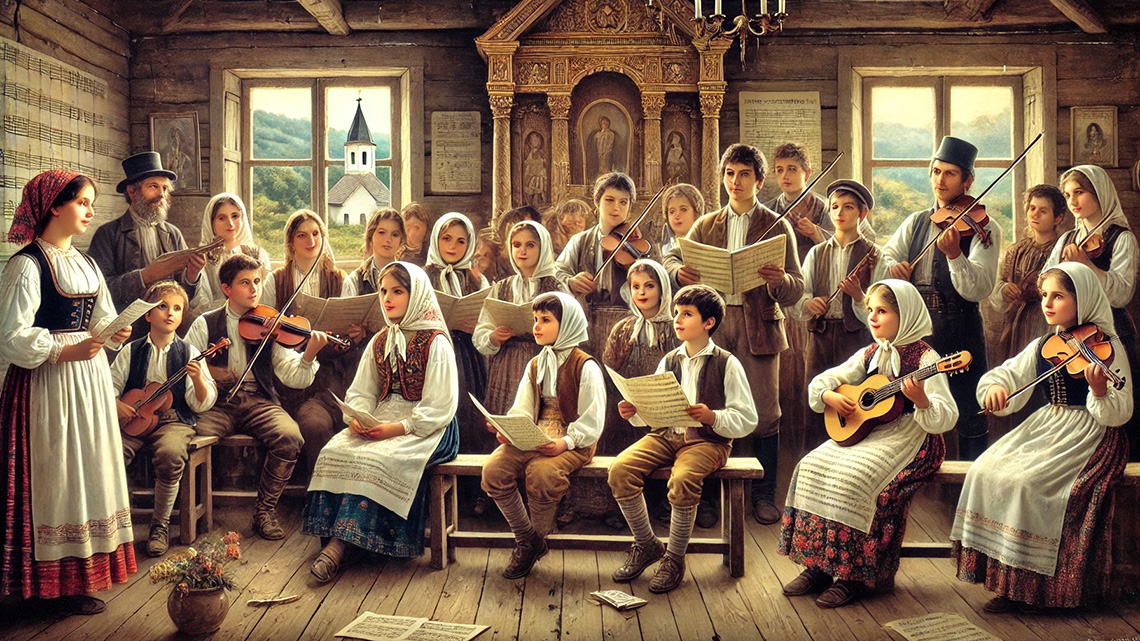
In 1838, Teodor Pavlović, in the Serbian National Newspaper, published the text of an anonymous traveler who "traveled to Franjevo (Vranjevo) this autumn" and discovered so many new and beautiful things in the village that they deserve to be shared with readers. Speaking about the beauty of the church, the value of three priests, and two young teachers, the author of these lines particularly emphasizes:
"But what else is there in Franjevo, which, besides in the cities of Arad and Pest, nowhere else in Serbian lands exists—Pjenija and music schools: thirty simple children, none older than 10–12 years, wearing sheepskin coats, clean linen trousers, and sandals, and before them, notes written by their own hands, from which they (in rhythm, as if born with it, striking) sing the entire liturgy, arranged, harmonized, and so blessed, that any person with even a bit of humanity would be completely overtaken by the tender and sweet feeling. But that’s not all: those same children, in trousers and sandals, also learn music; each of them knows how to play the flute, violin, small or large trumpet... The girls learn the guitar and harp..."
Excerpt from the sermon about Josif Marinković, Dr. Bogdan Đaković, on "Obzorje," 2008.


Comments