



In the years following the First World War, political life in the villages of Banat was strongly marked by the activities of the workers’ and communist movements.
In the village of Kumane, a strong illegal party organization already existed, enabling many directives from the higher party leadership to be effectively implemented. Working conditions further improved when, on January 13–14, 1923, in Belgrade, the Independent Workers’ Party of Yugoslavia was founded on the initiative and under the leadership of the Central Committee of the illegal Communist Party of Yugoslavia. Through this party, communists were able to act legally and continue their political struggle against the existing bourgeois authorities.
The exact date of the establishment of the local organization of the party in Kumane is unknown, but it was most likely founded in 1923. In March of that year, the regime prevented the party from presenting its own candidate lists in many electoral districts during the parliamentary elections. This also occurred in the North Banat electoral district, which included Kumane. Consequently, the Central Committee of the party called upon workers and peasants to boycott the elections and refrain from voting for bourgeois parties.
Party members distributed proclamations and conducted agitation among villagers and laborers, which had a visible impact. Out of 1,440 registered voters in Kumane, 988 cast their ballots. Of these, 343 voted for candidates of the Agrarian Party and 111 for the Radical Party, while other parties received only a minimal number of votes. Under communist influence, roughly one-third of the electorate abstained. Dimitrije Vujić was elected as a deputy despite receiving only 343 votes.
On March 19, 1923, the commander of the gendarmerie station in Kumane submitted a report to the brigade in Novi Bečej concerning the distribution of party leaflets in the village. Based on this report, the State Prosecutor’s Office in Zrenjanin initiated criminal proceedings against Steva Tatić, Žarko Strajnić-Bađa, and Milan Darabuc, accusing them of anti-state agitation. However, at the main hearing held on December 30, 1925, the District Court in Zrenjanin dismissed the indictment and discontinued the proceedings.
Following the Second Party Conference held in Vienna from May 9 to 12, 1923, party activities intensified. A Secretariat of the Communist Party for Vojvodina was established, with separate branches for Bačka and Banat. During this period, Jožef Hermal, secretary for Banat, established contact with Žarko Strajnić-Bađa and instructed him to reorganize the illegal party network in Kumane by forming small party cells.
The secretaries of these cells in Kumane included Žarko Strajnić-Bađa, Ljuba and Steva Petrović, Racko Čolić, Lazar Mirčetić, and Slavko Miškov. The cells gathered sympathizers among agricultural workers, and membership contributions ranged from one to three dinars, depending on financial ability.
Preparations for establishing the local organization of the Independent Workers’ Party were carried out by local communists, including Laza Blažić, Jovan Veselinov, Žarko Strajnić, and Nova Stančić. The founding assembly was held in the house of Ljubica Odadžić-Nemčeva, which later became the party’s headquarters in the village. At the assembly, the leadership was elected: Boško Ćurčić as president, Jovan Veselinov as secretary, Dušan Tatić as treasurer, and Ljuba Petrović, Steva Petrović, Slavko Strajnić-Bađa, Boško Zarić-Sikra, Nova Stančić, Slavko Miškov, and Lazar Mirčetić as members of the Executive Board.
Soon afterward, the party gathered the most active agricultural and craft workers into its ranks. Through newspapers such as “Radnik” and “Borba,” members spread political ideas and influenced broader working-class circles. In this way, the organization gained increasing importance, establishing closer ties with disenfranchised peasants and demoralized agricultural workers, while communists pursued their objectives through the legal framework provided by the party.
Conclusion
The local organization of the Independent Workers’ Party of Yugoslavia in Kumane represented an important segment of the village’s political life during the interwar period. Through a combination of legal political action and an illegal party network, the ideas of the workers’ movement spread among peasants and laborers, leaving a lasting mark on the political history of northern Banat. The organization stands as testimony to the intensity of political activism in small communities and to the role of local activists within the broader workers’ movement of interwar Yugoslavia.
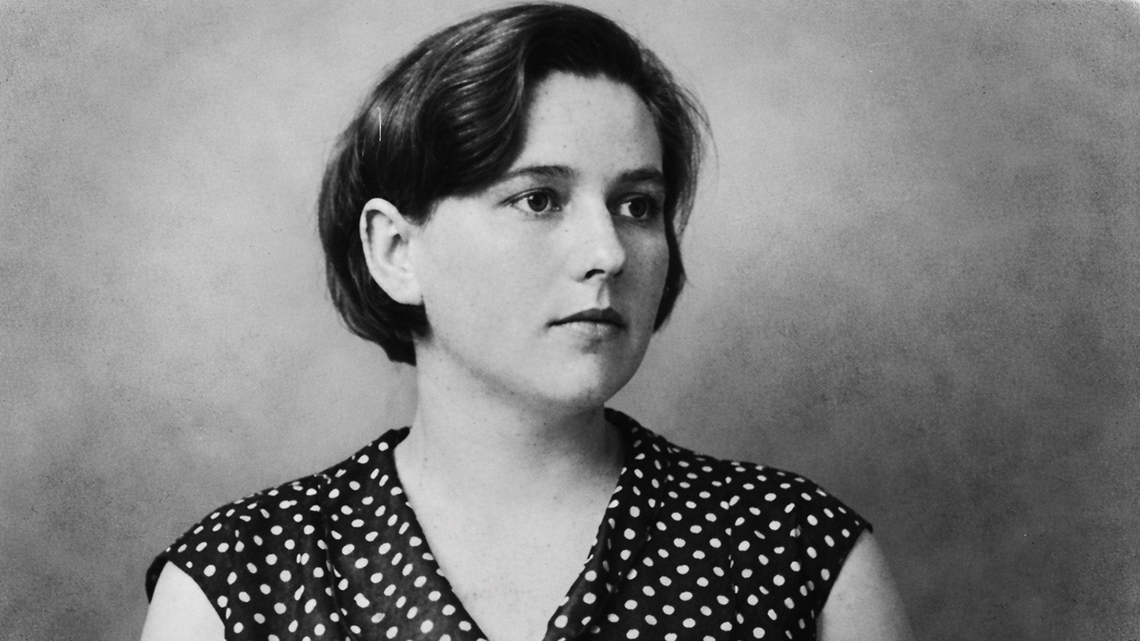
1. Kova Mečkić Granić, a member of the CPY (Communist Party of Yugoslavia) since 1927. Arrested in 1928 and brought to trial for spreading communist propaganda and establishing an illegal CPY organization in Velike Livade
Comments