



"The Formation, Development, and Destruction of the Jewish Community in Novi Bečej" is the title of an extensive work created through the years of effort by Branislav-Bata Kiselički. As he explains in the introductory notes, the author approached this monumental task due to his sense of duty and obligation to his Jewish friends from his youth, and later to their fellow countrymen who lived in Novi Bečej in the near and distant past.
The essence of the work he undertook is perhaps best explained by Dr. Viktor Jordanić, one of the few Novi Bečej Jews who survived World War II. In a letter addressed to Bata on April 8, 1986, besides providing information about the Jews in Novi Bečej, in one special paragraph he says: "The task you have set for yourself is not easy, but it is noble; it restores faith in human integrity. If you succeed, you and your collaborators will experience great spiritual satisfaction, and you will be able to say and feel like the great Roman poet Horace – Exegi monumentum – we have erected a monument to the innocent victims who were killed without any guilt in a dreadful, inhuman way, at a time when our country and most of Europe were ruled by criminals, the greatest of all that history had known until then."
Indeed, the years of work resulted not only in a scientific outcome through the research and use of various and numerous sources of data and facts, but also in the creation of a work deeply imbued with a humanistic spirit. The material and living witnesses to the existence and life of Jews in Novi Bečej are few, and almost none remain. Therefore, this work grows into a monument to them, and to them – in memory. I will, however, take the liberty of making a small correction to the quoted paragraph by Dr. Jordanić: this work is not just a monument to the Jews – innocent victims of World War II, but it is a monument, more enduring than any tombstone, to the entire Jewish colony in Novi Bečej, or the Jewish community in Novi Bečej, as the author says, and its existence for a century and a half.
Behind the general title "The Formation, Development, and Destruction of the Jewish Community in Novi Bečej" lies a work of very elaborate structure, but in which two main sections can be identified: the first is the monographic part, the final text by the author in which he interprets and evaluates the sources and gathered data, and the second part is the "appendices," which contain numerous factual thematic overviews of carefully and systematically organized data. After these two sections, a separate section lists the sources used by the author, among which, due to their authenticity, special mention should be made of the letters sent to the author by surviving Jews, which he very appropriately incorporated into the whole of his work. Finally, as a "special addition," there is a list of all Jewish families (and individuals) with basic information about them, for the period from 1888 to 1941. All the sections together occupy a total of 378 pages of densely typed text. This clearly shows that this is an extensive work.
The monographic part consists of two detailed studies with the titles: "The Formation and Development of the Jewish Community in Novi Bečej" and "Genocide of Novi Bečej Jews."
"The Formation and Development of the Jewish Community in Novi Bečej" begins with an overview of the geographical, economic, and demographic conditions in Novi Bečej since the mid-18th century and the arrival of the first Jewish settlers in Novi Bečej. The author presents the numerous difficulties and obstacles that hindered the process of settlement and acquiring the status of equal citizens, up until the first decades of the 19th century, when the authorities of the Torontal County and the authorities of the Great Kikinda District improved their relationship with the Jewish settlers. The data on the number of Jewish settlers, particularly for Vranjevo (where the number of Jewish settlers grew to a peak of 224 by 1910), is interesting. Such demographic movements are reasonably explained by the general state and social conditions, as well as the increasingly tolerant attitude of the local population towards the settlers, depicting their arduous journey from the status of "toleratus Iudaeus" (citizens with incomplete rights) to "inkolata" (permanent settlement with fuller civil rights).
The demographic trends of Jews in Novi Bečej and Vranjevo are examined from various perspectives: the total number of settled and departed Jews, the places from which they came and the places they moved to, the number of marriages and marital connections, birth and death rates, occupations, economic prosperity, children’s education, and so on.
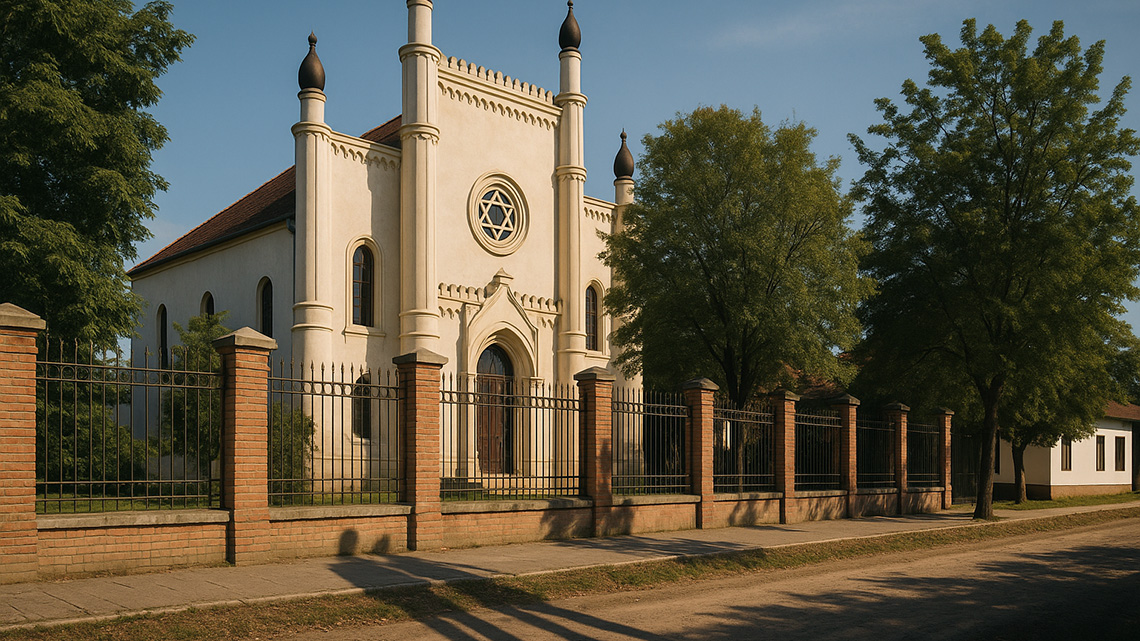
Under specific subtitles, parts are dedicated to the role of Jews in the economic development of Novi Bečej (with detailed descriptions of their various crafts, trade, industrial, banking, and other activities), their role in social and public life, their religious life, synagogues, and cemeteries.
The first signs of the decline in the Jewish population are identified and discussed in the first decade of this century, and a special section of the text, titled "The First Two Decades of the 20th Century," is dedicated to the social conditions and lifestyle of the Jewish community. A similar approach is used in the section "The Jewish Community in Novi Bečej from 1919 to 1941," where the author provides data and explanations about the emigration of a number of Jews from Novi Bečej, the emergence of powerful companies owned by Jews, and the participation of young Jews in sports, cultural, and political (anti-fascist) organizations, highlighting a few young Jews who stood out before World War II (Hauzer Lipot, Šlezinbger Đerđ - Đurika, Herman Bergl, Huven Margita, and Albert Vajs).
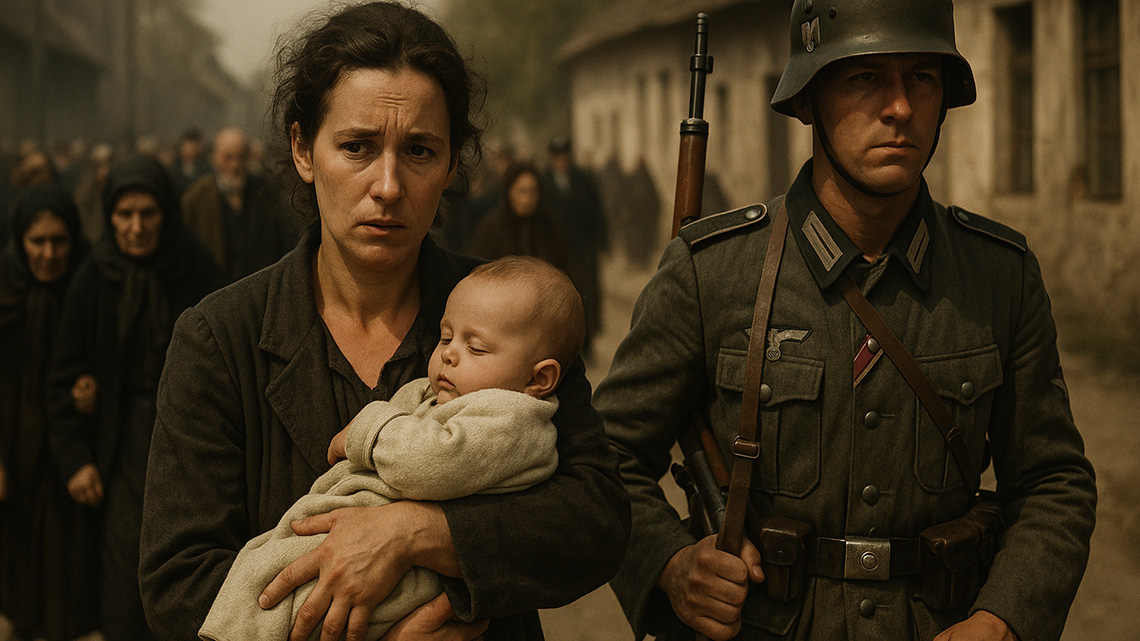
The second study in the monographic part is titled "Genocide of Novi Bečej Jews, 1941-1942." Describing the persecution of Jews from the first days after the withdrawal of the Yugoslav army in April 1941, the author traces their horrifying fate until May 10, 1942, when a special truck, the "death van," took the last group of Jews to the Jajinci pits, killing them with exhaust fumes, just as it had been done daily to Jewish women and children since March. Jewish men were executed as hostages at the Topovske Šupe in Belgrade in October and November 1941. Thus, except for a small number of survivors in various ways, the Jewish community in Novi Bečej was brutally destroyed.
Through this period of about 13 months, the author introduces us to events from the first arrests and the maltreatment of Jews in April 1941, their confinement in the synagogue and in Leo Vajs' warehouse, their transportation on barges to Belgrade, and the execution sites in Jajinci.
The author impressively presents the tragic fates of individual families or their members, thanks to authentic testimonies from the few surviving Jews and the testimonies of eyewitnesses from the town of Novi Bečej, which are originally cited here. The reader cannot avoid a strong sense of the tragedy, not only of the Jewish community as a whole, but also of the individual human fates of the Jews – our former fellow citizens.
The second part of this work consists of the "Appendices." Their content is not elaborated here in detail, as the titles of individual subsections indicate clearly enough. They are as follows: A brief description of Jewish families who lived in Novi Bečej from 1919 to 1941, a list of places from which Jewish families migrated to Novi Bečej in the 19th century, a list of Jewish families who moved out of Novi Bečej between 1883 and 1940, prominent Jewish figures in Novi Bečej, an overview of occupations by which Jewish families lived in Novi Bečej, a reconstructed list of deported and murdered individuals and families of Novi Bečej Jews in 1941, a reconstructed list of survivors, data on newborn Jewish children in Novi Bečej and Vranjevo from 1895 to 1941, a list of Jewish marriages, data on deceased Jews, personal data of students and their parents, and statistical data based on municipal and school registries.
Finally, although not closely related to Branislav Kiselički's work, I will again quote part of another letter by Dr. Viktor Jordanić sent to Bata much later, on May 15, 1991. That part reads: "After so much genocide throughout the centuries, some Jews prayed to God, if He exists, to choose another nation for a while. God did not listen, and genocide reached its peak during this war... Instead of choosing another nation, God helped to create the new state of Israel, where Jews can live completely freely and find refuge and a secure life."
I would comment on these few quoted lines as follows: God has not completely ignored the Jews' plea for another nation to be "His chosen people," even if just for a while. During World War II, Serbs, in terms of suffering and genocide, faced similar fates as the Jews, the "chosen people" of God. Even in the present day, thousands of Serbs have faced horrors similar to those of fifty years ago. May such horrors never again befall anyone, anywhere, and may such works as this, created by Branislav-Bata Kiselički, not be needed again.
In Novi Sad, September 7, 1992.

Comments