



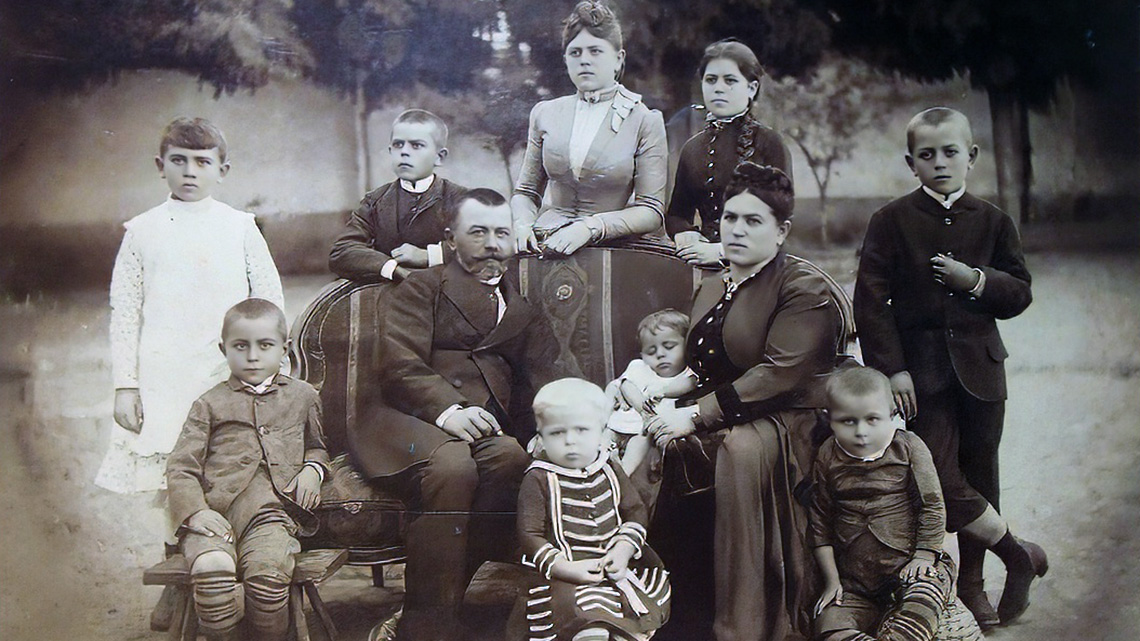
Lukseder Đerđ was a grain merchant, and his tradition was continued by Zoltan and his brothers. Istvanffy Endre mentions Đerđ in his famous lecture about Turkish Bečej and the Bečej residents after the great uprising, stating that he had a fleet for transporting grain and that, thanks to his boatmen, Turkish Bečej was saved from a tragic flood. He says:
"One February morning, Đerđ Lukseder, a grain merchant, whose boats were wintering near Čurug, was informed by his helmsman that the water level of the Tisa near Turkish Bečej was at least 4 meters higher than that near Čurug. After this notification, brought by a courier on horseback, it became clear that a mass of ice had blocked the flow of the Tisa, and the river had been rising. Through well-organized, 36-hour, superhuman work with pickaxes through a mountain of ice, the water flow was freed. Had there been a delay of just one day, today only history would remember Turkish Bečej.
This superhuman effort was not only of local significance. If Turkish Bečej had been flooded, according to contemporary engineers, part of Banat up to Timișoara would have been swept away by the waves. Here, the fate of Canaan (the old name for Palestine - the promised land) was decided, for when it was destroyed, the grain supply of the state was destroyed."
The Lukseder family left behind a beautiful monument in the form of one of the still most beautiful houses in Novi Bečej. It is the house on the main street, across from the Lutheran church, which was the Novi Bečej post office until the end of World War II.
Comments