



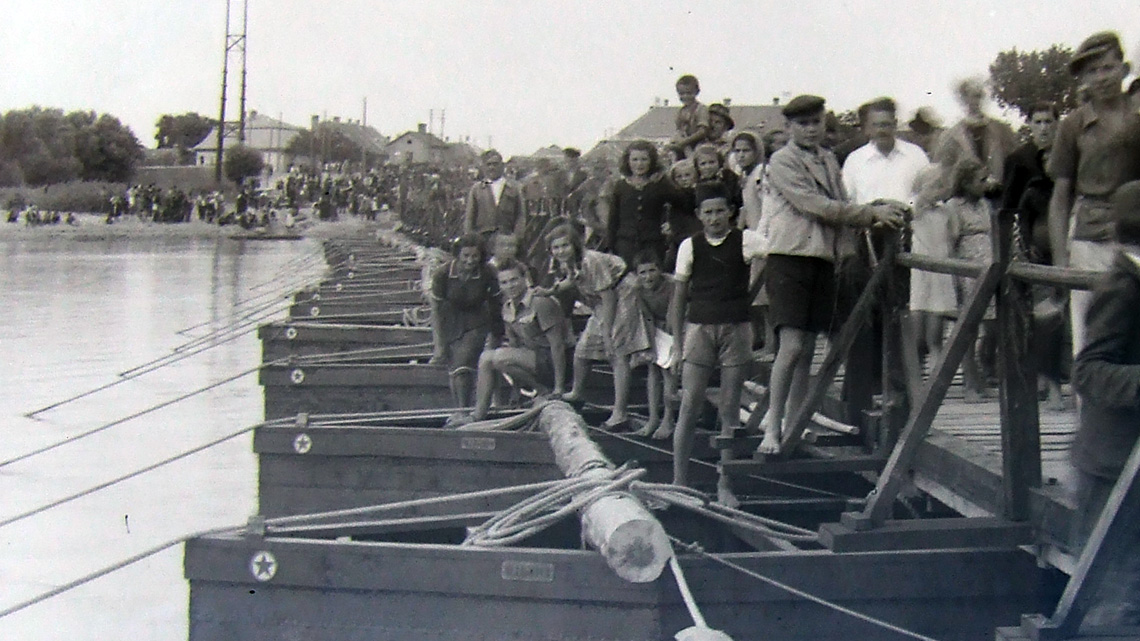
Since the mid-19th century, photography, as an important innovative branch of applied art (through Budapest and Vienna), slowly paved its way into Banat, where, in the county seat, in Veliki Bečkerek, István Oldal Sr. opened the first permanent painting studio in 1853. Since the first form of photography – the daguerreotype – was very expensive for the general public at that time and impractical in terms of reproduction and display, photography was only available to a select few.
It wasn't until the 1860s and 1870s that conditions for the spread of this visual expressive form were created. With the technical improvement of photographic production – as it was now done on paper and could be reproduced – photography quickly became widespread and accessible to almost everyone. The fact that this innovation was popular in Banat is evident from the fact that around 180 photographers practiced this craft in the region until 1918, with some starting to work in Turkish (Novi) Bečej from the 1870s onwards.
Karolj Andre, a tireless and dedicated researcher of the local history of Novi Bečej, has gathered in this book all the available facts that document the work of former photographers in Novi Bečej, collecting along the way valuable photographic materials that confirm the work of these masters of photography. Karolj Folkman (Volkmann), Konstantin Vukov, Geza Sakač, and other practitioners of this artistic craft devoted their entire lives to photographing the people, events, and landscapes of old Novi Bečej, and through their work, the contours of Novi Bečej's history written in photographs emerge – which gives special value to this work.
It is well known that photography is sometimes as important as the written word, as a photograph as a document often speaks more about a person or event than pages of written text. Karolj Andre's book proves this, drawing attention to the former photographers (both permanent and itinerant, as well as amateurs) who often advertised themselves as painters and who left a significant photographic trace in or about Novi Bečej.
The 21st century, as we know, is predominantly a century of visual communication and the emphasized use of photography in interpersonal communication, as well as on the internet. This work on Novi Bečej's photographers once again draws our attention to the importance and significance of photographic records (whether they are original shots or printed reproductions on old postcards), not only as documents but also as artistic expressive forms.
And finally: this work will surely prompt us to reflect on the importance and value of photography (both old and new), and the need to preserve it, for by archiving our old family photographs, we are essentially preserving our history and identity.
Dr. Ferenc Nemet, cultural historian
As a result of industrial progress and technological possibilities, 19th-century Europe witnessed the birth of a new cultural history. The discovery of the photographic process, officially announced in Paris at a meeting of the Academy of Sciences on August 19, 1839, marked an entirely unexpected developmental path for cultural history through this new visual medium.
By the 1850s, the already technologically advanced photographic process reached the territory of Serbia and the then Habsburg Monarchy. Thanks to traveling photographers who brought this process from Vienna and other cultural centers, every town and smaller place had several photographers who stayed for a certain period, photographed the residents, promoted the new process, and trained interested individuals. In this way, inhabited places slowly began to establish their first permanent photographic studios. The Central Banat region was particularly rich in this activity starting from the mid-19th century. Besides Bečkerek, which was one of the more dynamic centers of photography at the time, this book reveals how Novi Bečej also had a rich photographic activity and how it left a significant mark on the visual and civic culture of this place.
Through the biographies of photographers, the author introduces us to the practitioners of this craft in Novi Bečej from the 1870s until the advent of digital photography. A clear chronological overview provides a unique experience of the development of photography as a medium and allows for complex readings of the photographs included. The informative descriptions of the photographs are enriched with data about historical figures, notable residents, buildings, and significant events in Novi Bečej and Vranjevo, giving us a complete picture of life, citizenry, culture, and the spirit of the times during the periods in question.
In the book "Photographers of Novi Bečej," the author shows us how intense the photographic activity was in the mentioned places. From Karolj Folkman (Volkmann), Konstantin Vukov, Geza Sakač, to many photo studios and amateur photographers, a continuity was created that was nurtured and resulted in a rich photographic legacy.
Karolj Andre, besides possessing great knowledge and dedication to the history of Novi Bečej, writes books that exemplify how to handle local heritage. As he himself emphasized, this book is not a photography manual but a historical overview that highlights the presence and importance of photographers in Novi Bečej. The author preserves the memory of photographers of bygone times, reconstructing the social, cultural, and economic life of his town through the visual material of Novi Bečej's photographers.
Karolj Andre's work on the book "Photographers of Novi Bečej" represents an example of good practice in how to treat local photographic heritage, how to study, cherish, and finally – present it.
Ivana Arađan, art historian


Comments