



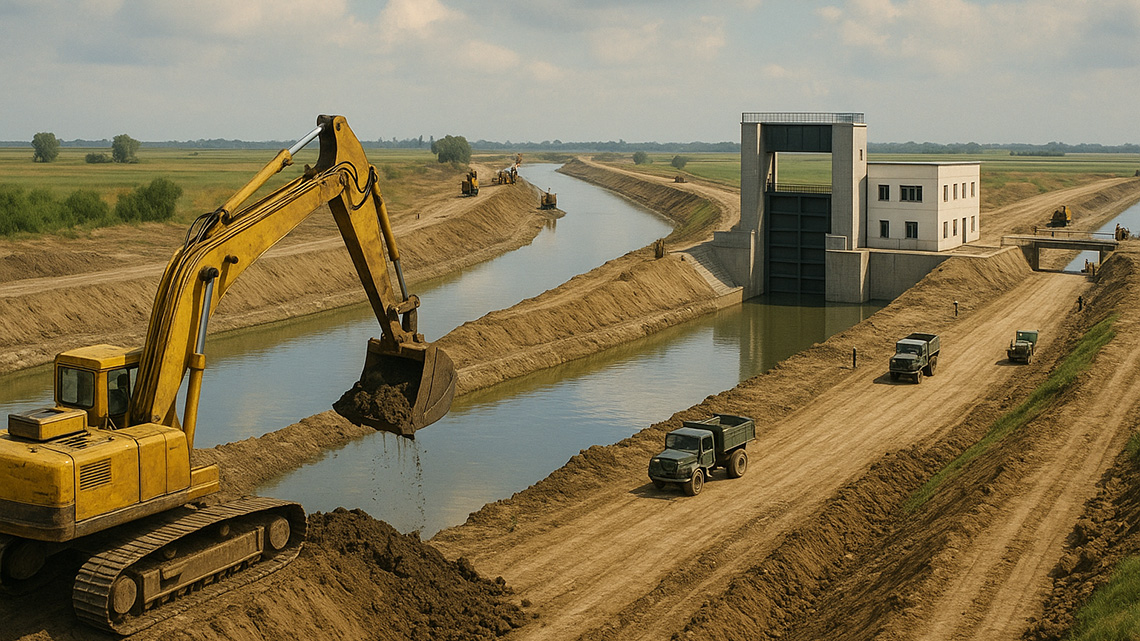
As a part of the Banatska Palanka – Novi Bečej canal system, the section from the confluence of the Kikinda Canal to the Tisa River near Novi Bečej serves to convey significant volumes of water for the supply of the Banat region and to discharge excess water into the Tisa during periods of high water levels, when river conditions allow.
Near the junction with the Tisa River, the canal splits into two branches:
- Intake-discharge branch, equipped with a sluice gate
- Navigation branch, featuring a ship lock
The length of this canal section is 15.99 km.
During drainage periods, the canal collects inland waters from an adjacent catchment area of 16,000 hectares.
In addition to its primary functions, the canal also supports:
- navigation,
- forestry development on embankments,
- sports, recreation, and similar activities.
The section from the so-called triangle (the confluence with the Kikinda Canal) to the Bašaid road was excavated between 1962 and 1964, while the section from the Bašaid road to Novi Bečej, i.e., to the Tisa River, was constructed between 1967 and 1972.


Comments