



After three years marked by great enthusiasm and the gathering of an increasing number of swimmers and water polo players, the “old guard” of the team began to disperse. The team’s coach, Radomir Ivanić, left for France, while Dubravka Nešović, a student at the Academy of Music, remained in Belgrade during the summer.
Zvonko Tolmačev was also living and working in Belgrade as a military engineer, while Branislav Vojnov-Banaš and Sava Ivanić were serving in the navy (Yugoslav People’s Army). Vladimir Kiselički continued his studies in Ljubljana.
Under these circumstances, a new generation stepped onto the swimming and water polo scene—girls and boys aged 15 to 18: Dara Grujić, Nada Vukčević, Zorica Beljuc, Vladimir Davidović Njora, Milorad “Miša” Berbakov, Mihajlo “Gura” Gurjanov, Miroljub “Mira” Jakšić, Ivan Popov, Karlo Štaud, and others.
At the same time, competitions within the Zrenjanin sub-association, according to the 1954 regulations, introduced longer swimming disciplines. Events included 200 and 400 meters freestyle (front crawl), 200 meters breaststroke, as well as the 4×100 meters freestyle relay.
According to the water polo rules of that period, matches were played in two halves of 10 minutes of effective playing time. After each goal, the game restarted from the goal lines—similar to the beginning of the match—with the fastest (or most rested) player swimming for the ball. Because of this, fast swimmers were especially valued, as they could secure possession and initiate attacks for their team multiple times during a single game. There was no time limit for offensive possession, so coaches often relied on tactics focused on maintaining a lead once their team gained a two- or three-goal advantage.
It is also interesting that at the time there was a prevailing opinion that, due to the demanding nature of water polo, players under the age of 14 should not participate in the sport, but instead focus exclusively on swimming. Junior championships in Serbia and Yugoslavia were organized as single-round tournaments held once a year, for players up to 18 years of age.
In 1954, the young water polo players of Jedinstvo took part in the Serbian Youth Championship. In Group “A”, they achieved the following results:
- Radnički (Kikinda) – Jedinstvo (Novi Bečej) 7:1
- Radnički (Kovin) – Jedinstvo (Novi Bečej) 4:7
- Proleter (Zrenjanin) – Jedinstvo (Novi Bečej) 13:0
Group “A” standings:
- Proleter (Zrenjanin) — 3 3 0 0, goal difference 23:2, 6 points
- Radnički (Kikinda) — 3 2 0 1, 16:5, 4 points
- Jedinstvo (Novi Bečej) — 3 1 0 2, 8:24, 2 points
- Radnički (Kovin) — 3 0 0 3, 4:18, 0 points
After the group stage, the Novi Bečej team played for fifth place against Spartak from Subotica, the third-placed team from Group “B”. Spartak proved stronger and won 8:1, leaving Jedinstvo’s young squad in sixth place in Serbia in their debut competitive season.
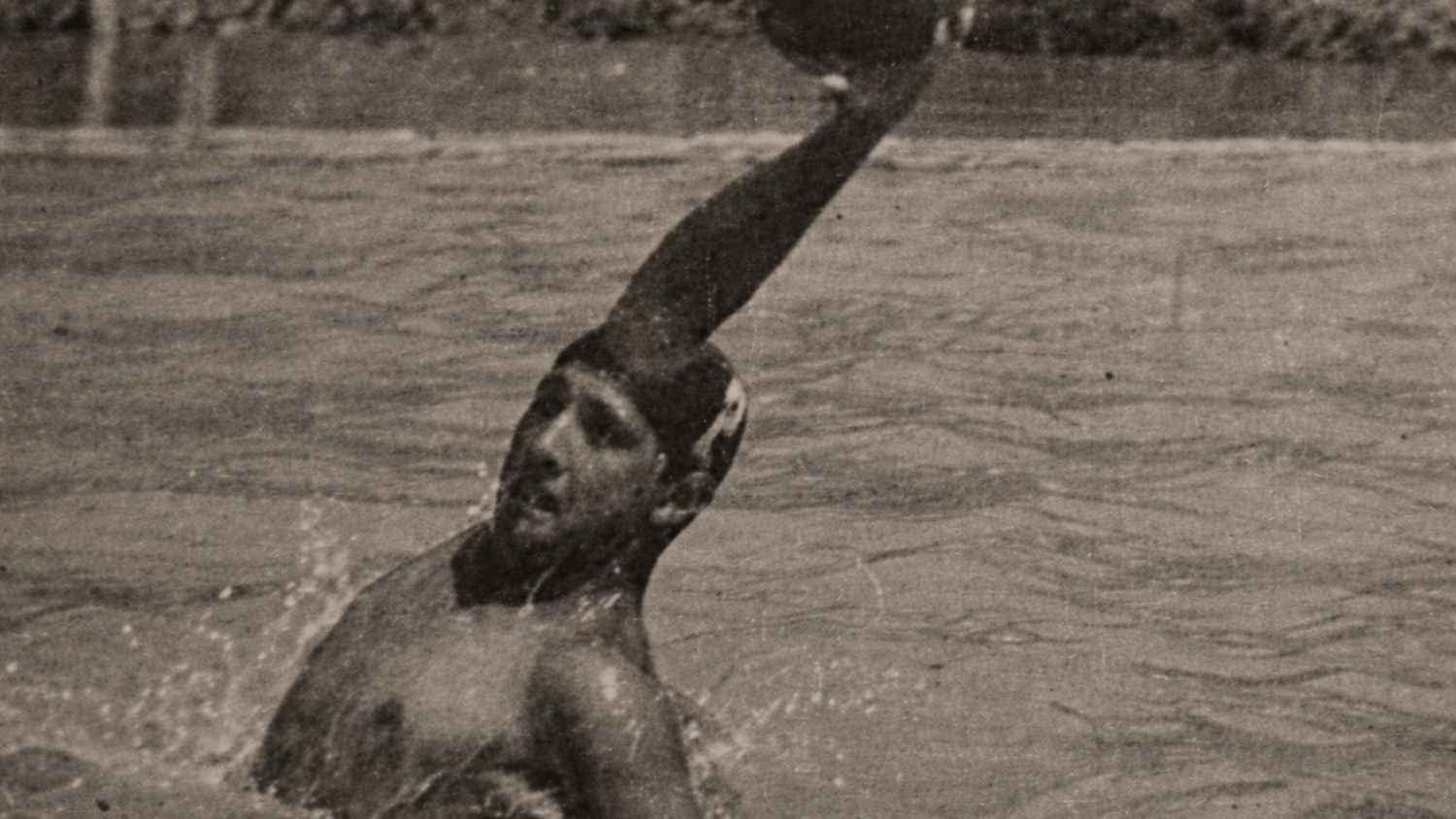
In the photo: Manojlo Gurjanov, center of the Jedinstvo water polo team
Comments