



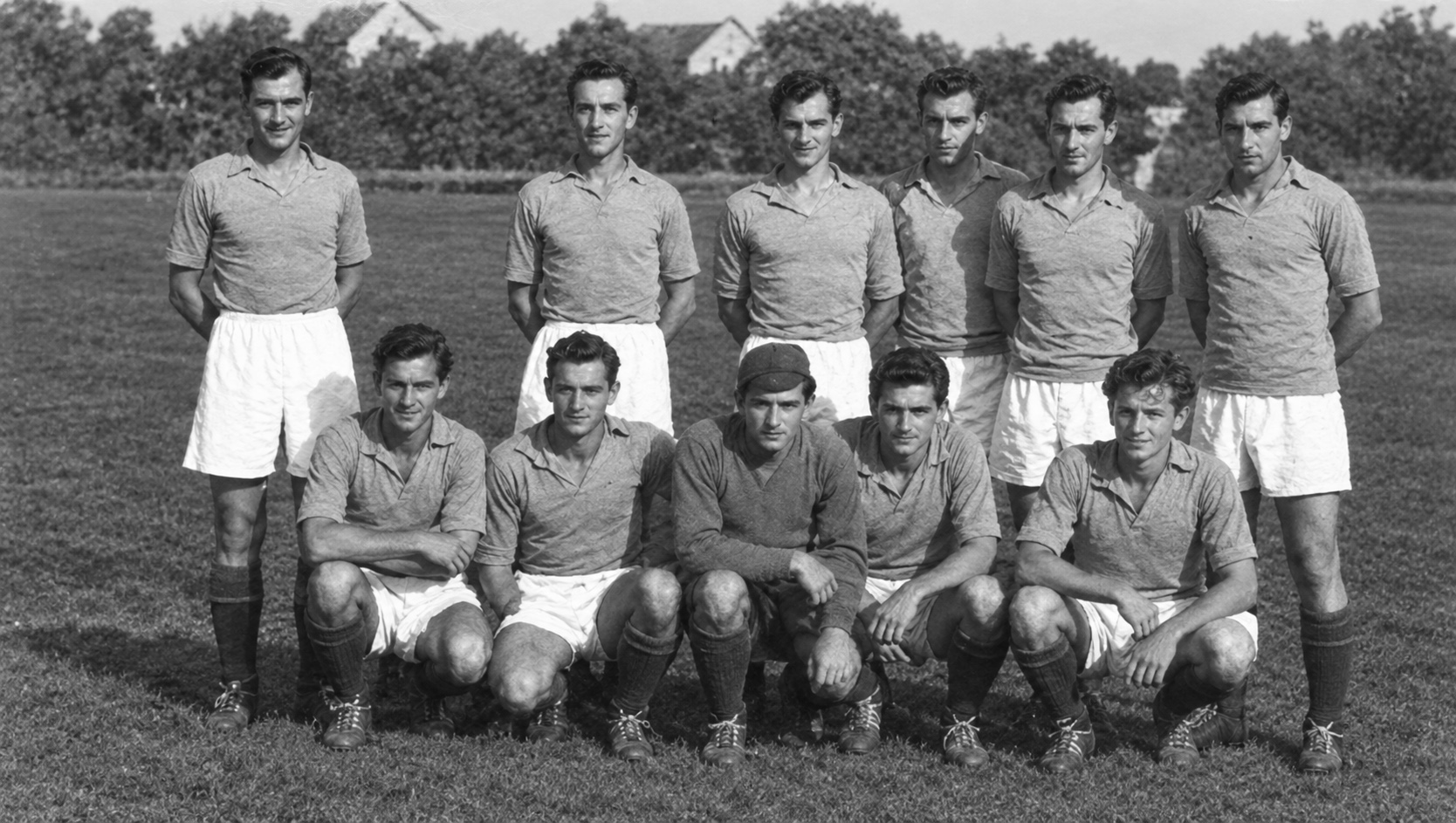
Between 1955 and 1963, the fifth generation of water polo players emerged in Novi Bečej. These were ambitious, intelligent, and highly capable athletes who managed to maintain the previous level of play and eventually advance to the Republic League. However, this required time and perseverance.
Interruption of Systematic Training and Spontaneous Gatherings
Following Braša’s departure from Novi Bečej, systematic work in swimming and water polo came to a complete halt. Despite this, the new generation continued to gather spontaneously on the Tisa River, training occasionally—mostly ball-passing and shooting at a single floating goal tied to the shore. There were no official competitions, but the team survived thanks primarily to M. Berbakov and his friends.
The “Managerial Era” (1955–1959)
This period is known as the “Managerial Era” because Miša Berbakov, through his enthusiasm and organizational efforts, kept the team alive.
- In 1955, Miša organized a guest appearance in Ohrid, with two borrowed players from Bečej.
- The following summer, he arranged a match against Bečej, held in Bečej. The Novi Bečej players were literally gathered directly from the beach and taken to the match, which ended in a catastrophic defeat. Novi Bečej scored only one goal—from half the field—thanks to M. Kiselički, who caught the opposing goalkeeper “asleep.”
Official Competition in 1958
A similar outcome occurred in 1958, but this time during an official competition: the Second Republic Division, held in Senta. The participants were:
- “Senta”
- “Polet” (Sombor)
- “Odred” (Kikinda)
- “Jedinstvo” (Novi Bečej)
The Novi Bečej team was practically “drowning” in the pool—almost every match was played on one goal. Still, there were two bright moments:
S. Ivanić scored the team’s only two goals, both from half the field, which earned him a place among the seven best players of the tournament.
Relocation to “Banja” and Competitive Progress
Due to technical reasons—specifically the impossibility of setting up a regulation-size field on the Tisa—the following season water polo was moved to “Banja.” The team was coached by I. Jagodić, who successfully led it into the Second Republic Division.
The 1961 Season: Team Consolidation
In 1961, the team was coached again by S. Ivanić, who shaped it for a higher level of competition. That season, “Jedinstvo” finished in second place.
Final standings:
- “Proleter” – Zrenjanin
- “Jedinstvo” – Novi Bečej
- “Student” – Zrenjanin
- “Radnički” – Kovin
The 1962/63 Season: Controversial Refereeing
The next season began very successfully—“Jedinstvo” won the first tournament. However, in the first match against Bečej, referee Miško Stojiljković – Kreza expelled the team’s best center player, Ž. Berbakov, in the very first minute of the game.
In 25 years of playing the sport, the author notes he had never seen this rule applied. With one man down, the team had no chance of winning.
The consequences of this controversial moment were clear:
- Bečej advanced to the Second National League
- “Jedinstvo” dropped to third place (saved by the points from the first tournament)
- “Kreza” became Bečej’s coach the following year
The author states that this experience made him decide to retire from the sport entirely.
Tournaments in Bela Crkva
Both tournaments were held in Bela Crkva, with the following participants:
- “Bečej”
- “Jezero” – Bela Crkva
- “Jedinstvo” – Novi Bečej
- “Odred” – Kikinda
- “Student” – Belgrade
- “Radnički” – Kovin
The performance of “Jedinstvo” was far below its actual potential, and the morale of the team was devastated after the controversial match. There was no desire to win; the players were simply waiting for the tournament to end so they could go home.
Continuation in 1964 and the End of an Era
In 1964, Novi Bečej continued to compete successfully in the Republic League under the leadership of T. Acković. However, this marked the end of systematic and professional work in water polo development in Novi Bečej. The best players of the fifth generation moved on to stronger clubs, while the others stopped competing.
A new phase began — the “Selector Era.”
The “Selector Era” (from 1976 onward)
With the completion of the DTD canal and the Tisa dam, the team left Banja and moved to the canal in 1976.
From then until the early 1990s, a unique training model was developed and led by Z. Marić, known as the “Selector Era.”
The Last Attempt at Systematic Training (1977–1978)
The last attempt to revive systematic and professional work in swimming and water polo took place in 1977 and 1978, under the leadership of R. Ivanić. Although the beginning was very promising, the initiative ended rather quickly.
Comments