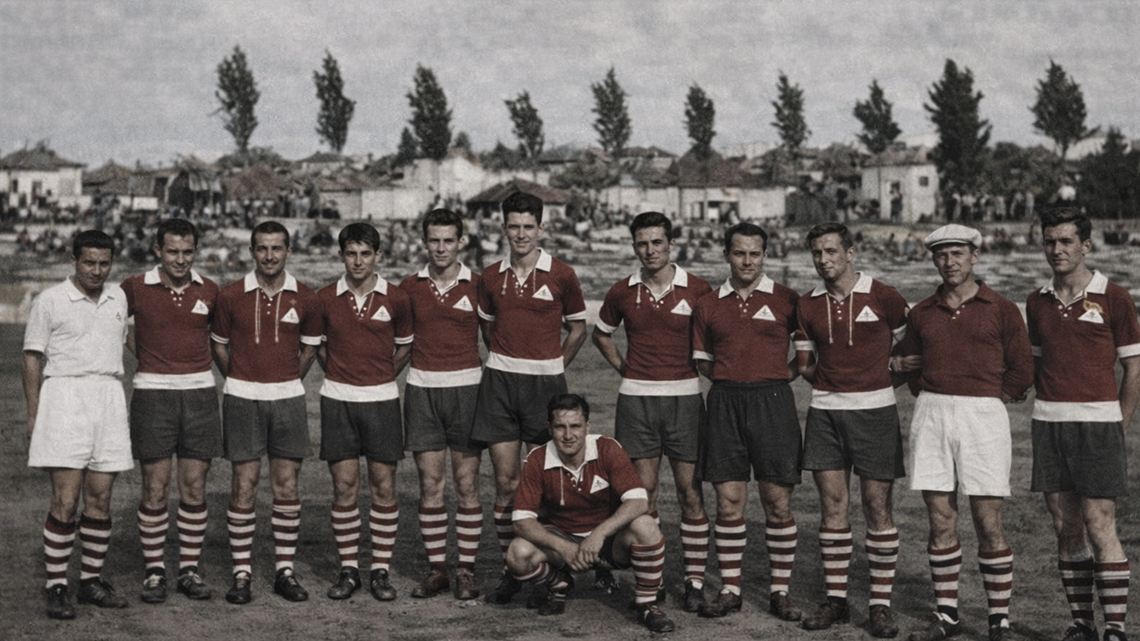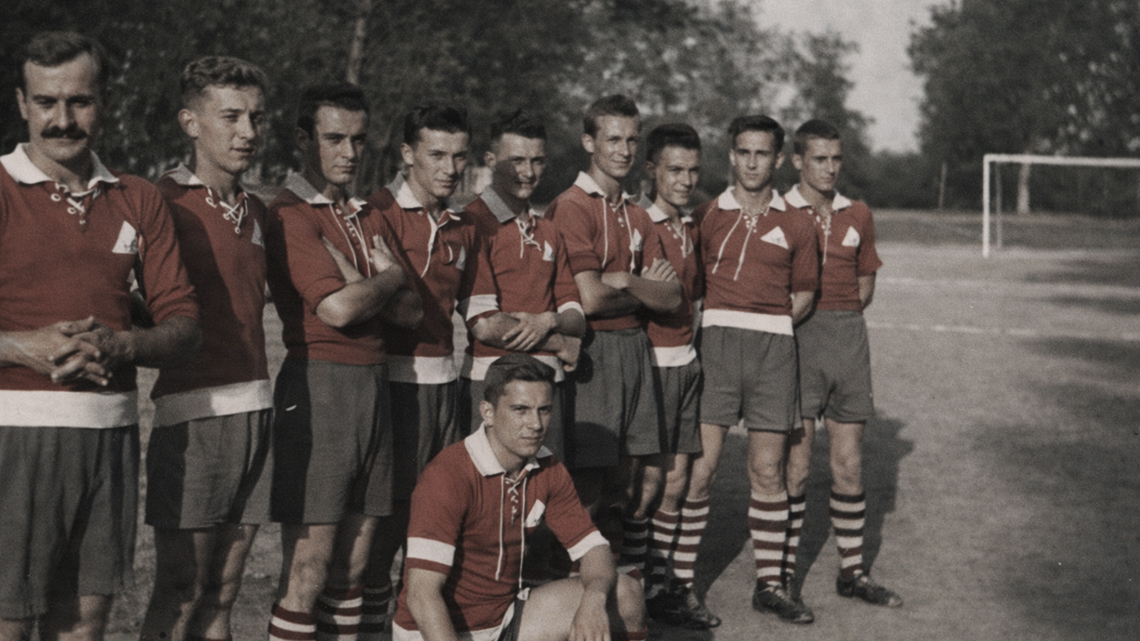

Immediately after the occupation, as early as the summer of 1941, the football club DMKS Turul was founded in Novi Bečej. The club was composed exclusively of members of the Hungarian community. At the beginning of 1942, following the establishment of the Banat Hungarian League, Turul joined the competition for the Banat championship.
Explore the rich history of football in Novi Bečej with our 'Ninety Years of Football' category. Discover key moments, significant personalities, and unforgettable matches that have shaped the local football identity. Join us on a journey through decades of passion, rivalry, and community on the field.
Share this page on social media
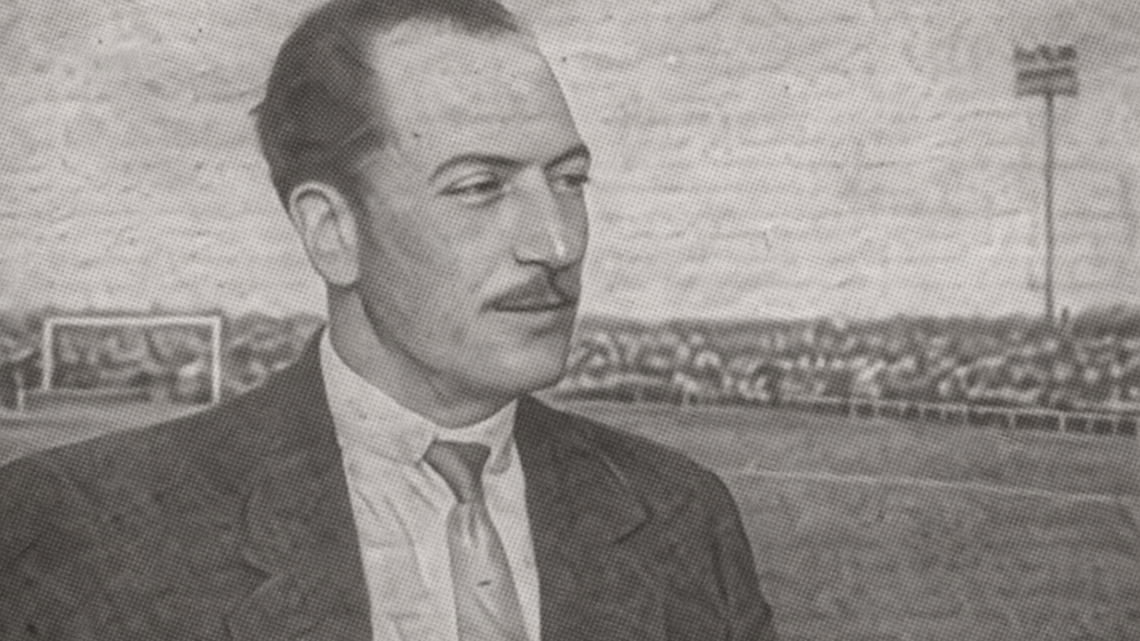
Šandor Kiš was one of the rare true football stalwarts of his generation. A hardworking and exceptionally combative half-back, he left a strong mark with Turul, and after the Second World War he also played for Zvezda.
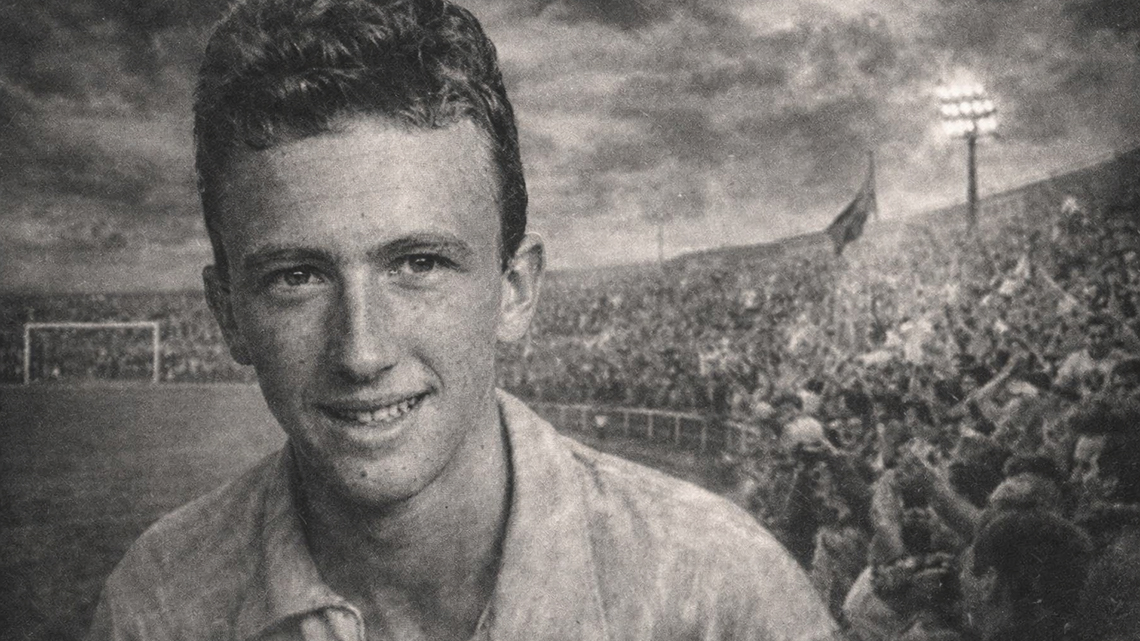
László Gomba appeared on the football scene of Novi Bečej at a very young age. Together with Ferik Kiš and József Čanji, he was among the group of young enthusiasts who initiated the founding of a new club in Novi Bečej in 1940, originally named Napredak. Shortly after its establishment, the club changed its name to S.K. Zanatlija, where Laci quickly secured a place in the first team and proved his footballing quality.
The football club Zvezda began its activities in the summer of 1942, but with very modest results. In its first match, the team narrowly defeated the weak side Turul by 2–1. However, already in the second game, Zvezda suffered a devastating defeat at home in Novi Bečej, losing 1–8 to Banat from Dragutinovo (today Novo Miloševo).
Béla Farkaš belonged to the generation of footballers who matured during the difficult years of the Second World War, yet through his talent and character he left a lasting mark on the history of football in Novi Bečej. He inherited his footballing ability from his father Géza Farkaš, a distinguished pre-war player of Građanski, but Béla’s natural gift and football intelligence placed him among the most promising players of his generation.
Ferenc Gomba, affectionately known by his friends and teammates as Feri or Frici, was the complete opposite in temperament to his older brother Laci. Quick, lively, and passionate, he stood out as a left winger for DMKS Turul from the very start of the 1941/42 season.
Vilmoš Kujan, born in Novi Bečej, moved to Novi Sad as a boy to learn a trade, where he stayed until 1942. During his time in Novi Sad, he played football, which made him one of the top players in Novi Bečej upon his return. In DMKS Turul, during the early war years, he quickly established himself as one of the team’s most important first-team players, alongside István Berta.
Every match between Zvezda and Obilić of Kumane attracted exceptional public interest, both in Novi Bečej and in Kumane. It is difficult today to fully convey the atmosphere surrounding those encounters, so we turn to the book “Reportaže” (Reportages) and present one contemporary match report that vividly illustrates the spirit of the time and the importance of this rivalry.
In Novi Bečej, up until the Second World War, many young men from farming families attempted to take up football, but with little success. Agricultural work unfortunately coincided with the football season, making it difficult to reconcile the two. Most of them gave up after only a few training sessions, realizing that they could not achieve the required level to earn a place in the first team.
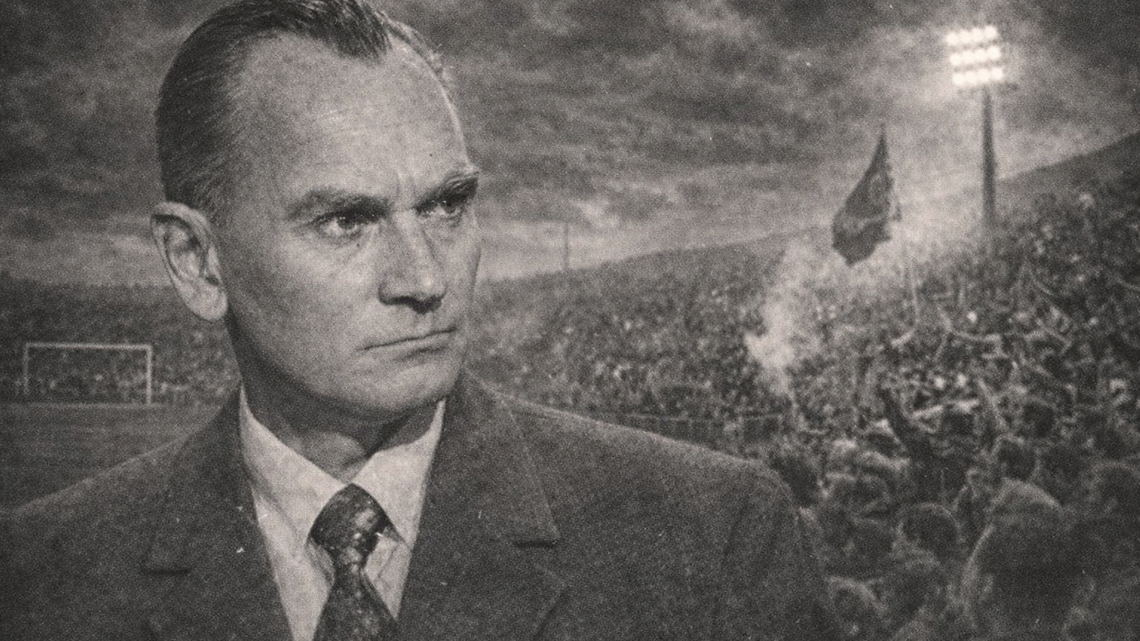
Zdravko Gavrić lived in Novi Bečej under an assumed name, Zdravko Radosavljević, as he had escaped arrest by the Hungarian authorities in Stari Bečej, which was under Hungarian occupation at the time.