



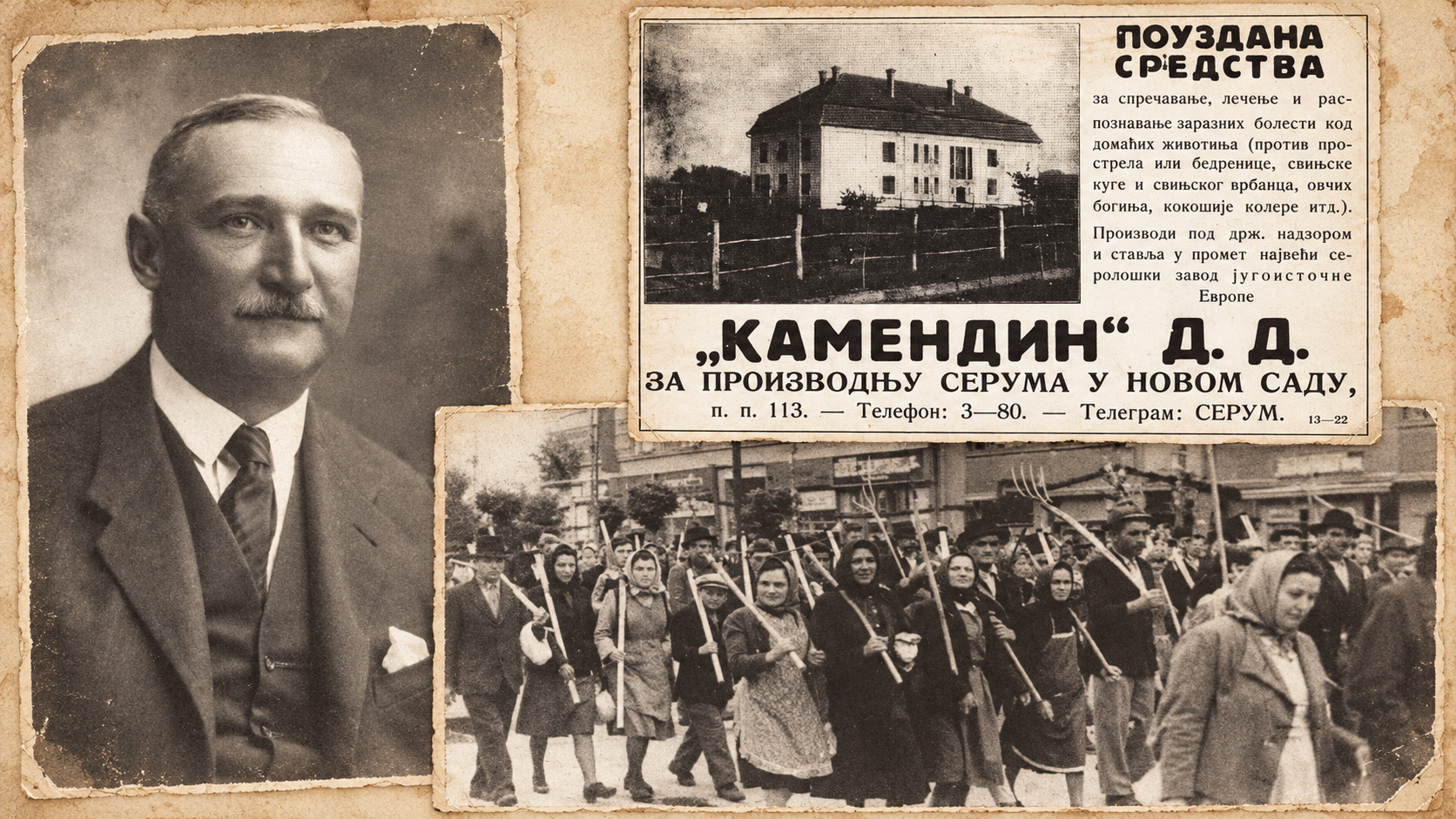
More substantial construction work at Kamendin began in 1948.
The Main Directorate informed the estate that, as of 31 December 1947, its loans amounted to 1,606,434 dinars in short-term working-capital credit and 2,951,300 dinars in long-term credit for the construction of livestock fattening facilities. Kamendin also received a seasonal loan of 1,400,000 dinars for pig fattening.
Under the investment plan for capital construction, social facilities and equipment, the Main Directorate allocated a stated total of 21,182,000 dinars to Kamendin for 1948. The original breakdown listed the following purposes:
| Purpose | Amount |
|---|---|
| Buildings | 18,505,000 dinars |
| Barracks for seasonal workers | 1,200,000 dinars |
| Equipment | 1,353,000 dinars |
| Research | 60,000 dinars |
| Livestock and saplings | 1,264,000 dinars |
Under the capital construction programme known as Plan “A”, work began in 1949 on two barns for young cattle, each with a stated capacity of 100 animals, three feed-preparation kitchens adjoining the fattening facilities, and eight residential buildings.
By October of that year, the following amounts had been spent from the investment loan:
| Purpose | Amount spent |
|---|---|
| Capital construction | 6,632,612 dinars |
| Equipment | 572,583 dinars |
| Social and welfare facilities | 4,192,000 dinars |
| Livestock purchases | 335,238 dinars |
During the same year, Kamendin also used a short-term loan of 34,667,000 dinars.
In early 1949, the Agricultural Commission of the Main Executive Committee approved a further investment loan of 300,000 dinars for hotbeds.
Improving Workers’ Living Conditions
Investment and construction helped improve living and working conditions at Kamendin. According to the original text, all permanent workers had been provided with accommodation by the end of 1949.
Progress was also made in supplying employees more regularly, particularly with manufactured goods. The estate’s trade union organisation played an important role in this.
The workers themselves, together with members of anti-fascist organisations from nearby settlements, participated in the construction of homes and other buildings. Through voluntary labour, they sought to help complete the facilities within the planned deadlines.
Dismantling the Narrow-Gauge Railway
In mid-1948, the four-kilometre narrow-gauge railway connecting Kamendin with Stepanovićevo was dismantled.
An agreement for its transfer free of charge was signed on 28 June 1948 between the Main Directorate of Provincial Agricultural Estates of Vojvodina and the Directorate for the Construction of the Danube–Tisa–Danube Canal. The railway was transferred for use in canal construction, on condition that it be returned to the estate when the work was completed.
The canal was one of the most important projects envisaged by the Five-Year Plan in Vojvodina, but its construction extended over subsequent decades. The railway was more useful for those works than on the estate, where its use was declining.
After dismantling, it was never returned to Kamendin. Meanwhile, trucks and other vehicles increasingly took over transport duties, reducing the need for an industrial railway.
Assistance to Farmers in Sirig
Kamendin’s workers helped farmers in nearby settlements fulfil their sowing plans by providing labour, tractors and draught teams.
On 12 April 1947, the estate’s management reached an agreement with the Local Committee of the colonist settlement of Sirig, whose residents lacked machinery and draught animals. Three tractors and 40 animal teams were deployed, ploughing 55 cadastral jutra in one day.
A reporter for Slobodna Vojvodina recorded:
“A little farther away, where the tractors are ploughing, a group of workers from the Second Brigade is at work. Kalapoš Šandor is the best worker today. His brigade leader praises him:
‘He is the best worker in my brigade. For him, there are no fixed working hours. Today he has undertaken to work all day and, if necessary, all night, simply to help the farmers who have no draught teams.’
In this way, Kamendin’s workers help our farmers cultivate their land through their exceptional efforts. As cheerful songs and jokes echo across the fields, furrow follows furrow through the farmland of Sirig.”
A New Name and Headquarters
In early 1949, the name and headquarters of the Kamendin Provincial Livestock Institute were changed.
Under Decision No. 2,500 of 22 February 1949, issued by the Secretariat of the Main Executive Committee of the People’s Assembly of the Autonomous Province of Vojvodina, the enterprise became the Kamendin Provincial Agricultural Estate, with its headquarters in Zmajevo.
The same decision authorised director Marko Tankosić and accountable financial officer Siniša Jovanović to represent and sign on behalf of the enterprise within the limits of their authority.
Expert Commissions and Planning New Buildings
To ensure appropriate construction on provincial agricultural estates, the Commission for Agriculture and Forestry of the Main Executive Committee of the People’s Assembly of the Autonomous Province of Vojvodina established two expert commissions in early 1949.
Their task was to inspect construction already underway and determine sites for future buildings.
The first commission included engineer Ivan Milašinović, director of planning at the Main Directorate of Provincial Agricultural Estates of Vojvodina, and engineer Kamenko Ćirić, head of the Livestock Section of the Institute for Agricultural Research in Novi Sad, among other members.
The second commission included engineer Veliša Raičević, head of capital construction planning at the Main Directorate; engineer Milivoje Pavlović, head of the scientific research service within the Agricultural Commission’s Planning Sector; and other specialists.
Kamendin was inspected between 23 February and 5 March 1949, with director Marko Tankosić participating.
The commission assessed the possibilities for capital construction in 1949, taking into account the intention that the estate should eventually support scientific research and livestock experiments.
The residential area was to extend the housing development begun in 1948. Further expansion required a residential colony east of the access road.
The young-cattle barns were to stand west of the barn built in 1947. Houses for young pigs were planned as an eastward extension of the northern row of fattening facilities, with 20 metres between buildings and outdoor runs facing south. Silo towers were to be positioned at the end of each barn.
Planned Livestock Numbers and Feed Requirements
Under the commission’s development plan, Kamendin was to have 106 working animals. Draught requirements were calculated on the basis of one pair of horses, or an equivalent number of oxen, per 40 cadastral jutra.
The cattle herd was to include:
- 300 cows;
- 240 young cattle under one year old;
- 160 young cattle and heifers under two years old.
When the actual animal numbers were converted into standard livestock units, working animals and cattle would account for 590 units.
The plan envisaged one livestock unit per 2.5 cadastral jutra. This stocking level was expected to provide sufficient manure for regular fertilisation, regarded as essential for more intensive production.
Pig farming would account for a further 260 livestock units. The plan called for 100 sows and their offspring, assuming greater herd fertility because the foundation stock consisted mainly of Yorkshire and Berkshire pigs.
According to the standard calculations, grain and roughage requirements would be:
| Feed type | Planned quantity |
|---|---|
| Maize | 195 wagonloads |
| Bran | 121 wagonloads |
| Oilseed cake | 69 wagonloads |
| Barley | 2.5 wagonloads |
| Peas | 50 wagonloads |
| Various types of hay | 140 wagonloads |
| Silage | 320 wagonloads |
| Maize stalks | 107 wagonloads |
| Straw for feeding | 70 wagonloads |
| Oats | 7 wagonloads |
The commission highlighted the substantial feed requirements and the limitations of the estate’s own production. Nevertheless, the report also stated that the calculations indicated that livestock feeding was approximately covered.
The cropping plan considered suitable for the proposed livestock operation comprised:
| Land use | Area in cadastral jutra |
|---|---|
| Hay and fodder-crop seed production, with seed production allocated 10% of this area | 770 |
| Silage crops or beet | 210 |
| Oats | 66 |
| Maize for the estate’s own needs | 350 |
| Maize for workers’ allotments | 130 |
| Barley | 25 |
| Garden | 30 |
| Wheat | 430 |
One proposed alternative was to replace maize grown for the estate with peas, which were considered a more valuable feed and harder to obtain. It was also noted that pea straw was not an equivalent substitute for maize stalks.
Based on the dry matter in consumed feed and bedding, manure production was estimated at 700 wagonloads, considered sufficient for regular fertilisation.
Experimental Station or Estate for Mass Production?
Kamendin was originally intended to become an experimental station of the Provincial Livestock Institute in Novi Sad.
The commission warned that the existing capital construction plan could direct the estate too heavily towards large-scale livestock production, undermining its original research purpose.
The report stated:
“The current capital construction plan threatens to burden this estate with such extensive livestock production duties that it will be unable to fulfil its original purpose in the future. This would jeopardise the successful work of the Livestock Institute, since there is no more suitable estate near Novi Sad for the intended purposes.”
The commission therefore proposed that the Agricultural Commission, or the Presidency of the Main Executive Committee of the Autonomous Province of Vojvodina, adopt a decision formally assigning Kamendin to the Livestock Institute. Capital construction was to be aligned with the estate’s future responsibilities.
Livestock at the End of 1947
At the end of 1947, Kamendin had 84 horses: 44 mares, 25 geldings and 15 young animals.
The cattle stock consisted of two bulls, 48 cows, 148 young cattle, 23 calves and 65 oxen.
There were 1,520 pigs in total:
| Category | Number |
|---|---|
| Boars | 28 |
| Sows | 170 |
| Young pigs | 603 |
| Piglets | 474 |
| Fattening pigs | 245 |
| Total | 1,520 |
The estate also had eight donkeys and 110 turkeys.
During the same year, 300 pigs were placed in fattening. Two hundred animals were delivered, with a combined weight of 33,627 kilograms.
Animal Losses and Difficulties in Pig Production
High pig mortality was a major problem on most provincial estates between July and December 1947.
At the end of the year, the Main Directorate ordered continuous supervision during farrowing to reduce piglet deaths from suffocation. It also required greater attention to hygiene and housing conditions.
Despite the measures taken and preventive vaccinations, three horses, two cattle, 167 pigs and 299 poultry died at Kamendin between March and October 1948. A further 24 cattle and 399 pigs underwent emergency slaughter.
The largest monthly pig losses occurred in April, with 41 deaths, and October, with 47.
Provincial and other state authorities set planned livestock delivery obligations. In 1948, Kamendin was required to deliver 6,000 pigs, while the winter capacity of its fattening facilities before the construction of new buildings was 1,500 animals.
In a report to the Main Directorate dated 26 January 1948, the institute stated that during the first half of the year it would have six breeding boars and 80 Yorkshire sows, together with the same numbers of Berkshire animals. Approximately 800 newborn piglets were expected.
Director engineer Marko Paunović warned that there was insufficient maize to feed the breeding pigs because the estate’s entire maize crop had been designated as seed. Assistance was requested in securing feed, with maize requirements alone amounting to 220,000 kilograms.
This was one of the many difficulties Kamendin faced in the early postwar years.
Livestock in the Annual Report for 1948
According to the annual report, Kamendin had 77 horses, nine donkeys and a stated total of 271 cattle at the end of 1948.
The cattle breakdown listed:
| Category | Number |
|---|---|
| Bulls | 2 |
| Dairy cows | 33 |
| Suckler cows | 23 |
| Young cattle | 106 |
| Calves under one year old | 48 |
| Oxen | 32 |
The original text attributed milk production of 865,660.5 litres to the 33 dairy cows.
The pig stock was recorded as follows:
| Category as listed in the original overview | Number |
|---|---|
| Boars | 26 |
| Sows | 234 |
| Castrated animals | 58 |
| Female pigs over one year old | 2,031 |
| Young male pigs | 1,010 |
| Young female pigs | 124 |
| Male piglets under four months old | 452 |
| Female piglets under four months old | 422 |
| Male suckling piglets | 218 |
| Female suckling piglets | 200 |
| Fattening pigs | 750 |
| Stated total | 5,576 |
The poultry stock included five turkey males, 131 turkey females and 362 young turkeys. The estate also had 40 beehives with movable combs.
At the end of the annual report, director Marko Tankosić assessed livestock health as satisfactory in view of the housing conditions.
Swine fever had occurred in a small number of pigs, while some purchased animals had developed swine erysipelas. According to the report, timely intervention quickly brought the infections under control.
Purchasing and Selling Pedigree Livestock
Funds were approved for pedigree livestock purchases to meet planned targets for fattening and breeding-stock production.
In 1948, Kamendin received approval for 944,000 dinars to purchase two bulls, 30 cows, 20 calves, two boars and 20 sows.
The institute also sold pedigree livestock to other agricultural estates and peasant work cooperatives.
In early January 1948, the Planning Sector of the Main Directorate was informed that Kamendin had 17 Simmental bulls for sale in good condition. The same account subsequently listed:
- one bull aged four years;
- ten bulls aged 16 months, obtained from Belje;
- four bulls aged 18 months, from Czechoslovakia;
- four bulls aged 12 months, from the estate’s own herd.
Twenty-five boars were also offered for sale: 15 Berkshire and ten Yorkshire.
Cattle Selection in Early 1948
Cattle selection at Kamendin was carried out under a decision of the Main Executive Committee of the Autonomous Province of Vojvodina dated 29 January 1948.
According to the report, 288 cattle and one buffalo bull were examined. The breakdown listed the following categories:
| Category | Number |
|---|---|
| Cows | 48 |
| Heifers | 90 |
| Breeding bulls | 2 |
| Young bulls | 28 |
| Female suckling calves | 5 |
| Male suckling calves | 5 |
| Weaned female calves | 7 |
| Weaned male calves | 6 |
| Oxen | 67 |
Two Class II breeding bulls were entered in the herd books:
- Rumba, metal tag 218, left-horn identification mark 224, aged five and a half years, from a family with high milk production;
- Geza, metal tag 246, left-horn identification mark 241, aged four years, imported from Switzerland.
The following Class II cows were also registered:
| Name | Metal tag | Left-horn identification mark | Year recorded in the report |
|---|---|---|---|
| Jabuka | 201 | 2 | 1946 |
| Bereg | 217 | 66 | 1942 |
| Ruža | 202 | 230 | 1943 |
| Cicela | 203 | 28 | 1945 |
| Luna | 204 | 24 | 1943 |
| Zorka | 205 | 79 | 1945 |
| Fama | 213 | 45 | 1944 |
| Lina | 215 | 27 | 1944 |
| Lola | 216 | 32 | 1944 |
Of the 28 young bulls examined, six from Czechoslovakia were considered suitable for breeding and classified as Class III.
The report stated that four locally bred bulls were suitable for breeding, but the reproduced list named only three:
| Name | Metal tag | Recorded date | Class |
|---|---|---|---|
| Bećar | 219 | 3 January 1947 | II |
| Bibor | 220 | 15 January 1947 | II |
| Biro | 224 | 17 April 1947 | III |
Bulls from Hungary were recorded under the designation “Krotal”:
| Identification number | Class |
|---|---|
| 2865 | III |
| 4110 | III |
| 9507 | II/III |
| 1840 | III |
| 1553 | III |
| 9278 | II |
| 1751 | II |
| 2701 | II/III |
| No number | III |
The locally bred bulls judged unsuitable for breeding and designated for castration were Brnja and Boris, each two years old; Braca, eight months old; and Boža, Bobica, Bata and Branko, each one month old.
Of the 90 heifers examined, one was classified as Class I, five as Class II, and the remainder as Class III and suitable for breeding.
Removing Unsuitable Animals
The commission also examined 67 oxen. Animals bearing identification numbers 116, 151, 134, 136, 95, 137, 115, 157, 158, 96, 155, 156, 119, 120, 103 and 104 were recommended for sale for fattening.
The same recommendation applied to oxen with left-horn identification marks 127 and 138, which had been assigned from Sirig for use by the Novi Sad City People’s Committee. These animals were recorded as having no teeth and no longer being fit for work.
The cow Mina, aged 12, without teeth and bearing left-horn mark 247, was also recommended for fattening. Additional identification details appeared in the original as “tet. 1. u. 59 d. u.”
The bull Bela, aged two and identified as 123 in the ear records, was recommended for slaughter to feed the workers because of a condition described as “falling sickness”. The same recommendation was made for a heifer from Czechoslovakia bearing metal tag 229 because of incurable actinomycosis.
These statements record the decisions made by the commission at that time.
Comments on Housing, Feeding and Veterinary Services
The report concluded with several general observations.
The barns were considered too small for the number of animals, and suitable accommodation was to be constructed as soon as possible. High mortality from pneumonia was also noted, prompting a recommendation that the calf accommodation be moved to a draught-free location.
A new inventory book was proposed, with livestock classified by category and age.
Roughage supplies were considered satisfactory, but an increase in concentrated feed was recommended. This was intended to allow the productive capacity of individual animals to be assessed and improve the rearing of young breeding stock.
Female calves were to be allowed to suckle for four months, and male calves intended for breeding for five months.
The estate had an organised veterinary service employing a senior veterinary assistant. Records were kept of sick animals, together with control sheets for medicines and instruments.
The commission recommended establishing a separate veterinary clinic comprising a dispensary, accommodation for approximately three sick animals and an examination room. Until then, a small room in the administration building served as the dispensary.
Planned Obligations and Brigade Work Organisation
Kamendin directed its production according to instructions from its administrative and operational management authority and higher state bodies.
One of the plans listed the following livestock and production obligations:
| Category | Planned obligation |
|---|---|
| Horses | 90 |
| Adult cattle | 297 |
| Young cattle | 425 |
| Fattening pigs | 5,000 |
| Young pigs | 1,900 |
| Sows and boars | 281 |
| Two-month-old piglets | 1,300 |
| Foundation breeding poultry | 150 |
| Poultry for slaughter | 3,275 |
In early 1949, further changes to the work system were introduced to increase production and improve organisation.
From 1 March, Kamendin applied quota-based work and brigade organisation in both livestock farming and crop production. By September, the system covered 107 of the estate’s 161 workers, distributed among ten brigades. Quotas had been established for 75 per cent of all work on the estate.
Mechanisation and Crop Production
Alongside its principal livestock activities, Kamendin intensified crop production during the early years of the Five-Year Plan.
Because tractors and other agricultural machinery were scarce, the estate frequently used nearby machine-and-tractor stations during peak seasonal work.
During deep winter ploughing in 1947/48, tractors from these stations ploughed 1,378 cadastral jutra, the estate’s own tractors 608, and horse teams 259. At that time, the estate had, among other crops, 954 cadastral jutra planted with the Bankut wheat variety.
In the following year, the machinery inventory listed these tractors:
| Make and model | Number |
|---|---|
| Oliver 90 | 2 |
| Oliver 80 | 4 |
| Oliver 70 | 5 |
| Mavag | 1 |
| Hofer | 1 |
As tractor numbers increased, the use of horses for ploughing declined, as did reliance on machine-and-tractor stations.
The estate also had two trucks: an 85-horsepower Ford, registration S.2-2166, and an 80-horsepower Dodge, registration S.2-2170.
According to the 1948 harvest results, winter wheat grown on 239 hectares yielded an average of 14 metric quintals per hectare, while winter barley grown on 70 hectares yielded 20 metric quintals per hectare.
A metric quintal equals 100 kilograms.
Agricultural Work Records for 1948/49
Like other state estates, Kamendin kept detailed records of agricultural work, employee numbers and the use of feed and fertiliser.
Deep Winter Ploughing in Autumn 1948
The plan covered 1,366 cadastral jutra.
Between 11 and 18 September, the estate’s tractors worked 96 jutra. Between 19 and 25 September, a further 136 jutra were recorded as worked by its tractors and ten by animal teams.
The overview up to 27 November recorded a total of 216 jutra worked by the estate’s tractors, 150 by machine-and-tractor station tractors and ten by animal teams. The remaining unworked area was stated as 1,076 jutra.
Fertilisation
Autumn manure application was planned for 514 cadastral jutra. By 12 December, it had been completed on 64 jutra under cereals and 42 under fodder crops.
Artificial fertiliser application was planned for 1,600 jutra. By 26 September, it had covered 439 jutra under cereals, 25 under vegetables and 80 under fodder crops.
Sowing
By 18 September 1948, four jutra of spinach, three of lettuce and six of peas had been sown.
By 9 October, one jutro of cabbage for consumption was recorded, and by 30 October, six jutra of garlic.
By 23 October, 260 jutra of wheat had been sown, while 179 jutra of winter barley and 80 jutra of winter peas had been sown by early October.
Harvesting Late Crops
By 18 September, 174 cadastral jutra of hemp for fibre had been harvested, with an average yield of 30 metric quintals. The records also listed harvesting on 57 jutra of hemp for seed, 30 of lucerne for seed and ten of foxtail millet, together with potatoes lifted from 25 jutra.
By 6 November, sunflower had been harvested and threshed from 19 jutra, with an average yield of nine metric quintals.
By 27 November, the entire maize area of 340 jutra had been harvested, with an average yield of 15 metric quintals.
Winter and Spring Ploughing in 1949
Deep winter ploughing was planned for 1,452 cadastral jutra over the whole season. By 5 February 1949, 600 jutra had been completed: 393 by the estate’s tractors, 162 by machine-and-tractor station tractors and 45 by animal teams.
Ploughing for spring sowing was planned for 839 jutra and completed on 23 April 1949. The estate’s tractors ploughed 439 jutra, and machine-and-tractor station tractors 400.
Permanent and Seasonal Worker Numbers
The records show substantial changes in employee numbers.
| Date | Permanent workers |
|---|---|
| 18 September 1948 | 98 |
| 30 October 1948 | 48 |
| 5 February 1949 | 150 |
In February 1949, the estate needed approximately 30 additional permanent workers.
Seasonal worker numbers were:
| Date | Seasonal workers |
|---|---|
| 18 September 1948 | 132 |
| 30 October 1948 | 98 |
| 25 December 1948 | 40 |
| 22 January 1949 | 13 |
| 9 April 1949 | 120 |
In April, approximately 200 additional seasonal workers were needed.
Cultivated Areas in the May 1949 Report
A report dated 21 May 1949 by the then director, Jožef Marton, provides an overview of cultivated areas and the diversity of crops.
The total sown area amounted to 2,191 cadastral jutra:
| Crop group | Area in cadastral jutra |
|---|---|
| Cereals | 1,070 |
| Industrial crops | 47 |
| Vegetables | 241 |
| Fodder crops | 821 |
| Other | 12 |
| Total | 2,191 |
Cereals
| Crop | Area in cadastral jutra |
|---|---|
| Winter wheat | 273 |
| Winter barley | 179 |
| Spring barley | 80 |
| Spring oats | 193 |
| Maize | 345 |
| Total | 1,070 |
Industrial Crops
| Crop | Area in cadastral jutra |
|---|---|
| Sugar beet for seed, first year | 5 |
| Sugar beet for seed, second year | 21 |
| Paprika for processing | 19 |
| Poppy | 2 |
| Total | 47 |
Vegetables
| Crop | Area in cadastral jutra |
|---|---|
| Potatoes | 59 |
| Onions | 21 |
| Garlic | 7 |
| Beans | 20 |
| Lentils | 4 |
| Cabbage | 14 |
| Tomatoes | 11 |
| Aubergines | 1 |
| Green peppers | 5 |
| Melons and watermelons | 5 |
| Cucumbers and pumpkins | 10 |
| Green beans | 10 |
| Green peas | 3 |
| Peas for dry grain | 26 |
| Other vegetables | 44 |
| Stated total | 241 |
Fodder Crops
| Crop | Area in cadastral jutra |
|---|---|
| Established lucerne | 186 |
| Newly sown lucerne | 86 |
| Spring vetch for hay | 336 |
| Spring vetch for seed | 15 |
| Field peas | 80 |
| Maize for fodder | 57 |
| Fodder beet, first year | 39 |
| Fodder beet, second year | 5 |
| Fodder carrot, second year | 1 |
| Foxtail millet | 16 |
| Total | 821 |
Other Areas
| Purpose | Area in cadastral jutra |
|---|---|
| Workers’ allotment gardens | 11 |
| Experimental field | 1 |
| Total | 12 |
Main Directorate Supervision and Demands to Fulfil Plans
The Main Directorate of Provincial Agricultural Estates of Vojvodina managed Kamendin and other estates, passed on instructions from higher authorities and directed production. It sometimes reacted sharply when tasks fell behind schedule.
A circular sent to all estates on 2 April 1949 provided the following figures for spring ploughing:
| Estate | Planned area | Completed by the date of the circular |
|---|---|---|
| Fruška gora | 2,295 jutra | 52 jutra |
| Irmovo | 1,616 jutra | 46 jutra |
| Kamendin | 839 jutra | 95 jutra |
The Directorate warned:
“On 1 April, we sent all estates a telegram specifying which crops they must sow by 5 April, and that deadline cannot be changed. Any estate that fails to fulfil this task will be held accountable.
Furthermore, all estates are ordered for the last time to immediately harrow deeply ploughed land, winter crops, lucerne fields, meadows and pastures.”
Later records show that Kamendin completed its planned spring ploughing on 23 April. This confirms that ploughing was finished during April, but does not in itself establish whether the crops specified in the telegram were sown by 5 April.
Professional Training for Workers
The Agricultural Department of the Main Executive Committee and the Main Directorate organised lectures and courses to train workers in livestock farming and crop production.
A vegetable-growing course attended by 52 workers was held in Temerin in February 1949.
After completing the course, Lajoš Boroš and Imre Šara were assigned to Kamendin. Boroš received a salary of 3,500 dinars and Šara 2,800 dinars.
Director Jožef Marton’s Summer 1949 Report
Among the surviving fragments of documentation is director Jožef Marton’s monthly report to the Main Directorate for the period from 10 July to 10 August 1949.
The report stated that the brigade-and-team system had been introduced at Kamendin and that hourly and piece-rate work were no longer applied.
In livestock farming, however, a shortage of buildings prevented the full allocation of individual responsibilities. In crop production, labour shortages prevented individual workers from being assigned specific areas, so work was performed in groups according to experience-based quotas.
Mowing and threshing began in July. Labour shortages required intensive work and overtime.
On construction and living conditions, Marton reported:
“Capital construction work in pig farming is not being completed within the specified deadlines. The same applies to residential buildings. Although the fattening facilities are partly completed, the adjoining kitchens and separate channels have not yet been started.
The construction enterprises are expecting approximately a hundred People’s Front volunteers from Kikinda, while estate employees are also helping with the work.
Housing conditions are unsatisfactory. A workers’ canteen has opened, serving approximately 200 workers. All workers, without distinction, have received their ration entitlements and coupons.”
The Director’s Operational Work Plan
An operational plan for “systematic work” also survives, showing the director’s daily responsibilities.
Daily Plan
| Time | Responsibility |
|---|---|
| 07:00–08:00 | Check the control register to ensure reports and telegrams have been sent on time |
| 11:30–12:30 | Review incoming correspondence and distribute it to the responsible officers |
| 14:00–15:00 | Use charts to monitor implementation of the operational plan |
| 18:00–19:00 | Receive requests, complaints and other submissions |
Weekly Plan
| Day | Responsibility | Time |
|---|---|---|
| Monday | Site inspection with the head of capital construction | 08:00–11:00 |
| Tuesday | Field inspection with the chief agronomist | Not specified |
| Wednesday | Meeting with all administrative staff | 15:00–17:30 |
| Thursday | Field inspection with the head of livestock farming and the veterinarian | 08:00–11:00 |
| Friday | Meeting with brigade leaders | 13:30–15:30 |
| Saturday | Review each administrative employee’s work | Not specified |
Monthly Plan
| Date | Responsibility |
|---|---|
| 5th of the month | Meeting with the chief bookkeeper |
| 8th of the month | Report to the Directorate |
| Around the 15th | Analyse the plan implementation report with all responsible officers |
| Around the 28th | Inspect the storehouses |
In addition to these duties, the director was expected to inspect workshops and other activities not covered by the schedule during available periods, including preparations for an exhibition.
Jožef Marton concluded by emphasising that all responsible officers must prepare their own operational plans in accordance with this schedule, and that all administrative staff and brigade leaders must follow it.
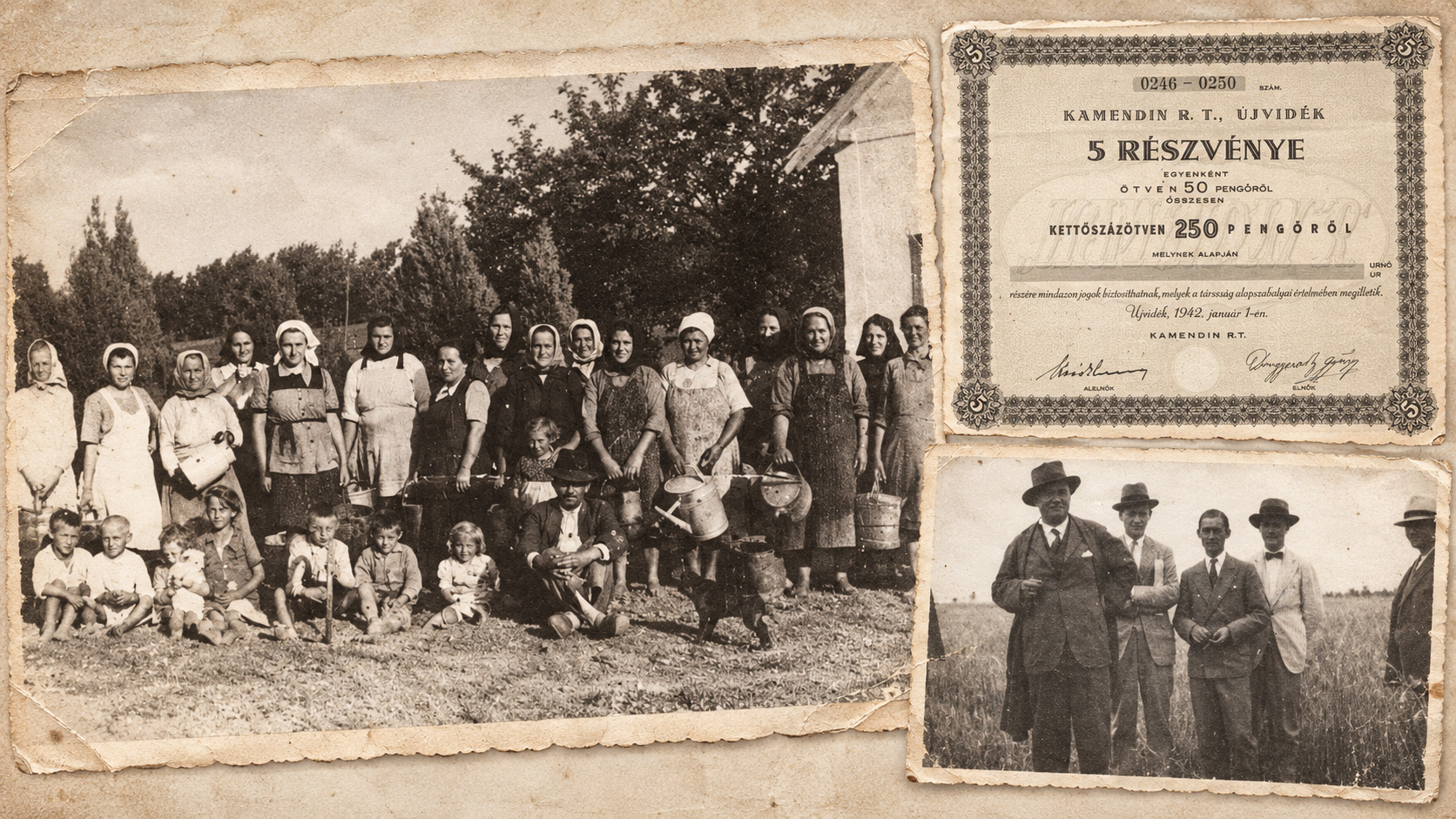
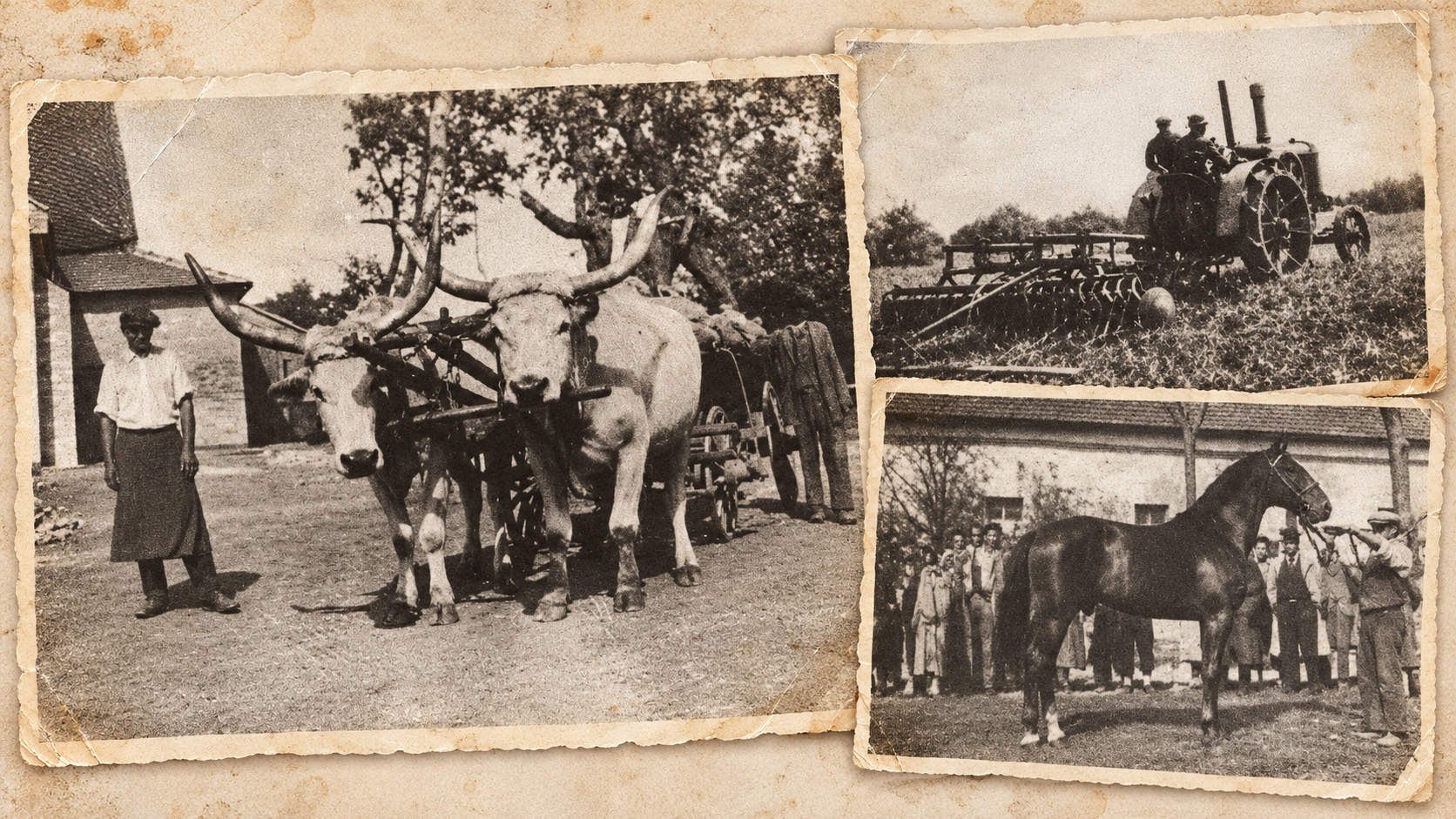
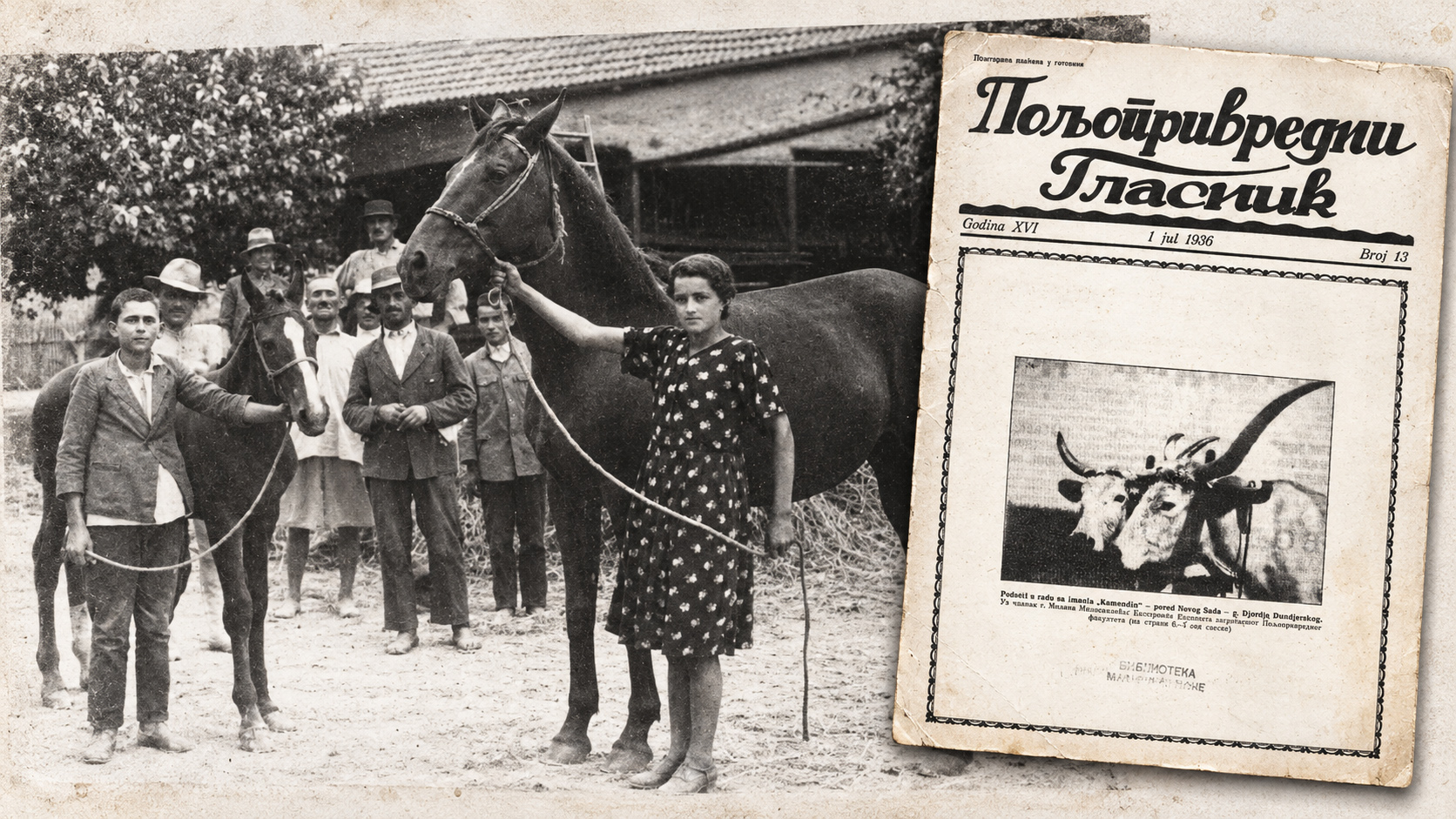
Comments